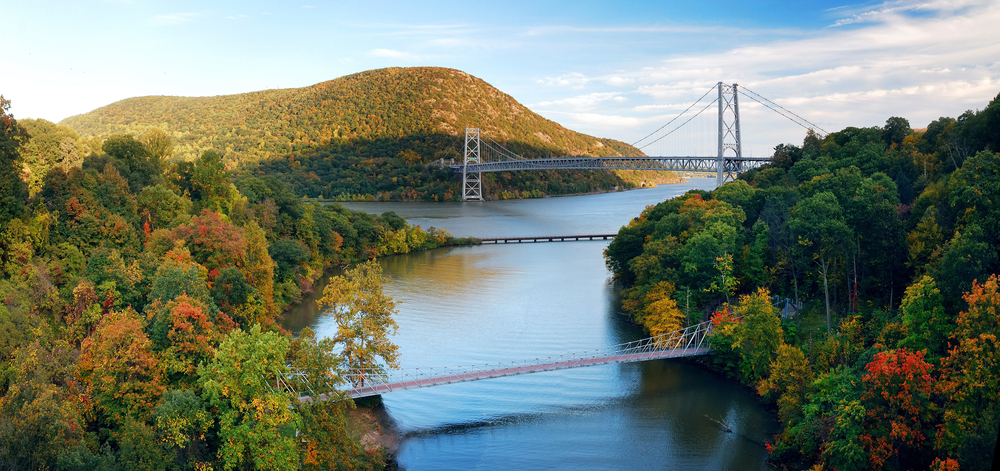
In the Berkshires and Hudson Valley, proximity to New York City and Boston shapes a lifestyle built on world-class arts, farm-to-table dining, and a shared penchant for staying out of the spotlight.
By Chris Caggiano
The movie theater in Millerton, New York doesn’t try to impress anyone. No stadium seating, no multiplex sprawl – just three modest screens in a town of a few thousand people near the Connecticut and Massachusetts borders. It looks like a theater built for locals, because it is one. And yet on any given weekend, the person two rows back might be the director of the film playing – or the actor on screen – having driven in from a farmhouse a few miles away, with no expectation of being noticed and, more tellingly, no fear of it either.
That absence of spectacle is, according to Elyse Harney Morris of Elyse Harney Real Estate, the defining feature of the market spanning Litchfield County, Connecticut; the Hudson Valley in New York; and the southern Berkshires in Massachusetts – three areas that function, for buyers, less like distinct markets and more like a single triangle, each of its points within about two and a half hours of Boston or New York City.
“They’re not here to outshine everyone else,” Harney Morris said of the area’s residents, describing a community where writers, artists, and people of considerable public profile live alongside multi-generational local families with little friction between them. Actors and producers who live in the area, she said, will sometimes stay after a screening for an informal conversation with the audience – nobody, she noted, thinks twice about seeing someone of prominence riding the train or going about their day. It is a place, in her telling, where that kind of encounter is just another detail of life in the area.
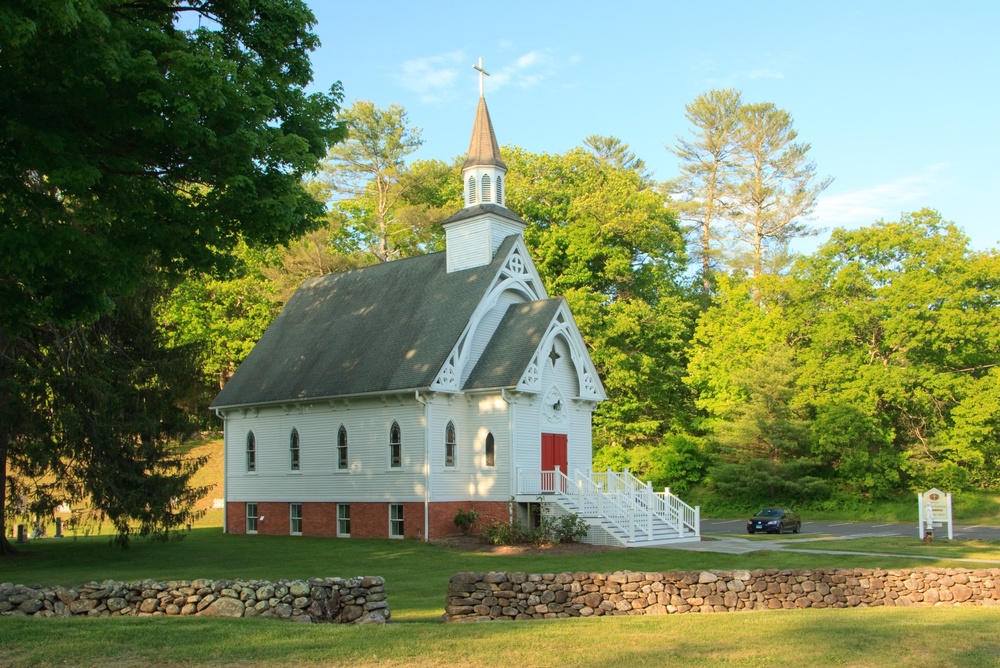
Cultural Life
That same unpretentious quality extends to the region’s cultural offerings, the breadth of which can surprise people who assume rural New England and its neighboring valleys mean fewer diversions. “There is a tremendous amount of arts, entertainment, music,” she said.
The concentration of serious arts institutions here rivals that of far larger metropolitan areas: Jacob’s Pillow Dance Festival in Becket, Massachusetts; the Williamstown Theatre Festival and Barrington Stage Company, both drawing Broadway-caliber productions and talent each summer; the Clark Art Institute and MASS MoCA, anchoring a museum circuit that also includes the Norman Rockwell Museum in Stockbridge; and the Hudson Valley Shakespeare Festival across the New York border in Garrison. Williamstown is also home to Williams College, one of the country’s top-ranked liberal arts colleges, which brings a steady stream of visiting scholars, lectures, and exhibitions open to the public well beyond the academic calendar.
The Yale School of Music maintains a presence in Norfolk, Connecticut, and Tanglewood, home to the Boston Symphony Orchestra’s summer season, draws crowds for its Fourth of July concerts, with a wide array of picnic blankets spread across the large lawn. Harney Morris calls the concerts “quintessential,” the kind of evening that belongs on a bucket list.
Millbrook Winery in Dutchess County, New York hosts weekend music alongside food trucks, set against rolling pasture and ponds. Independent bookshops, small-batch lecture series at the local libraries, and artist residencies scattered throughout the region round out a cultural calendar built less for tourists than for year-round residents who want first-rate art, ideas, and performance without having to leave home. “It’s a very cultured group that lives here,” Harney Morris said, “but they want to stay down low.”
Farm-to-Table by Design
The dining culture follows the same understated logic across all three states – no “scene,” per se, just serious cooking. In Connecticut’s Litchfield Hills, the Mayflower Inn & Spa in Washington runs a kitchen led by chef Luke Dowdy, a veteran of the Thomas Keller Group and Jean-Georges. Arethusa al Tavolo in Bantam, under chef Dan Magill, is built directly into the Arethusa Farm’s own dairy operation, so much of what’s on the plate traces back to the same herd down the road. Winvian Farm in Morris, a Relais & Châteaux property spread across 113 acres, does something similar under chef Chris Eddy. West Street Grill in Litchfield, owned by James O’Shea, has anchored the town green for over three decades.
Cross into New York’s Hudson Valley, and the pedigree gets even more decorated. Blue Hill at Stone Barns, chef Dan Barber’s restaurant built around its own working farm in Westchester County’s Pocantico Hills, helped define the modern farm-to-table movement nationally and holds two Michelin stars. In Rhinebeck, Terrapin has been serving from local farms since 1998 under chef-owner Josh Kroner. Troutbeck in nearby Amenia pairs serious cooking, currently led by executive chef Vincent Gilberti, with a historic estate setting. Millbrook itself keeps things lower-key, with weekend food trucks and live jazz at Millbrook Winery.
In the Berkshires, Great Barrington has become something of a small-scale dining destination in its own right: Café Adam, still chef-owned by Adam Zieminski after two decades; and Old Inn on the Green in nearby New Marlborough, a candlelit, prix-fixe-only dining room led by chef Peter Platt inside an 18th-century building. Just over the New York line in Philmont, Local 111 has built a reputation on the same locally sourced ethos under longtime chef-owner Josephine Proul.
What ties these kitchens together, across three states, is where the ingredients originate. Local farms benefit directly. Another of Harney Morris’s family’s businesses, Harney & Sons Fine Teas, supports local farms and environmental initiatives through its participation in 1% for the Planet, part of a broader culture of land stewardship that shapes how the region grows – or, more precisely, how it chooses not to.
Local Wellness
The wellness infrastructure runs just as deep, and each property has carved out its own specialty. In the Berkshires, Canyon Ranch Lenox occupies Bellefontaine, a restored 1897 mansion modeled on Louis XVI’s Petit Trianon. The 100,000-square-foot complex is built around a highly structured approach: guests work with an advisor to choose a “pathway” – a health intervention, a lifestyle reset, a resilience-building program – and the campus delivers accordingly, from aerial yoga and a rock-climbing wall to ashiatsu massage, with medical staff and psychologists on hand alongside the usual spa therapists.
A few miles away in Stockbridge, Kripalu Center for Yoga & Health takes a different approach. It’s the largest yoga-based retreat center in North America, occupying a former Jesuit monastery – once a Gilded Age cottage owned by Andrew Carnegie – on 300 wooded acres overlooking Stockbridge Bowl. Guests can kayak on the lake, walk the property’s labyrinth, or spend a week in Ayurveda or meditation training.
Connecticut’s version of this lives inside the Mayflower Inn & Spa itself. The Retreat at Mayflower Inn combines an indoor-outdoor pool, steam bath, and thermal sanctuary with more active options – a guided naturalist hike to Macricostas Pinnacle ending in a picnic over Lake Waramaug, or a canoe trip around Mayflower Pond in summer, cross-country skiing in winter. And in the Hudson Valley, Wildflower Farms in Gardiner pairs its Thistle Spa with the property’s working orchards and heirloom gardens, so a treatment can be followed by a walk through the same nine-acre farm supplying the kitchen.

A Lifestyle Choice
That instinct toward keeping things close to home extends to how families are using their properties. Harney Morris described a distinctly post-pandemic pattern: multi-generational buyers acquiring substantial acreage – properties in the 100-acre range are not unusual – specifically to bring grandparents, parents, and children onto one property, with enough land and privacy for kids to learn to fish or keep bees.
“This is a lifestyle choice,” she said, describing two Berkshire properties she had recently placed with buyers from Boston and New York, each roughly 100 acres. Buyers for these larger holdings increasingly include California families as well, though she noted they tend to gravitate toward contemporary architecture rather than the traditional or modern-farmhouse styles more common to the area – a preference she attributed partly to recent wildfire displacement prompting a full rebuild, this time somewhere else entirely.
Beneath that top tier sits what Harney Morris described as the market’s real volume: buyers in their mid-thirties to mid-forties purchasing turnkey homes, a segment she called the most active in the current market. These buyers want finished properties – minimal renovation, perhaps a single wallpapered accent wall rather than a full room – and what typically begins as a weekend home has a way of becoming permanent. “They stay here for a year,” she said, “and then one of them starts commuting” – into New York City, in most cases – “a few days a week, and then the whole thing just stops – they’re staying.”
The Two-and-a-Half-Hour Rule
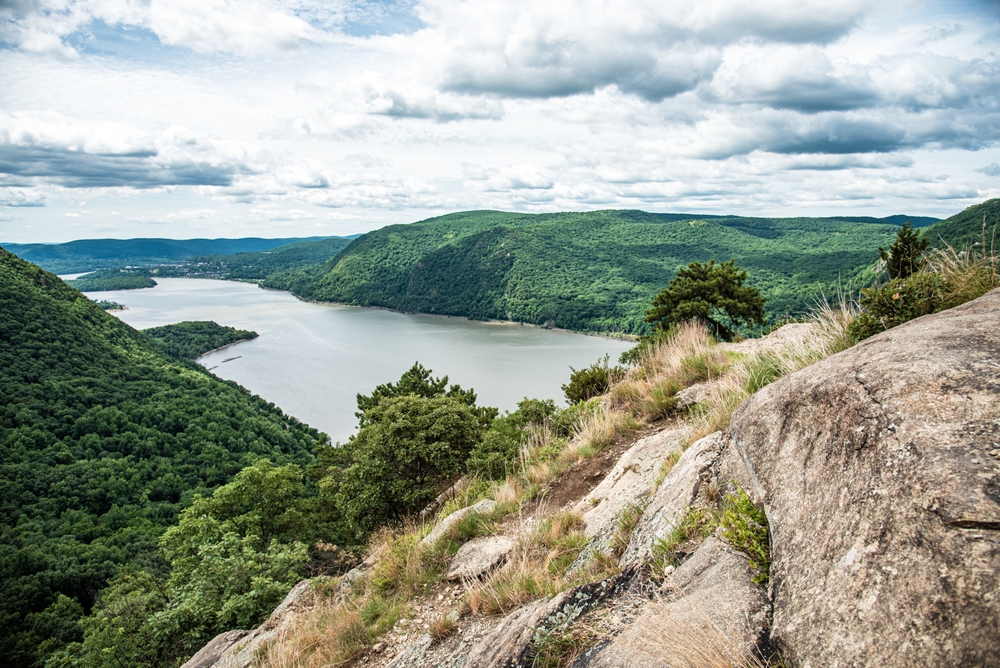
There’s only so far people are willing to travel on the regular to experience all that the area has to offer. Two and a half hours, in Harney Morris’s telling, is the outer boundary that buyers and their families are willing to accept. “That seems to be a breaking point for kids and adults,” she said. “They just go, no more, I can’t do more than two and a half.” That number shapes almost everything about how families experience the region: it’s why buyers from New York City and the Boston area can treat a home in Litchfield County, the Hudson Valley, or the Berkshires like a retreat from ordinary life but also an extension of it – close enough to make a Tuesday commute possible, far enough to feel like a different season entirely.
A house here isn’t simply a destination in itself; it functions as a hub for a much larger swath of New England, all still inside that same two-and-a-half-hour comfort zone. It is, in Harney Morris’s view, the defining structural fact of the lifestyle here: not just a place to be, but a place from which everything else stays within reach.
About the Expert: Elyse Harney Morris is Lead Broker and Owner at Elyse Harney Real Estate in Salisbury, Connecticut. She serves the Litchfield Hills, Hudson Valley, and Berkshires markets across Connecticut, New York, and Massachusetts.
This article is intended for informational purposes only and does not constitute legal, financial, or investment advice. The views and opinions expressed herein reflect those of the individuals quoted and do not represent an endorsement of any company, product, or service mentioned. Readers should conduct their own due diligence and consult qualified professionals before making any investment decisions.