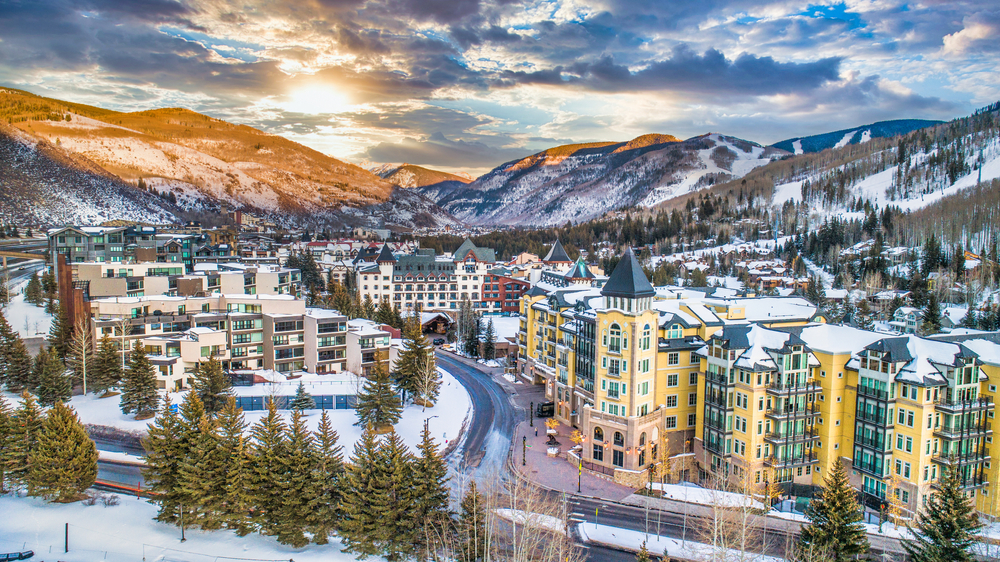
From Michelin-pedigree dining to a private-club corridor stretching into Beaver Creek and Bachelor Gulch, Vail’s appeal to sophisticated buyers has less to do with ski runs than with everything the valley has built around them.
Ask someone who has owned in Vail for twenty years what keeps them coming back, and skiing is rarely the first answer. It’s the dinner reservation that took one phone call instead of three. The gallery opening two doors from the coffee shop. The tee time at a course that took decades to route between two mountain valleys. The jet that lands close enough to the slopes that “getting there” barely registers as travel.
Vail’s evolution from ski town to year-round destination has been engineered as deliberately as any building in it, and the valley’s lifestyle infrastructure – restaurants, clubs, aviation, philanthropy, arts – has become as much a part of the pitch to high-net-worth buyers as the mountain itself.
The Dining Scene
Vail’s restaurant scene has always punched above its altitude, but the arrival of Tavernetta at the Four Seasons Vail in late 2024 marked something new: the valley’s first outpost of a Colorado restaurant group with a national reputation. Tavernetta is the work of Frasca Hospitality Group, the team behind Boulder’s Frasca Food and Wine, winner of the 2025 James Beard Award for Outstanding Restaurant and a Michelin-starred kitchen since 2023.
This was Frasca’s first project outside the Denver metro area in its two-decade history, and the Vail location carries the same DNA: an Italian-focused menu from Chef de Cuisine Ethan Diamant, with the group’s Wine and Beverage Director and a senior sommelier building out the cellar.
That new arrival sits alongside restaurants that have defined Vail dining for far longer. Sweet Basil has anchored Vail Village’s culinary scene since 1977. Mountain Standard built its reputation on open-flame and rotisserie cooking. Matsuhisa Vail brings a refined Japanese menu to the corridor. Together they give Vail Village and Lionshead a dining density that reads less like a resort town and more like a small, walkable extension of a major city’s restaurant scene, the kind of thing a buyer notices only after they’ve had to plan around its absence somewhere else.
The Private Clubs
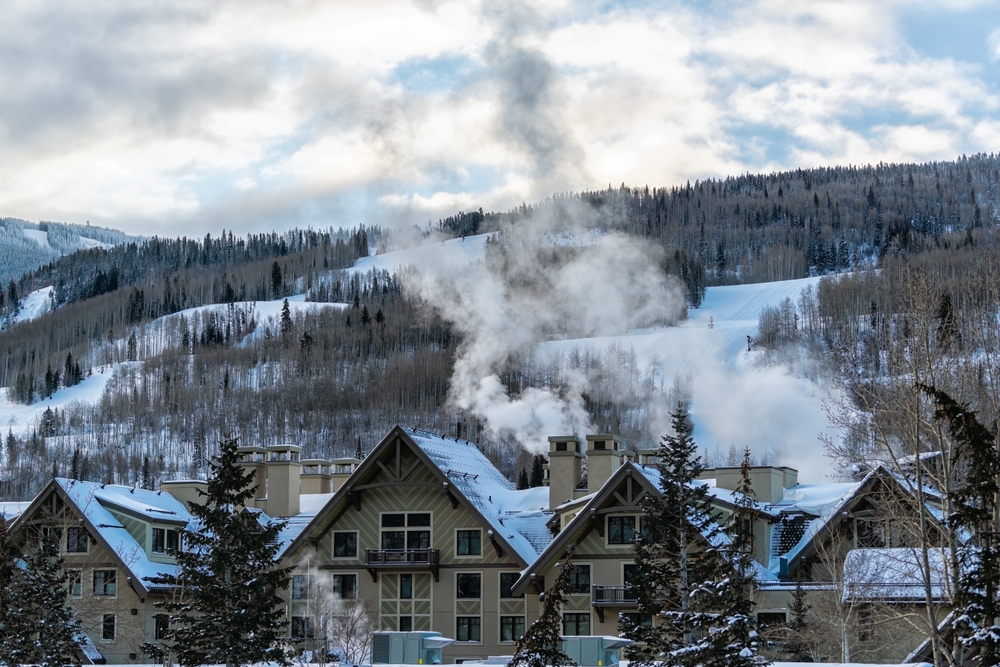
Ownership in Vail comes with an unwritten second tier of real estate: club membership. At the base of Vail Mountain, steps from Gondola One, the Vail Mountain Club offers heated underground valet parking, a private locker room, and on-mountain dining at The 10th. Full membership runs in the range of a quarter-million dollars, and even at that price, joining typically means a waitlist. A few blocks away in Lionshead, the Arrabelle Club occupies the same tier of exclusivity, with a ski valet at the base of the Eagle Bahn Gondola, a rooftop pool, and access to the Rock Resort Spa. Several of these memberships no longer maintain public waitlists at all, not because demand has cooled, but because the clubs have simply stopped taking names.
That same private-club culture extends the length of the valley. The Signature Clubs system reaches into Beaver Creek, Bachelor Gulch, and Arrowhead: the Beaver Creek Club and Bachelor Gulch Club serve property owners in those villages, the Arrowhead Alpine Club sits at the base of the Arrowbahn chairlift, and Red Sky Golf Club anchors the valley’s golf membership, with two courses designed by Tom Fazio and Greg Norman. Bachelor Gulch itself has been ranked the third-best Western U.S. golf resort by Condé Nast Traveler, and members of its private club receive reduced fees and priority tee times at Red Sky.
The connective tissue between the villages is as much a lifestyle feature as any single club – a wood-chip path winds from Arrowhead through Bachelor Gulch into Beaver Creek, threading aspen groves and wildflower meadows between communities that most visitors experience as separate towns. For an owner, it’s a reminder that a Vail property isn’t an isolated asset; it’s a foothold in a valley-wide network of clubs, courses, and access points, from Gondola One to Red Sky’s back nine.
Flying in
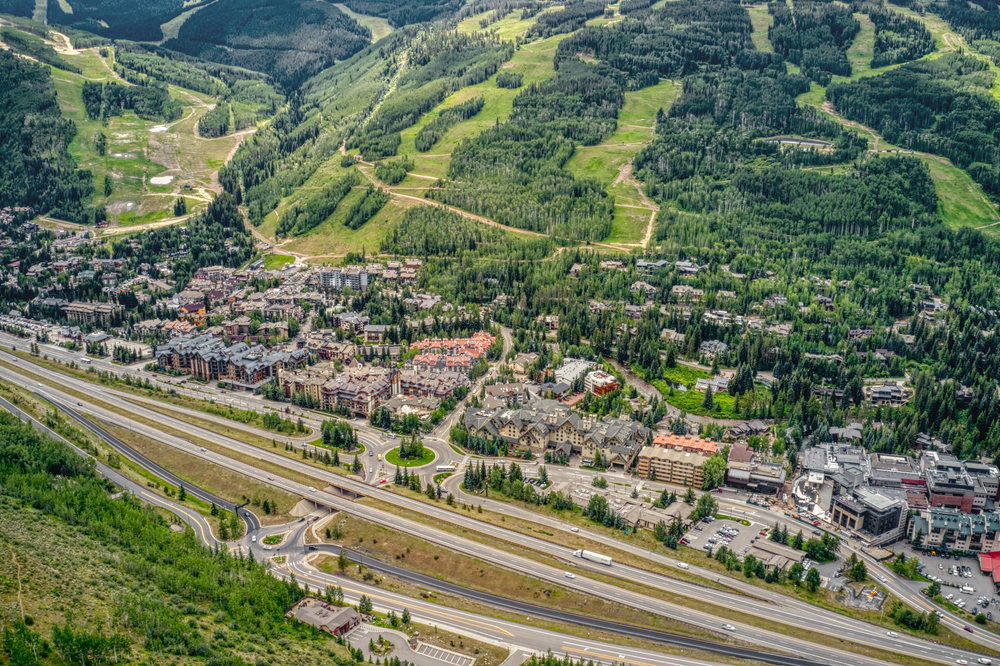
Part of what makes a valley-wide lifestyle possible is how easy it has become to get here without touching commercial aviation. Eagle County Regional Airport, roughly a twenty-minute drive from Vail Village, is served by a single FBO, Signature Aviation, a private-aviation terminal that handles fueling, hangar space, and ground service for private and charter aircraft. Signature Aviation has been called “the Ritz-Carlton of FBOs” in the industry press.
The location of the airport and its infrastructure allow it to stay operational through mountain weather that closes smaller airports nearby. It also offers on-site U.S. Customs and Border Protection service several days a week for private international arrivals. For an owner flying in from either coast or from abroad, the runway itself functions as an extension of the valley’s hospitality.
The Social Calendar
Much of what defines Vail’s cultural and philanthropic life traces back to a single organization: the Vail Valley Foundation. Beyond producing the GoPro Mountain Games, the Foundation runs Youth Power, its early-childhood-through-college initiative, and its own signature fundraiser, the Star Dancing Gala – one of the largest fundraising events in the Eagle River Valley, drawing local notables who spend the summer rehearsing choreography for a single night on stage. “This valley shows up with incredible generosity,” the Foundation’s vice president of philanthropy said of the tradition, “and those dollars directly fuel the programs that are changing lives for kids and families across the Eagle River Valley.”
Smaller but no less established events round out the calendar: Walking Mountains Science Center’s summer gala, A Taste of Nature, and the Vail Valley Charitable Fund’s community events, which have distributed roughly $10 million to local families facing medical crises since 1996. For part-time residents, the social calendar functions as a second entry point into the community – a way to be known in the valley beyond the ownership rolls of a single building.
Arts and Culture Beyond the Concert Hall
Bravo! Vail gets most of the attention, but Vail’s arts identity runs deeper and predates it. The Vail Dance Festival, now in its fourth decade, began almost by accident – when a planned Bolshoi Ballet Academy tour was cancelled in Houston in 1989, the Vail Valley Foundation stepped in and hosted three sold-out performances at the Ford Amphitheater instead. That single booking helped establish Vail as one of the world’s premier summer dance destinations. Performances now run across the Ford Amphitheater, the 530-seat Vilar Performing Arts Center in Beaver Creek, and the Avon Performance Pavilion, with the Vilar’s year-round calendar stretching from Broadway and opera to jazz, comedy, and film.
Away from the stage, the valley’s visual arts scene lives in its villages rather than a single museum district. Murals, sculpture, and small galleries run through Vail Village and Lionshead, and the Vail Valley Art Guild gives local and visiting artists a platform to show work and run workshops – a lower-key counterpart to the performing arts calendar, but one that reinforces the same idea: Vail treats culture as a year-round commitment, not a ski-season amenity.
Infrastructure for a Full Life, Not Just a Vacation
None of this works without the less glamorous investments underneath it. Vail’s regional airport has expanded to handle larger aircraft and more nonstop commercial service. Its healthcare system, anchored by the Steadman Hawkins Physicians Group’s international reputation in orthopedic surgery and supported by Howard Head Sports Medicine, has grown into cancer care, cardiology, and concierge longevity medicine – drawing patients who could go anywhere but choose Vail for the outcomes and the recovery environment alike. The town has also invested in behavioral health services and workforce housing, recognizing that a resort community’s quality of life depends on the people who keep it running, not only the people who visit it.
As Mark Gordon, Broker/Owner of Christiana Realty and a longtime figure in Vail real estate, puts it: “Employee housing, workforce housing, local housing, all of that is infrastructure.” It’s a framing that reflects how the valley’s longtime brokers think about the town’s future – not as amenities layered on top of a ski resort, but as the foundation a ski resort needs to keep functioning at all.
Built for Every Season
Vail’s recreation calendar has followed the same year-round logic, and the GoPro Mountain Games have become its clearest proof point. What started as a modest gathering has grown into one of the largest adventure-sports festivals in the country, drawing more than 90,000 spectators and roughly 4,000 athletes across four days of climbing, kayaking, trail running, mountain biking, and disc golf – an event the Vail Valley Foundation estimates has generated more than $70 million in cumulative economic impact for the town. Free concerts at the Ford Amphitheater and art activations throughout Vail Village round out a weekend built as much for people who came to watch as for those who came to compete.
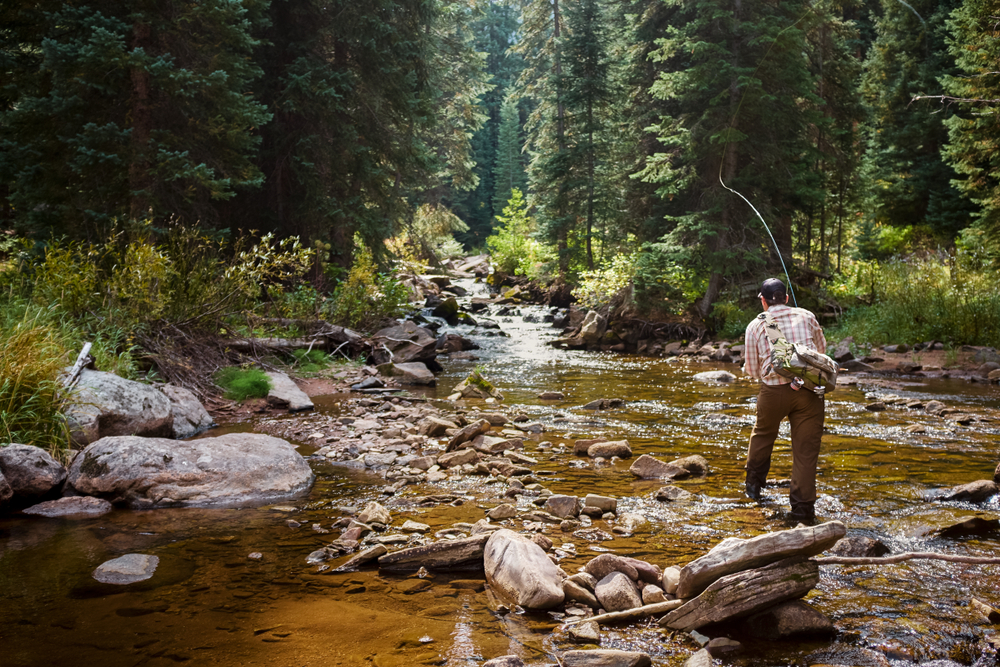
The rest of the season follows the same pattern of professional access layered onto natural terrain. Fly fishing on Gore Creek and the Eagle River – both Gold Medal waters – is typically arranged through outfitters like Gore Creek Fly Fisherman or Eagle River Outfitter, whose guides run wade and float trips daily through the summer. Mountain biking, hiking, and backcountry access work the same way, with local guide services handling permits, routes, and gear so a visit reads as effortless as a private club membership. Layer in the Vail Farmers’ Market & Art Show and the weekly rhythm of summer, and the valley’s pitch becomes clear: a mountain that converts as completely into a summer destination as it performs as a ski resort. Taken together – the dining, the clubs, the aviation, the philanthropy, the arts, the infrastructure, the recreation – Vail’s appeal to a sophisticated buyer isn’t a single season or a single amenity. It’s a valley built to be lived in, not just visited.
About the Expert: Mark Gordon is the Broker/Owner of Christiana Realty in Vail, Colorado. He has worked in the Vail real estate market for decades and has been involved in the development and marketing of luxury residential projects, including the Apogean at Lionshead.
This article is intended for informational purposes only and does not constitute legal, financial, or investment advice. The views and opinions expressed herein reflect those of the individuals quoted and do not represent an endorsement of any company, product, or service mentioned. Readers should conduct their own due diligence and consult qualified professionals before making any investment decisions.