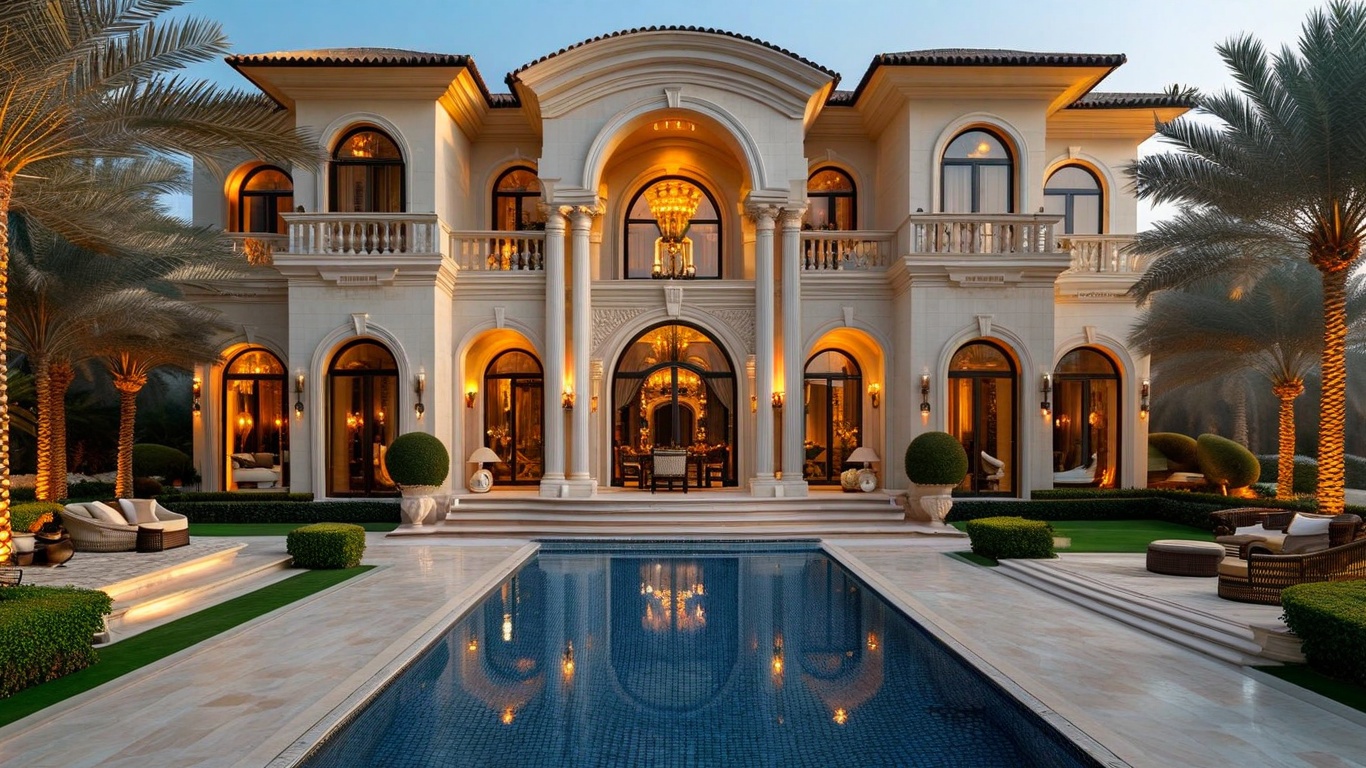
In the world’s most expensive real estate, no two homes are truly comparable – which means pricing by building a range, not chasing a number.
Pricing precision is a myth, at least at the higher end of the real estate market. These are the properties without a true peer: architecturally singular estates, irregular lots carved into hillsides, century-old homes with no modern equivalent. It’s a category where price tags routinely climb past $20 million, occasionally into nine figures.
Gary Gold, co-founder of Forward One Real Estate in Beverly Hills, sold the Playboy Mansion for more than $100 million at a time when no residential property in Los Angeles had ever traded for that price, then years later sold the Chartwell Estate for $150 million, resetting the ceiling again. For agents working in this territory, the job isn’t to calculate an exact figure. It’s to narrow toward a defensible range, then account for the part of value that no data point can capture.
The Lack of Comps
Traditional pricing leans heavily on comparable sales, or “comps” – recent transactions of similar homes used to estimate what a property should fetch. That approach works cleanly when housing stock is uniform: a subdivision where every home was built by the same developer, on similar lots, around the same time. “The more uniform it is, the easier it is to quantify,” Gold says.
Beverly Hills Flats – a historic, walkable district of luxury estates between Sunset and Santa Monica Boulevards, built out on flat, oversized lots roughly a century ago – falls into that category. Homes in Bel Air, set on irregular lots carved into the hillside, do not.
Ultra-luxury inventory generally leans toward the latter. Two homes in the same neighborhood, similar square footage, similar lot size, can differ in value by millions of dollars once factors like architecture, condition, and desirability are accounted for. In Venice, California, Gold points out, two homes can look identical on paper – same square footage, same lot size – and one could sell for triple the other’s price based on build quality, layout, and finish level. The paper only captures what’s measurable, and the biggest swings in value often come from what isn’t.
Standard appraisals typically draw on 15 to 20 comparable sales; at the multimillion-dollar level, appraisers are often working with as few as three to five. That thinner pool means each individual comp carries outsized influence on the final number, and it’s part of why lenders and appraisers alike apply more judgment, and more caution, once a property moves into rarefied territory.
The result, Gold says, is real uncertainty even after rigorous analysis: “You can do the best analysis in the world and still have a 10% swing either way.” That’s not a failure of the process. It’s an honest acknowledgment of what comps can and cannot do once a property stops resembling anything else on the market.
Building the Range
Some of that uncertainty gets baked in before a property ever reaches the market. New construction, in particular, tends to be priced against an assumption that “the house is worth as much as anyone’s ever sold a house for in that neighborhood, and probably more,” Gold says.
That assumption isn’t always wrong. But not every developer builds the best house that’s ever gone up in a neighborhood, and pricing as though they have doesn’t make it so. The gap between what a property is built to be worth and what buyers ultimately decide it’s worth is exactly the space a credible range can account for.
Given that uncertainty, Gold’s practical approach is to start wide and narrow in stages – layering in the data points that do exist until a defensible price range emerges, rather than chasing a single number the market can’t actually support.
Rather than telling a seller what a home is worth outright, Gold says he shows them what different price points actually buy – walking a Sherman Oaks client through what six million dollars gets you in the neighborhood, then five million, then four, so the seller can see the range rather than take a single number on faith. In one case, he offered to drive the client past each comparable property in person to make the comparison concrete. As such, the pricing process becomes more collaborative than at other levels of the market.
Tangible Versus Intangible
There are other collaborators in this process, each with valid points to make. By the time a property is under contract, Gold notes, a buyer, a lender’s appraiser, an advising agent, and often a buyer’s own family are all independently forming a view of what it’s worth. Each brings a different vantage point to the same number – the appraiser anchored to hard data, the family weighing emotional fit, the agent reading the broader market – and a seller’s price has to hold up against all of them at once, not just the one they set it at.
That means separating what’s tangible and measurable from what isn’t. Square footage, lot size, age, and location are quantifiable and comparable across properties, even nuanced ones. Presentation factors – staging, marketing, photography, the experience of touring the home – are also tangible, in the sense that they’re controllable, but they don’t map neatly onto a spreadsheet. “Those you can control,” Gold says, “and if you do those optimally, it is going to help the cause.”
The truly intangible factors sit a layer deeper: the emotional pull a buyer feels on first walking through the door, the pedigree of a property – who built it, which architect designed it, which families have owned it and what they were known for. Gold calls this the “desirability factor,” a quality some properties have and others, despite matching specifications, simply don’t. And then, of course, there’s the timing of the market itself, whether demand happens to be running hot or quiet the week a property is shown.
The Unpredictability Factor
Every so often, the intangibles move a price further than anyone could have modeled going in. Gold recalls a home in the Beverly Hills Flats that, by every measurable standard, should have sold for well under $20 million. Instead it drew roughly 30 serious buyers and closed roughly $2.5 million above what comparable sales could justify, a swing Gold hadn’t fully anticipated even with the desirability factor already priced into his thinking. The house was a century old and hadn’t been renovated in over a decade; what it had, he says, was buyers responding to something on sight, the way people look for “a house with like a soul” rather than one that “looked like the Apple Store.”
The lesson isn’t that desirability exists – that much is knowable in advance. It’s that no one can know how large a premium it will command until buyers actually show up. Data narrows the field of plausible outcomes; it doesn’t cap the upside. The agents who price well are the ones who leave room in the estimate for a number they can’t fully predict, rather than pricing strictly to the spreadsheet and hoping the gap closes in their favor.
The Takeaway
Getting to the right price at this level isn’t a matter of choosing between data and intuition. It’s sequencing them correctly: use the tangible data points to establish a credible range, account for the assumptions already built into how a property was priced or built, and then leave room for the intangible factors – presentation, timing, and the harder-to-name quality of desirability – that ultimately determine where within that range, or beyond it, a property actually lands.
That sequencing also explains why the Playboy Mansion and Chartwell Estate sales weren’t outliers so much as the model working as intended. Nothing about those properties could have been extrapolated from a spreadsheet; each simply broke past whatever range the data would have supported, because a threshold of buyers decided the intangible case was strong enough to pay for.
A range built entirely from data points would have missed both sales; a price built entirely on desirability, with no grounding in the data, would have priced them out of the conversation entirely. The properties that reset a market’s ceiling still need a floor built out of hard numbers to push off from.
About the Expert: Gary Gold is co-founder of Forward One Real Estate in Beverly Hills, California, specializing in ultra-luxury residential sales.
This article is intended for informational purposes only and does not constitute legal, financial, or investment advice. The views and opinions expressed herein reflect those of the individuals quoted and do not represent an endorsement of any company, product, or service mentioned. Readers should conduct their own due diligence and consult qualified professionals before making any investment decisions.