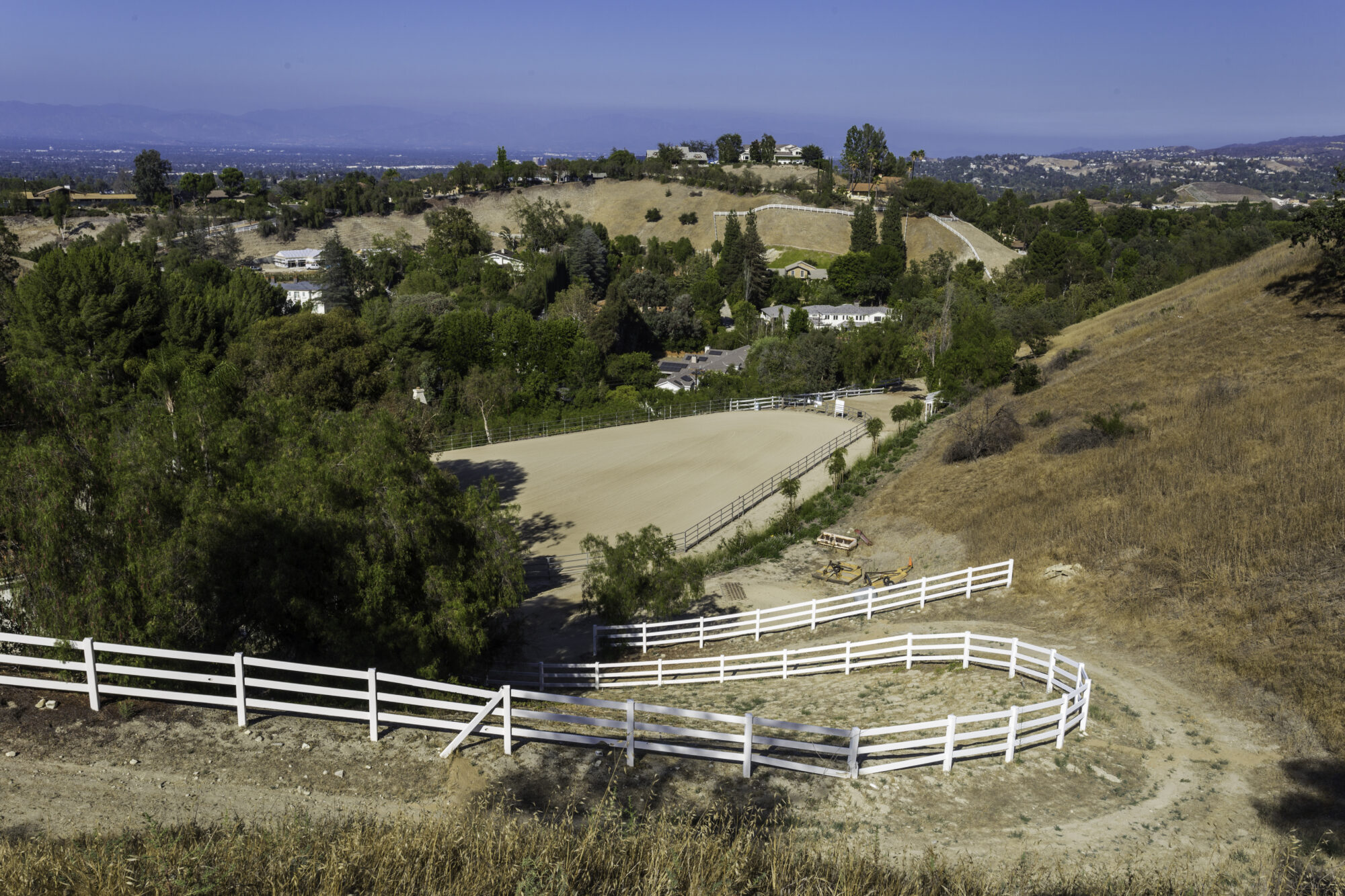
Horse trails, white picket fences, and a culture of discretion – Hidden Hills remains one of Los Angeles’ most enduring retreats, even as price points climb.
By Chris Caggiano
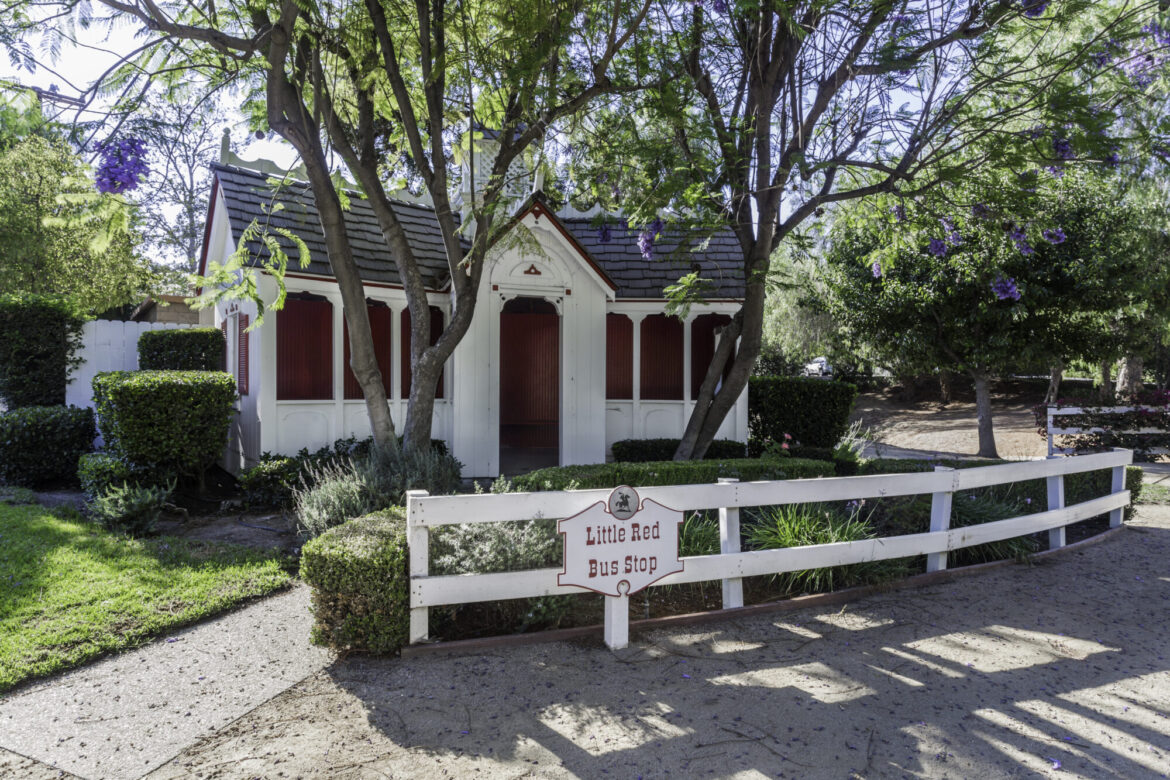
Drive through the entrance of Hidden Hills and the first thing that changes is the air. White picket fences line the roads. Horse trails run alongside nearly every lot, threading the community together the way sidewalks do elsewhere. The feeling, as Compass agent Jeffery Biebuyck puts it, is that of “driving into a different world,” one that has drawn entertainment figures, hip-hop artists, and finance executives alike to settle a few gates apart from one another, largely undisturbed and unnamed by design. Residents, it is fair to say, pay handsomely for the privilege.
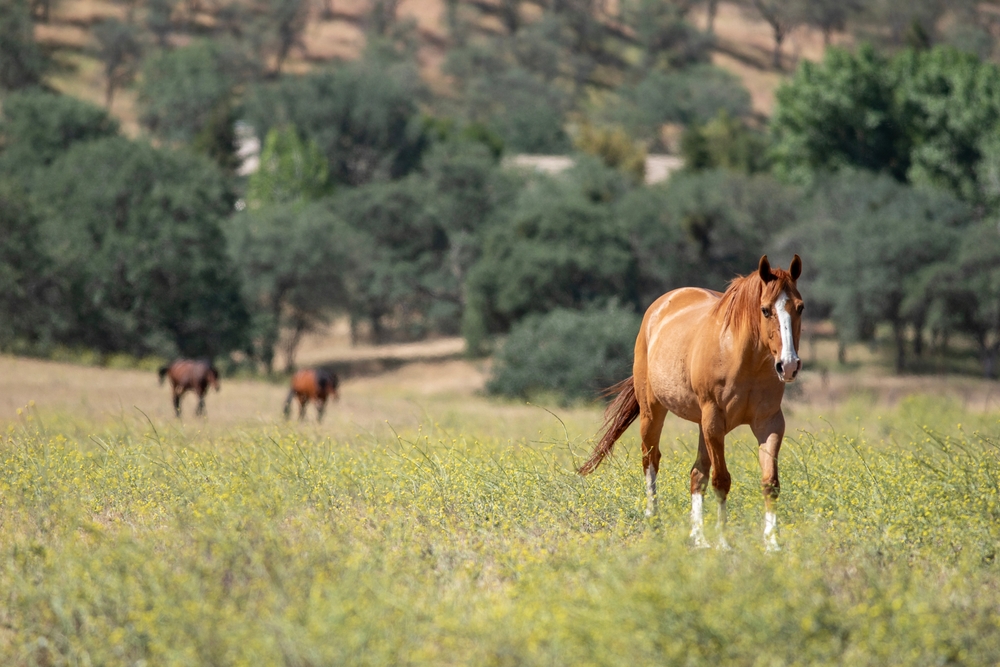
That sense of leaving ordinary Los Angeles behind is not an accident of landscaping. Hidden Hills is one of a small handful of true equestrian communities in Southern California, a designation that shapes nearly everything about how the neighborhood looks and lives. Every property in the roughly 700-home enclave touches a bridle trail. Architectural guidelines require that new construction set aside space for a barn, whether or not the owner keeps a horse. The result is a place built less around square footage than around the experience of space itself, wide, quiet, and set apart from the city surrounding it.
A Little History
Founded in 1950, Hidden Hills took shape as a rural retreat for entertainment figures working in nearby Burbank, a place to keep horses and put real distance between themselves and the city, at a time when a large lot mattered more than a large house. For decades, that priority was written into the building code itself: as much as 80 percent of a typical property was expected to remain dedicated to horse-keeping and open land, with the home occupying a comparatively modest share of the lot.
Biebuyck has worked the Hidden Hills market since 2004, long enough to watch that balance shift. Where horse-keeping once accounted for the majority of a typical lot, new construction has pushed that figure down closer to a quarter of a property’s footprint, as builders respond to a market pushing toward $30 million and $40 million homes. Even so, the architectural committee’s guidelines remain exacting: height restrictions, setbacks, and style parameters that range from traditional to Mediterranean to semi-modern, all calibrated to keep the community’s character intact, even as price points climb.
That tension between scale and tradition is playing out in real time. Roughly twenty new-construction homes are underway, many aimed at breaking past the $20 million mark. Whether the market fully embraces that price point, Biebuyck says, will shape how the next generation of builders approaches a neighborhood that was, not so long ago, built around the opposite instinct: less house, more land, and a horse in the yard.
Through the Gates
The community’s draw has always been privacy. Its history traces back to the studio era in nearby Burbank, when actors and industry figures wanted a retreat close enough to work but far enough to feel removed from it. That instinct still defines much of who buys here. High-net-worth families, entertainers, and executives across industries continue to choose Hidden Hills for the same reason generations before them did: a gated perimeter and a culture of discretion that keeps their home life out of public view.
What has shifted is the range of industries feeding that demand. Biebuyck has seen a rise in buyers whose wealth comes from artificial intelligence ventures and online content creation, a newer class of high earners alongside the traditional entertainment and finance buyers the community has long attracted. Many are arriving from New York, Texas, and the Bay Area, often drawn as much to the neighborhood’s traditional architecture and equestrian character as to its privacy.
Just as much of the demand, though, comes from far closer to home. A meaningful share of buyers are already residents, upsizing, downsizing, or passing a property to the next generation rather than leaving the community altogether. A family might keep a larger home for grown children while moving into something smaller themselves, or hold onto a property as a rental while downsizing once the kids have left. It is not unusual, Biebuyck notes, for a single family to hold more than one property inside the gates at once.
Another significant group is arriving from nearby Los Angeles neighborhoods such as Encino, Sherman Oaks, and Studio City, where rising safety concerns have sent longtime residents looking for the kind of physical security a gated, guarded community provides. Together, these local and regional buyers make up the majority of activity in Hidden Hills, a market sustained, above all, by people who already know the value of what is behind the gates.
Life Inside
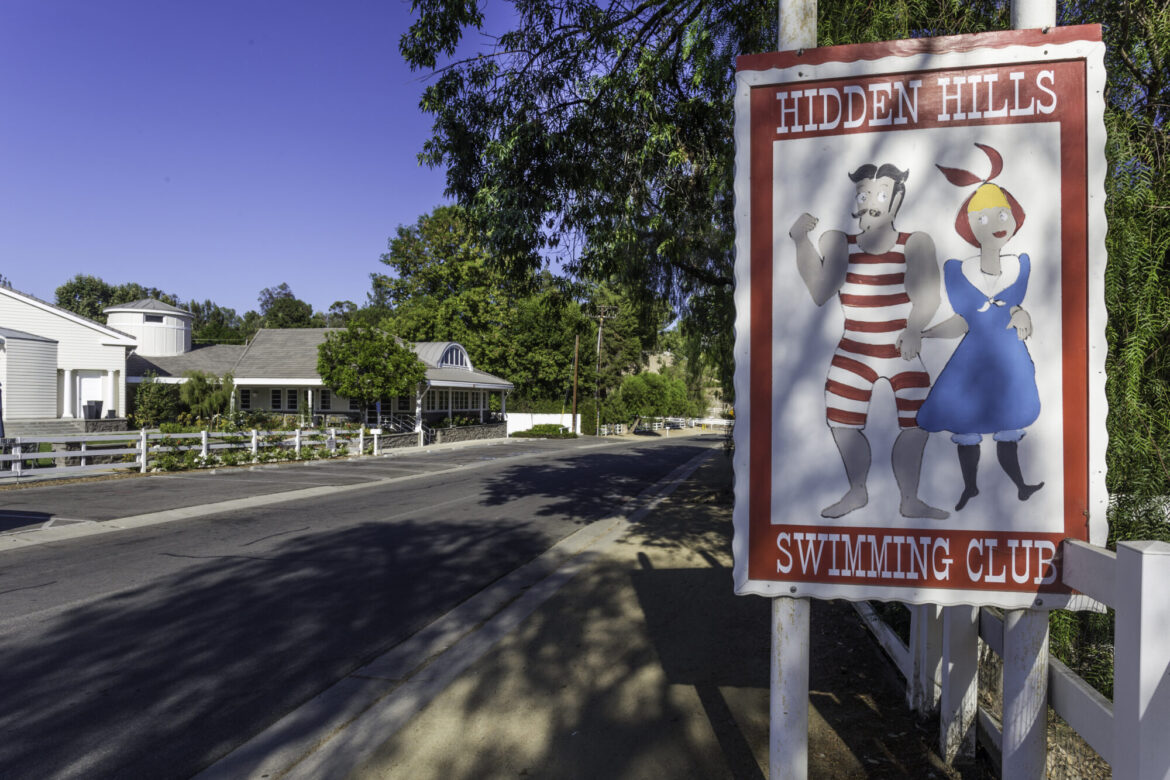
The town keeps itself deliberately small. There are no retail stores, no restaurants, no offices inside Hidden Hills’ gates, only homes, horse trails, and a single public school, Round Meadow Elementary, tucked just inside one of the community’s three entrances. For dining and shopping, residents head a few minutes down the road to The Commons at Calabasas, keeping the enclave itself free of commercial traffic and, by extension, free of the visitors that traffic would bring.
What the community lacks in storefronts, it makes up for in shared spaces built around its equestrian identity. Three riding arenas host everything from dressage practice to the town’s annual Fiesta, which is Hidden Hills’ annual fall community festival, dating back to the community’s earliest years. Long-running customs like Church on Horseback, an outdoor worship service attended atop your steed of choice, and a summer calendar of barbecues and parades give residents a rhythm of community life that has little to do with real estate value and everything to do with why people stay for generations.
That same informality carries into how residents actually live alongside one another. New arrivals are welcomed with community parties rather than left to introduce themselves, and it doesn’t take long before a newcomer finds themselves on the Fiesta committee or planning one of the town’s summer barbecues. Children move between the community theater, the summer camp, and the riding arenas, while Hidden Hills sits within a school district recognized among the top in the country, a draw for the families who make up a substantial share of the community.
That sense of a small town operating at an extraordinary price point extends into the surrounding area as well. Calabasas, its neighboring city, carries more than twenty gated communities of its own, giving the broader area a concentration of privacy-minded living that is difficult to find elsewhere.
Looking Ahead
Even in the most rarefied of communities, there are practical concerns to weigh. Fire risk and insurance have become a standard part of evaluating any property in this part of the Santa Monica Mountains corridor, particularly in the years following the Woolsey Fire. Insurance rates rose sharply in its wake before stabilizing as more carriers returned to the area. Biebuyck now builds an insurability check into the early stages of every transaction, treating it with the same weight as architectural guidelines or lot restrictions.
That kind of due diligence has become part of what it means to buy well in a community like this one. As new construction tests the upper edges of the market and a broader range of buyers finds their way through the gates, Hidden Hills continues to offer what it always has: space, privacy, and a version of Los Angeles built to feel far removed from it.
About the Expert: Jeffery Biebuyck is a real estate agent with Compass, based in Calabasas, California. He specializes in luxury residential properties in Hidden Hills and the greater Los Angeles area, working with high-net-worth clientele.
This article is intended for informational purposes only and does not constitute legal, financial, or investment advice. The views and opinions expressed herein reflect those of the individuals quoted and do not represent an endorsement of any company, product, or service mentioned. Readers should conduct their own due diligence and consult qualified professionals before making any decisions.