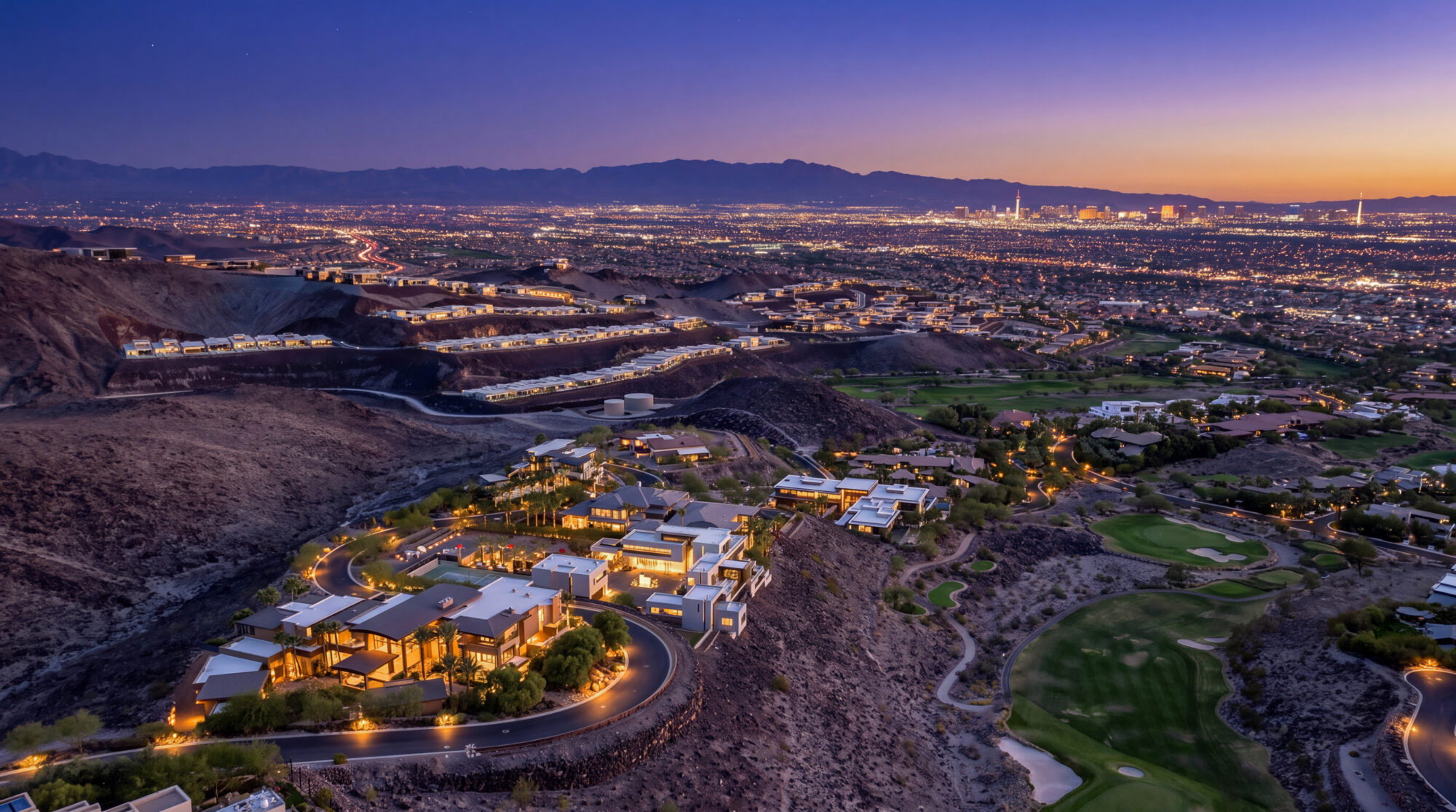
In the mountains that ring the valley, guard-gated enclaves and branded towers have turned the Strip from a destination into a view – and turned Las Vegas into a place where the wealthy choose to live
By Chris Caggiano
For most visitors, Las Vegas begins and ends on the Strip: the casinos, the shows, the corridor of neon that has defined the city for generations. For the ultra-luxury buyer, the Las Vegas that matters sits a short drive away, in the mountains around the valley floor. From there, the Strip is simply the view.
“Just 15 to 20 minutes away from the Strip, it’s a whole new world of Vegas,” says Natalia Harris. She and her husband and business partner, Ben Harris, lead a luxury team at Las Vegas Sotheby’s International Realty. Much of that world is new. Most of the real estate at the top of the market didn’t exist a decade ago. Over roughly the past ten years, developers have cut guard-gated golf communities into the hillsides, and buyers, many arriving from California and Seattle, have kept pace with every new phase.
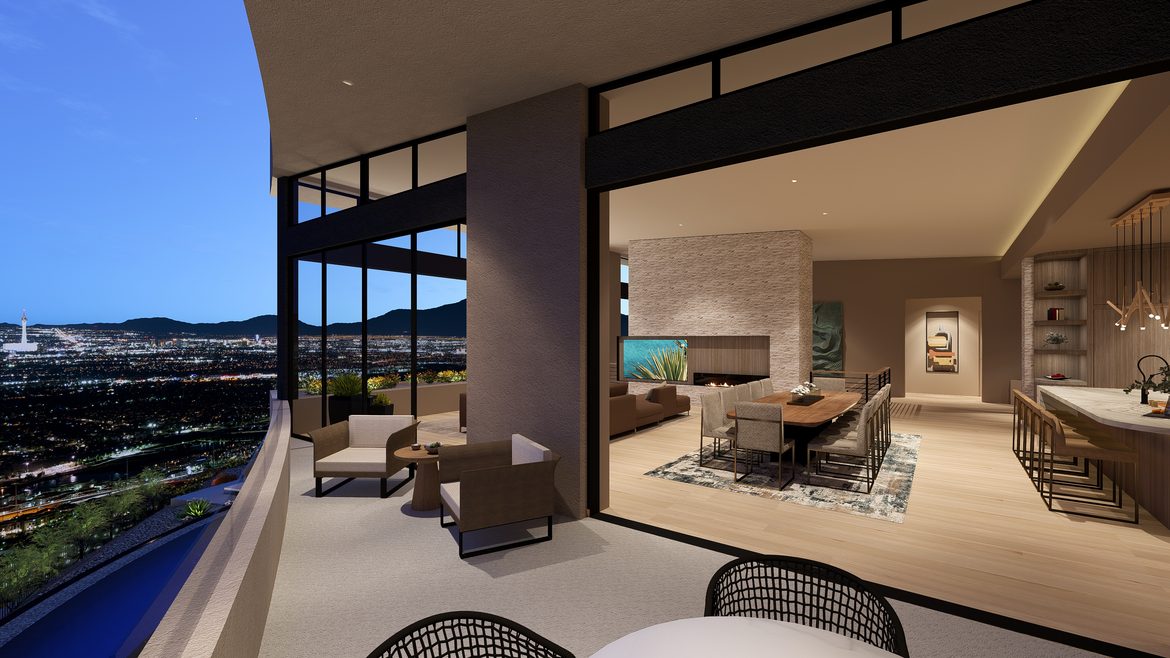
The result is a market that defines luxury differently than the city’s reputation might suggest. A million dollars once counted as luxury in Las Vegas. By the Harrises’ reckoning, luxury now really begins in the $2 million to $5 million range, and ultra-luxury generally starts around $10 million. At that level, buyers expect a home that improves every part of daily life: wellness, workspace, security, privacy. Above all, they expect a view.
The Strip Becomes the View
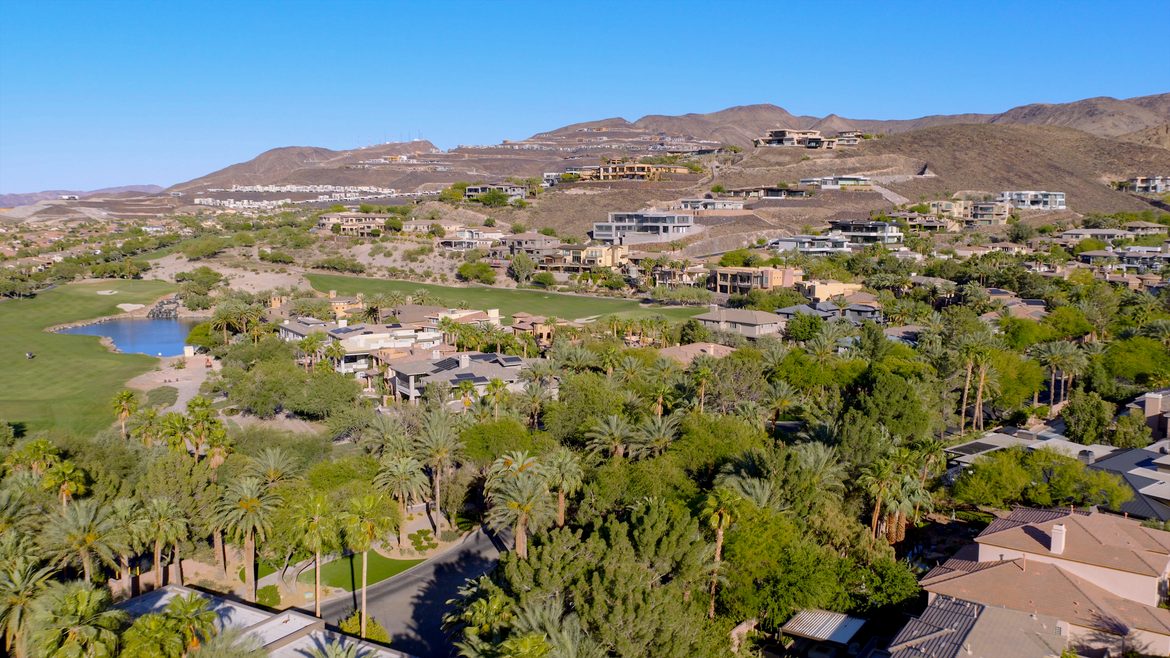
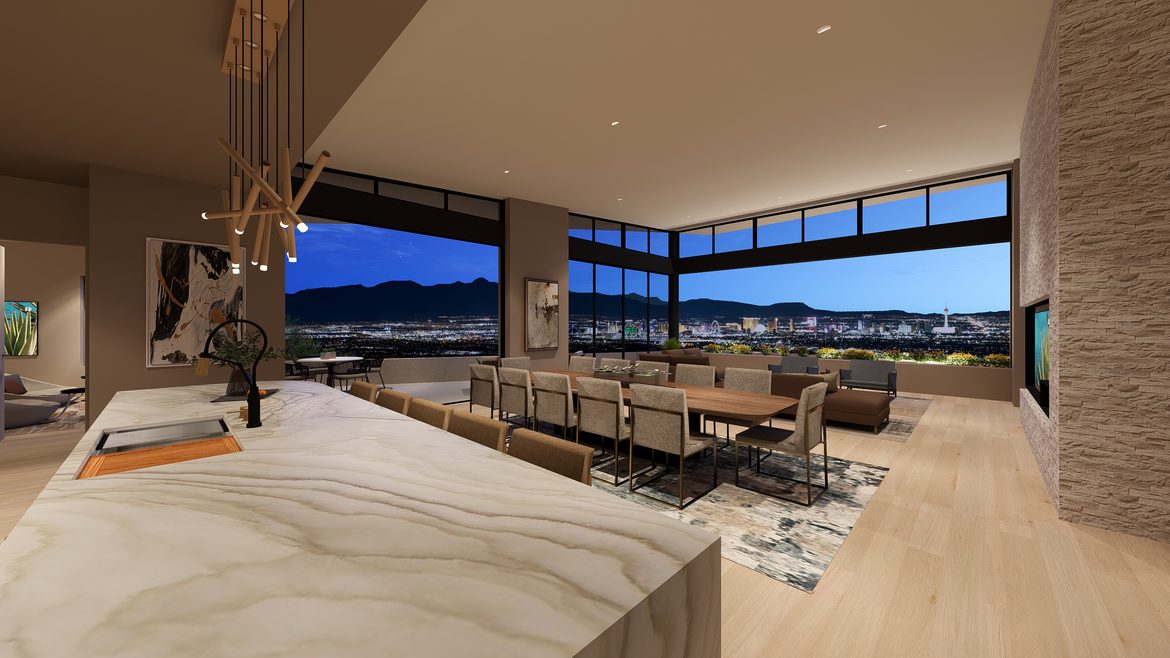
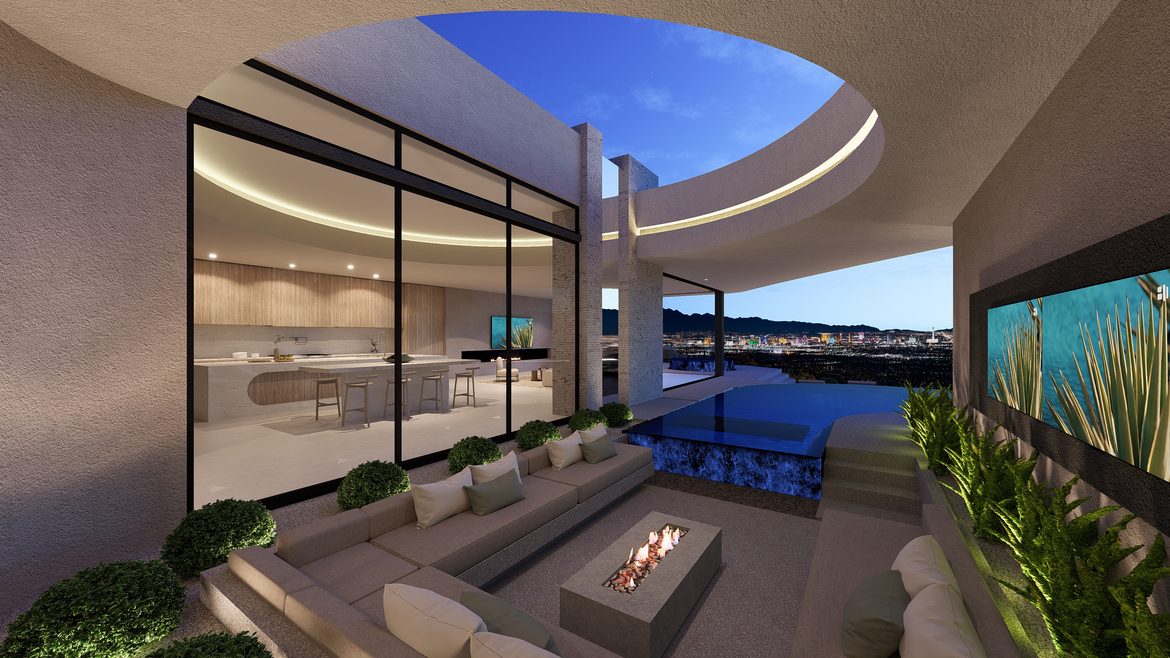
For buyers relocating from the West Coast, a Strip view plays the role an ocean view once did. It’s the feature that justifies the address. Because the valley floor is flat, that view is available almost only from higher ground, which is why the newest high-end construction has climbed into the foothills.
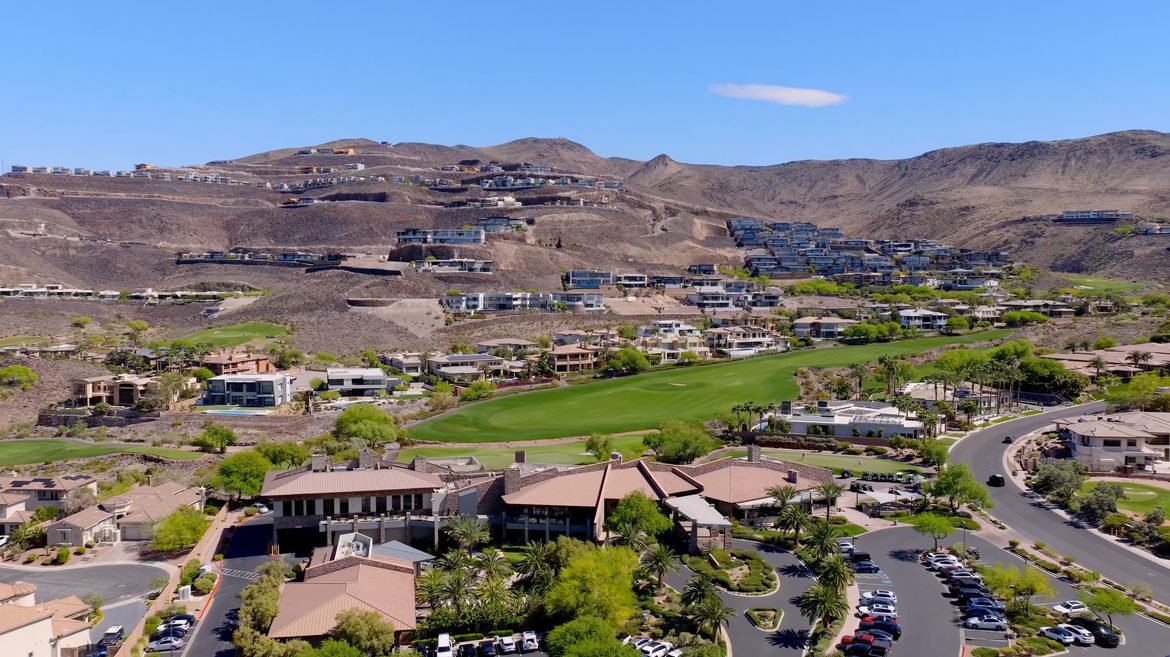
MacDonald Highlands shows this most clearly. It’s a guard-gated golf community in the Black Mountain foothills of Henderson, the city that borders the Strip to the east. Its older homes were built around the golf course before development moved up the mountain. They generally trade between $1.5 million and $3 million and look out over both the fairways and the skyline. The newer section higher up is a different market entirely. Much of it is ten years old or less, and some is still under construction. The Harrises currently have listings there between $15 million and $20 million. They’re also working with a client building a $30 million spec home for resale, and a recently completed private residence nearby is valued at around $40 million.
The terrain itself is part of the appeal. The slope drops so steeply that Ben Harris compares the effect to the Hollywood Hills or Malibu, with yards that seem to fall away toward the valley. Ascaya, on the same mountain, follows a similar model.
The most notable addition goes up rather than out. Four Seasons Private Residences Las Vegas is now under construction inside MacDonald Highlands, with 171 residences in two towers that step down the hillside, each oriented toward the Strip. It brings branded high-rise living into a guard-gated mountain community for the first time. Natalia Harris expects it to attract a buyer of its own: collectors who follow the Four Seasons brand from city to city and add Las Vegas to a portfolio rather than choosing it as a primary home.
That fits a broader pattern in the market. Some Las Vegas buyers live there full-time. Others spend just enough time to establish residency and benefit from Nevada’s lack of a state income tax. For still others, a Las Vegas home is their third or fourth.
The Harrises are also open about which side they take in what they call the battle of the Strip view. Summerlin, on the valley’s western edge, has its own elevated communities. In their view, though, Henderson wins, because it takes in the full length of the Strip, the sunset beyond it, and the Sphere.
What Privacy Is Worth
If views set the baseline, the community sets the price. According to Natalia Harris, the same house can command $500 to $1,000 more per square foot depending only on which gates it sits behind.
The clearest example is The Summit Club, a 555-acre Discovery Land Company community in Summerlin near Red Rock Canyon. Its residents include generational-wealth families, some of whom own Discovery Land properties in other states, along with names like Mark Wahlberg, Golden Knights owner Bill Foley, and the Fertitta family. The golf and the clubhouse, which anchors the community’s social life, matter. The Harrises say the real draw, though, is the company. “When you’re there, anybody around you is somebody,” Natalia Harris says.
That exclusivity is enforced in practical ways. There’s no signage, and a driver can pass the entrance, hidden behind a line of palms, without knowing it’s there. Visitors can’t simply drop something off at a friend’s house. Security follows guests to the address they gave and makes sure they leave the same way. Ben Harris calls it the most private community in the valley.
For buyers who are recognized everywhere else, that kind of discretion is the whole point rather than an amenity. It also explains why a premium of hundreds of dollars per square foot attaches to the gate rather than to the house.
From Sin City to Sports Capital
What brings these buyers to Las Vegas has changed as much as where they live once they arrive. Gambling built the city, but the Harrises now describe it as one attraction among many, and for plenty of visitors, not an attraction at all.
Entertainment shows the shift clearly. Frank Sinatra and Elvis came to Las Vegas late in their careers. Today’s headliners, like Bruno Mars, arrive at their peak, and the Sphere has made the city a required stop for major touring acts.
Sports have pushed the change further. The Golden Knights and the Aces have both won championships, and the Raiders are firmly established. Formula 1 has become an annual fixture on the Strip. The Super Bowl, which Las Vegas hosted in 2024, returns in 2029, and a ballpark for the Athletics is rising on the Strip.
Those same events expose high-net-worth visitors to communities they never knew existed. Once they add the tax advantages and an airport and private aviation within about 15 minutes, the decision comes quickly. The Harrises say some Silicon Valley tech executives have moved their companies to Las Vegas partly for a simpler reason: people are far more willing to take a meeting when the invitation includes a great dinner and a show.
Life Beyond the Strip
The Strip’s influence has also spread into the neighborhoods. Over the past five to ten years, national builders have filled in much of the open land around the Strip, and restaurants and retail have followed, bringing the Strip’s standards to the places where residents actually live.
Dining shows this most clearly. The city’s reinvention began with food, when celebrity chefs opened restaurants on the Strip. “You’re not coming here for a cheap steak anymore,” Natalia Harris says. Now much of the most interesting dining comes from Strip veterans. Former chefs and managers are opening their own places for locals, bringing Strip-level experiences with them. Guest House in Town Square, opened by operators with Strip hospitality backgrounds, hides a speakeasy-style wine locker in back.
That sense of discovery carries through the rest of the evening. Ben Harris describes a typical night out as a sequence that moves from dinner to a lounge with a DJ to a speakeasy. Nearly every new opening, he says, conceals something behind a door. The word the Harrises keep returning to is “experiential.” That idea extends to Area15 and the Museum of Ice Cream, both of which appeal to families as much as adults.
Shopping has made the same move from the Strip into the neighborhoods. Luxury retail first arrived with flagship boutiques at Crystals. Downtown Summerlin then brought an upscale open-air shopping district into a residential area, and Henderson has a similar project on the way.
Beyond the restaurants and boutiques, the landscape offers its own escapes. Lake Las Vegas now includes a man-made island of custom waterfront lots with private docks, still within sight of the Strip. Lake Mead is about 30 minutes from the Strip for boating and water sports. Hikers head to Red Rock Canyon, and in winter there’s skiing on Mount Charleston, roughly 30 to 40 minutes away.
Just Getting Started
The flow of buyers from California and Seattle hasn’t slowed, the Harrises say, and they expect a professional baseball team, along with the prospect of an NBA franchise, to reshape the city further. Major construction continues on the Strip, from the new ballpark to Hard Rock’s redevelopment of the former Mirage site.
The Strip is still at the center of all of it. What has changed is where the ultra-luxury buyer stands in relation to it. For decades, people came to Las Vegas to experience the action at its center. The buyers reshaping its luxury market came for the view, and they’re staying for everything else.
About the Expert: Natalia and Ben Harris are a husband-and-wife luxury real estate team with Las Vegas Sotheby’s International Realty. They specialize in MacDonald Highlands and Henderson and serve clients in sports, entertainment, technology, and business across the Las Vegas Valley.
This article is intended for informational purposes only and does not constitute legal, financial, or investment advice. The views and opinions expressed herein reflect those of the individuals quoted and do not represent an endorsement of any company, product, or service mentioned. Readers should conduct their own due diligence and consult qualified professionals before making any investment decisions.
Hero Image Photo Credit: Justin Violette