
“Luxury” has become one of real estate’s most overused labels, applied to every kitchen and patio on the market. Washington, D.C. agent Daryl Judy argues that it isn’t about what a home costs, but how much friction it removes from everyday life.
By Chris Caggiano
Real estate has a favorite adjective, and it has stopped doing any work. At the top of the Washington, D.C. market, “luxury” turns up in nearly every listing. Of the 33 homes listed in the city at $5 million or more in September 2026, 27 used the word in some form, according to a review of Bright MLS listings by Daryl Judy, Associate Broker at Washington Fine Properties.
If the word is going to mean anything, Judy argues, it has to mean something other than features or finishes. Luxury, to him, is the reduction of friction. “It’s not a price point,” he says.
The overuse is fairly recent. A decade ago, Judy says, you didn’t hear the word nearly as often. Now it has been stretched over so many countertops and courtyards that it no longer tells a buyer anything. He admits he isn’t innocent of the habit himself. “I have to remind myself that if I need to use the word luxury, it probably isn’t,” he says. That’s why the definition matters: taking it seriously means looking past the marble and the top-tier appliances to what a home actually removes from daily life.

What Friction Looks Like
Friction is the small, recurring cost of getting through a day: the tasks, decisions, and interruptions that demand attention whether or not they ever become real problems. In a house, much of it is built into the plan.
A laundry room in the basement means hauling baskets up two flights of stairs every week. A garage without direct entry means carrying groceries through the rain. A condo building without a package room means deliveries piling up in the lobby, or disappearing from it. A long driveway in a snowy climate means a plowing contract or an early morning with a shovel. None of these shows up in listing photos, and none seems like much during a 30-minute showing. But each one repeats week after week, and together they shape how a house feels long after the novelty wears off.

Beyond the Floor Plan
Not all friction is a matter of design. Some of it is removed by the people who come into the house, and Judy’s examples here are notably unglamorous. One is a cleaning crew that comes in on a regular schedule, so the house gets cleaned without anyone having to think about it. Another is a babysitter trusted enough that parents can leave for the evening without running through a mental checklist. Neither is remarkable for what it costs. What they share is reliability: their value lies in not having to manage them at all.
Friction isn’t only a matter of tasks. It’s also interruption: noise, notifications, and anything else that pulls attention away from the moment. Judy’s example is an evening on a front porch with a glass of bourbon and not a soul in sight. There’s no traffic, no planes overhead, and no phone pinging. Nothing needs doing, and nothing is intruding.
The same principle can point in the opposite direction. At his place in downtown D.C., Judy can walk from his office, change, and be at an outdoor table for dinner three blocks away, with Pilates a block from his door. There, the luxury isn’t quiet but proximity: the commutes, parking, and logistics that would otherwise fill an evening simply drop away. Solitude and a busy city block have little in common, but each removes friction for the person who wants it.
Friction doesn’t wait until move-in day, either. Buying a home can generate as much of it as owning one: a lender who misses a deadline, a settlement company that loses a document, a closing that leaves the buyer chasing answers and coordinating everyone involved. A beautiful house is less of a luxury if getting into it was an ordeal.
The Burden of More
Here the definition gets sharper, because it separates luxury from price entirely. If luxury is the reduction of friction, spending more doesn’t guarantee more of it. Money can add friction as easily as it removes it.
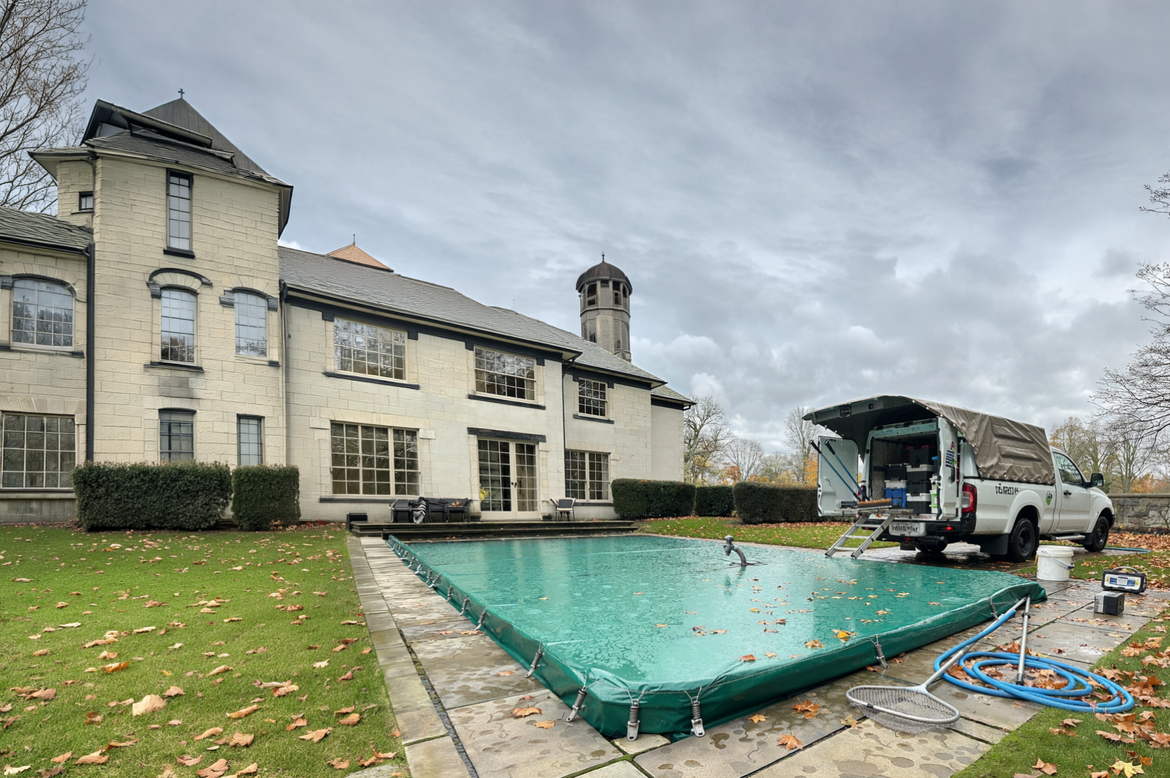
High-end real estate shows this clearly. Nearly every feature that makes a property impressive on paper comes with an obligation. A pool needs weekly service and seasonal opening and closing. A waterfront lot brings flood insurance and a seawall that has to be inspected and repaired. A wine cellar needs climate control that someone has to monitor, a whole-house generator needs regular testing, and a smart-home system needs a technician when it fails. Acreage needs landscapers, and a second home needs someone to check on it while it sits empty. Each obligation is manageable on its own. Together they can turn an owner into the operator of a small facility.
That’s why a move that looks like a step down can be the more luxurious choice. Judy has seen buyers leave 10,000-square-foot houses for condos a fraction of the size, giving up square footage to shed the contractors, the repairs, the systems, and the constant worry about what might go wrong next.
One of his clients is weighing a version of that trade now. The client owns a second home in D.C. and still loves it, but keeping it up has become a job of its own: landscaping, mechanical service, cleaning, and a steady run of general repairs. The plan is to sell and move into a one-story condo with no outdoor maintenance at all. Nothing about the house has gotten worse. What has changed is how much of its owner’s attention it demands. By the measure that matters here, letting it go is the gain. Which trade counts as luxury, though, depends on what a particular owner finds burdensome.
Where Price Fits
None of this settles an obvious objection. Many of the things that remove friction cost money: a cleaning crew, a trusted babysitter, a porch with no neighbors in sight, a condo within walking distance of everything. It’s fair to ask whether “friction removal” is just a polite term for wealth.
Money helps, but it doesn’t decide the question. As the pool, the seawall, and the oversized house show, spending more can add friction as readily as it removes it. And much of what removes friction has little to do with budget. A laundry room on the bedroom level, a garage that opens into the kitchen, and a building with a package room aren’t premium features, yet each spares an owner something every week. What separates luxury from mere expense is whether the money goes toward removing demands or accumulating them.
Price can buy luxury. It doesn’t define it.
About the Expert: Daryl Judy is an Associate Broker with Washington Fine Properties in Washington, D.C., where his practice focuses on high-end residential properties throughout the D.C. area.
This article is intended for informational purposes only and does not constitute legal, financial, or investment advice. The views and opinions expressed herein reflect those of the individuals quoted and do not represent an endorsement of any company, product, or service mentioned. Readers should conduct their own due diligence and consult qualified professionals before making any investment decisions.