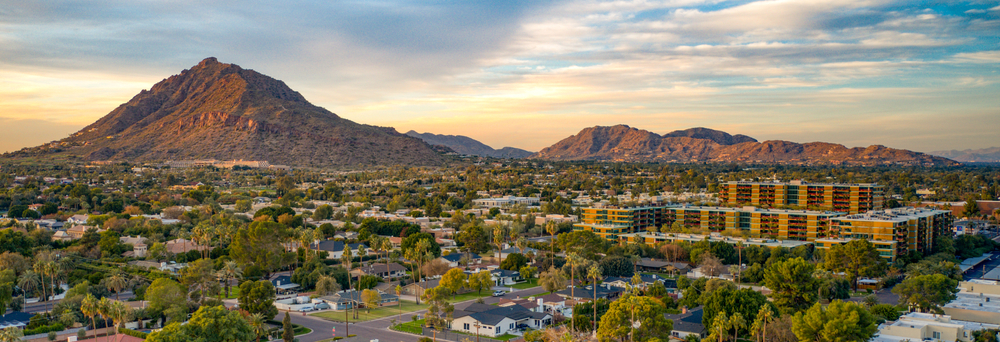
The snowbirds still come to Scottsdale. But increasingly, they’re not going home – trading a seasonal retreat for a permanent one, and rebuilding the desert in the process.
By Chris Caggiano
Scottsdale and Paradise Valley have spent decades collecting superlatives about record-breaking home prices, but the ceiling keeps resetting faster than the market can absorb the news. A 20,919-square-foot estate on Mockingbird Lane in Paradise Valley closed this July for $40.24 million in an all-cash deal, breaking a record set just seventeen months earlier at $33.5 million. By the first two months of this year alone, ten Paradise Valley homes had already closed above $10 million, compared with nineteen for all of 2025.
These sales, while on the higher end of the scale, are hardly outliers. “It’s like gangbusters out here,” said Lisa Roberts of Sotheby’s International Realty, a Scottsdale-based agent who works the ultra-luxury tier. Roberts has watched the definition of “record” shrink into meaninglessness over her career. A $6 million closing used to be front-page news. Now, she said, those transactions happen “all day, every day.”
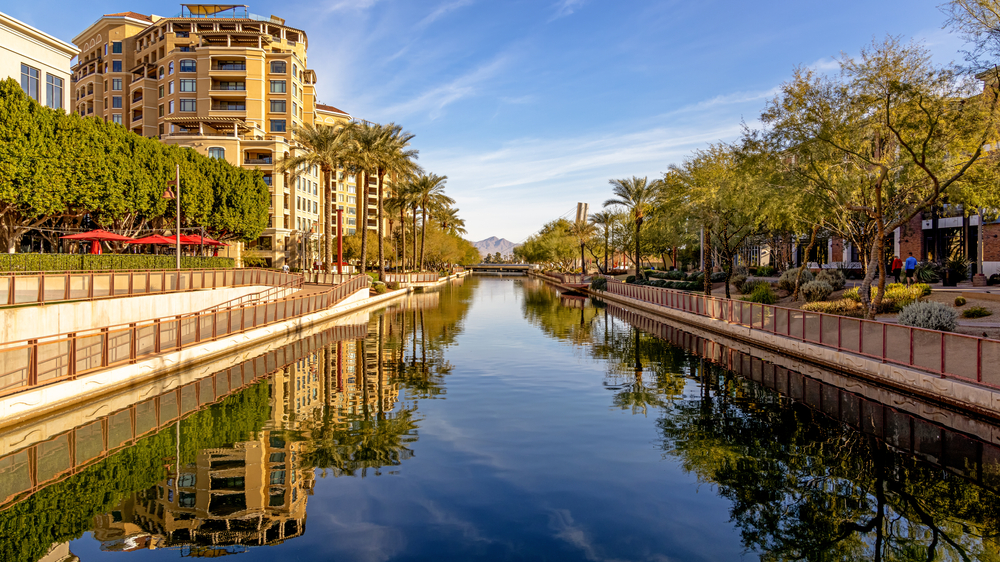
A Hot Market. Literally.
In the summer months, the Phoenix area can see long stretches of days above 100 degrees Fahrenheit. But the heat is also on at the luxury end of the real estate market. Admittedly, the broader Phoenix housing market has cooled and normalized over the past few years, but that correction has almost entirely skipped the top of the pyramid.
Homes in the top price quartile of the Phoenix metro rose 6.2 percent year-over-year in 2026, while lower price tiers stayed essentially flat. The reason is structural, not sentimental: buyers at the $10 million-and-up level pay cash, so they’re largely insulated from mortgage rates and borrowing costs that still weigh on the rest of the market. Limited inventory in Paradise Valley, Silverleaf, and Desert Mountain compounds the effect – there simply isn’t enough ultra-luxury product to meet demand, which keeps prices climbing even as the broader market catches its breath.
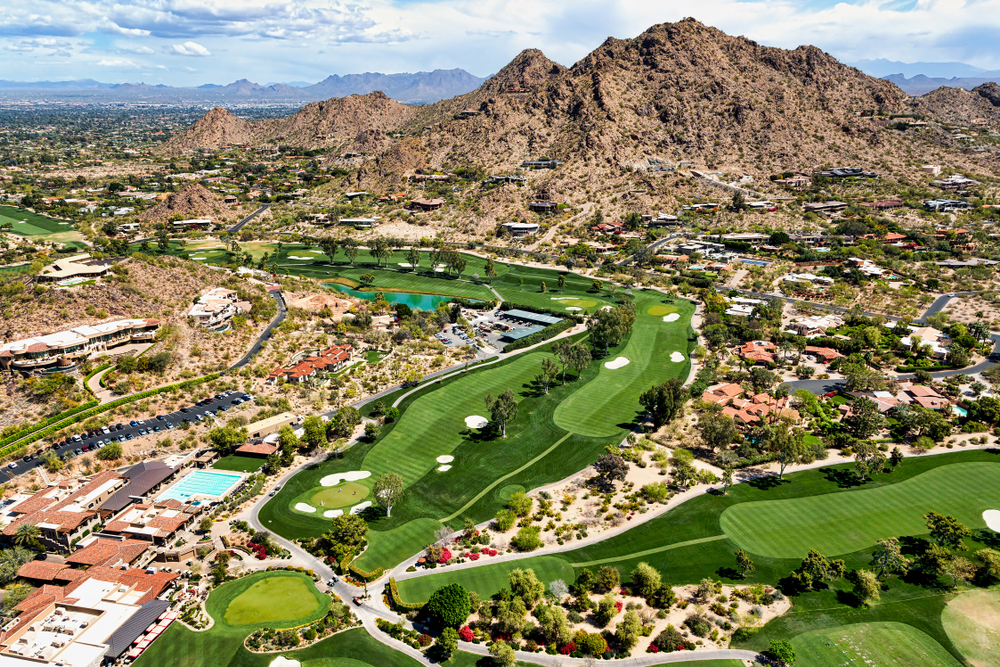
That scarcity has a geography to it. Paradise Valley now carries a median list price between $4.7 million and $5.9 million, and buyers who assume they can find something for less quickly discover otherwise. “You can’t really get much of anything under $4 million,” Roberts said – a typical lot alone runs over $3 million. Priced-out buyers regularly redirect north, where newer construction and larger parcels are still available for people willing to drive a bit farther from the original town center.
The Tax Math
Ask Roberts where the money is coming from, and the answer arrives without hesitation: California. It used to be Canadian buyers filling that role; now it’s almost entirely people relocating from Los Angeles, the Bay Area, and everywhere in between.
For a lot of people, it all comes down to Arizona’s favorable tax environment. Arizona has taxed all income at a flat 2.5 percent since 2023, the lowest rate of any state that taxes income at all. California’s top marginal rate is 13.3 percent, kicking in above $1 million in income and applying to capital gains as ordinary income – a particularly sharp edge for the entrepreneurs and investors populating this migratory buyer pool. On a $500,000 income, that gap alone is worth roughly $10,000 to $20,000 a year, before accounting for Arizona’s comparatively modest property tax rates.
What makes the move workable rather than merely appealing is proximity. Scottsdale Airport is about twelve minutes from the Silverleaf area, with Los Angeles about fifty-five minutes beyond that – close enough that someone can shift their tax residence to Arizona without fully severing their California business ties. That logistics reality explains a shift Roberts has watched firsthand: buyers at this level are increasingly building or buying primary residences rather than seasonal escapes, even though the lock-and-leave lifestyle hasn’t disappeared. The desert isn’t just a place to visit anymore. For a growing share of this buyer pool, it’s home.
Where the New Money Is Building
Silverleaf, Desert Mountain, and DC Ranch remain the addresses that anchor the top of the market, with transactions ranging from $5 million past $30 million and estates above $15 million no longer unusual. But two newer developments show where ultra-luxury Scottsdale is expanding next, and they point in different directions.
Privada, tucked into the Pinnacle Peak foothills adjacent to the Four Seasons Resort at Troon North, takes the compound approach: just 51 residences, including custom homes on lots ranging from a quarter-acre to 2.5 acres, designed explicitly around privacy and low density. At the other extreme sits Optima McDowell Mountain Village, a roughly $1 billion, six-tower vertical community breaking ground on 22 acres near Scottsdale Road and the Loop 101. It’s being billed as the largest private rainwater-harvesting site in the country, with residences engineered to use a fraction of the water of a typical Scottsdale home – a bet that sustainable, high-density luxury has a real audience in a desert market that has historically prized acreage over amenities.
Back to Before
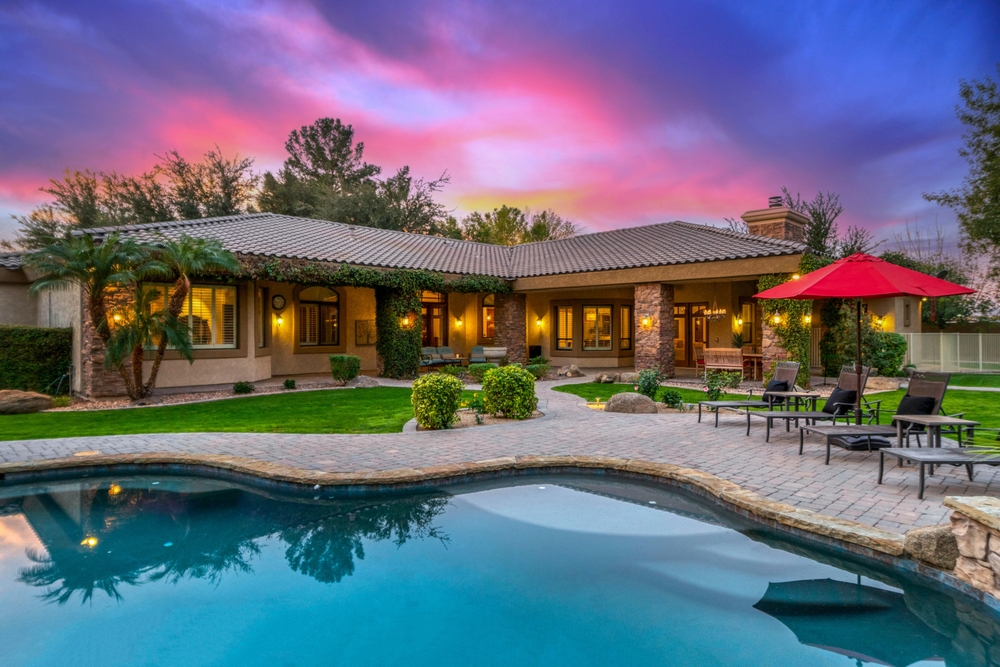
Buyers moving in full-time aren’t inheriting Scottsdale’s existing taste; they’re overwriting it with the house they actually want to live in. Scottsdale’s signature look through the 1990s and early 2000s was distinctly Tuscan – travertine floors, faux-painted walls, Venetian plaster – a style suited to a second home meant to be admired more than lived in day to day. Roberts said that look now reads as dark and heavy to most buyers, who are gutting those homes or building new ones in a cleaner, contemporary style: glass, clean lines, and what she calls “Santa Barbara white,” occasionally softened with a touch of French country.
That new style is not unprecedented here. Frank Lloyd Wright began building Taliesin West in the McDowell Mountain foothills in 1937 as his winter home, studio, and architecture school, and used it until his death in 1959. It is now a National Historic Landmark and, since 2019, a UNESCO World Heritage Site. Wright’s approach was organic modernism built for the desert on its own terms – glass, clean geometry, materials pulled from the site itself – closer in spirit to today’s contemporary pivot than to the ornamental Tuscan look it’s replacing. So, the current shift toward cleaner lines isn’t Scottsdale importing an outside aesthetic; it’s the market circling back toward the architectural instincts the area had before Tuscan villas became the default.
Built for Living
The same overwriting happens at a smaller scale inside the house. The RV garage has quietly become one of the most valuable line items in a Scottsdale listing. “A home that has an RV garage is going to sell for far more than a home that doesn’t,” Roberts said. What’s notable is that these garages don’t always hold an RV. Buyers convert them into woodworking shops, art studios, and private gyms – a transient feature repurposed by people who aren’t going anywhere.
Guest casitas follow a pattern of permanence: full kitchens and separate living quarters built for extended family to live in or visit for extended stretches, not a spare room for the occasional overnight guest. Wellness has moved indoors too. Roberts described growing demand for dedicated massage and wellness rooms inside the home itself, which she framed candidly as an attempt “to relieve the American anxiety.” Where a decade ago that need might have sent someone to a resort spa, buyers are now building the amenity directly into a house they expect to occupy every week of the year, not just during high season.
The membership side of Scottsdale life has adjusted accordingly. Buyers join a private gym known locally as “the village,” sign up for pickleball clubs with waitlists that stretch well beyond a single season, and angle for a place at DC Ranch Country Club or Silverleaf. For those unwilling to wait, Ancala Country Club offers a shorter path to a private club experience. None of it reads as seasonal indulgence anymore – it’s the routine infrastructure of people settling in, not visiting.
Taken together, the RV garage turned art studio, the wellness room instead of the resort trip, and the contemporary renovation replacing the Tuscan villa are the same story told at three different scales. Buyers arriving in Scottsdale now aren’t adapting to what they find. They’re building the place they intend to live in full-time – and in doing so, they’re pulling the area’s architecture back toward instincts Frank Lloyd Wright had about this desert nearly ninety years ago.
About the Expert: Lisa Roberts is a real estate agent based in Scottsdale, Arizona, specializing in the ultra-luxury residential market across Scottsdale and Paradise Valley.
This article is intended for informational purposes only and does not constitute legal, financial, or investment advice. The views and opinions expressed herein reflect those of the individuals quoted and do not represent an endorsement of any company, product, or service mentioned. Readers should conduct their own due diligence and consult qualified professionals before making any investment decisions.