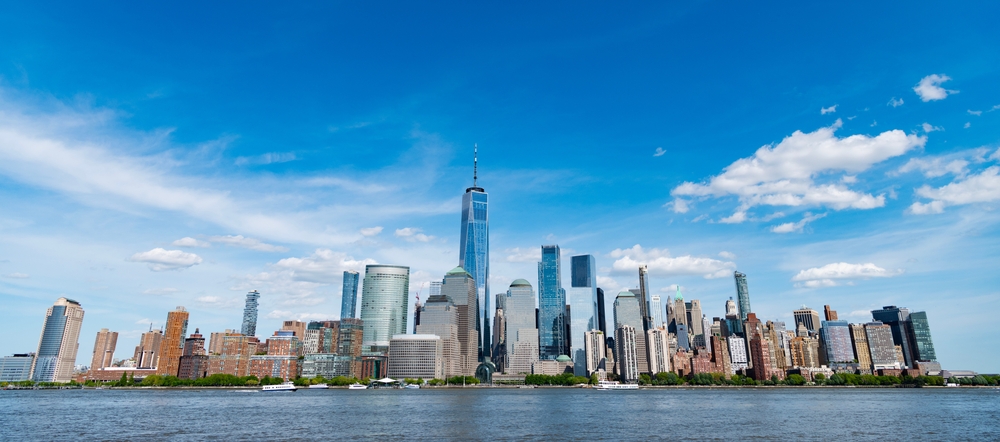
A decade of office-to-residential conversions gave downtown’s towers room for amenities that new construction finds hard to match – and pulled a neighborhood that used to empty out by six into one that truly comes to life at night.
By Chris Caggiano
In 2009, if you wanted dinner in the Financial District, you didn’t stay in the Financial District. Dezireh Eyn, CEO and co-founder of Platinum Forbes Global Properties, whose Manhattan brokerage has operated downtown since 2005, remembers the routine: go home or take a twenty-minute cab ride somewhere else. Staying downtown for the evening simply wasn’t on the table. “It was a complete ghost town,” she says of the era – bustling by day, empty by six.
That neighborhood no longer exists, and what replaced it wasn’t a single upgrade – better restaurants, or nicer buildings, or more retail – but a structural transformation that produced all three at once.
The Financial District’s residential buildings are, overwhelmingly, converted prewar office towers, built with the narrow floor plates and perimeter offices that older construction required, since every office once needed direct access to a window. That layout became a liability for modern office tenants, who wanted large, deep, open floors for trading desks and bullpen seating.
The same narrow floor plate that made them obsolete as offices made them well suited to residential conversion: every apartment needs a window, and a building with windows around its full perimeter converts far more cleanly into individual units than a deep floor plate would, which leaves interior space with no natural light. That’s the structural fact behind the neighborhood’s transformation – and the density of residents those conversions brought downtown is what pulled retail and nightlife in behind them.
The Perks of Conversion
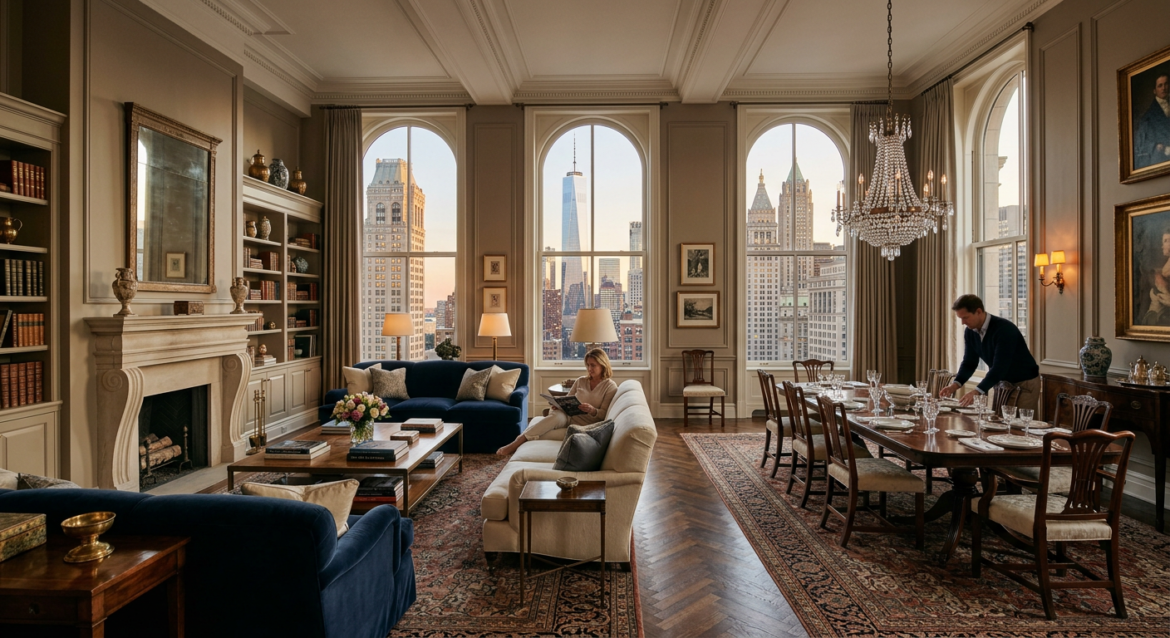
Downtown’s buildings are now competing directly on amenities, and treating that competition as existential rather than optional. Eyn points to the private workspace as the clearest example of where amenity expectations now sit. It’s not enough for a building to offer a shared co-working lounge anymore; with remote work now routine, residents want private booths where they can take a call with real privacy, and buildings that don’t offer them are losing tenants over it. “We’ve seen buildings lose tenants for just not having a private workspace,” Eyn says.
Conversion itself is where the neighborhood’s amenity depth comes from – former commercial space repurposed for residents rather than torn down and replaced. At buildings like 55 Broad Street, 25 Water Street, and 160 Water Street – office-to-residential conversions Eyn cites as representative of the neighborhood’s rental stock – residents now get rooftop pools, full fitness centers and spas, screening rooms, and a separate private dining room for hosting.
At the top of the market, the effect is even more dramatic. One Wall Street, the Art Deco former headquarters of Irving Trust, preserves its original mosaic-tiled banking hall as a resident amenity space, and pairs it with a 38th-floor pool and 100,000 square feet of additional amenities under the building’s private club. The building’s ground floor houses a Whole Foods and the first U.S. location of Printemps, the Parisian department store – retail chosen to serve the building’s residents rather than commuting office workers.
Retail Renaissance
The residents that conversion has brought downtown produced a second transformation: an actual social life after dark. As office-to-residential conversions accelerated – Eyn dates the sharpest acceleration to the pandemic – the retail followed the residents, and then more residents followed the retail. “Once the people came, the retail came, and once the retail came, more people came,” Eyn says, describing a feedback loop that turned FiDi from a place people passed through into one they didn’t need to leave.
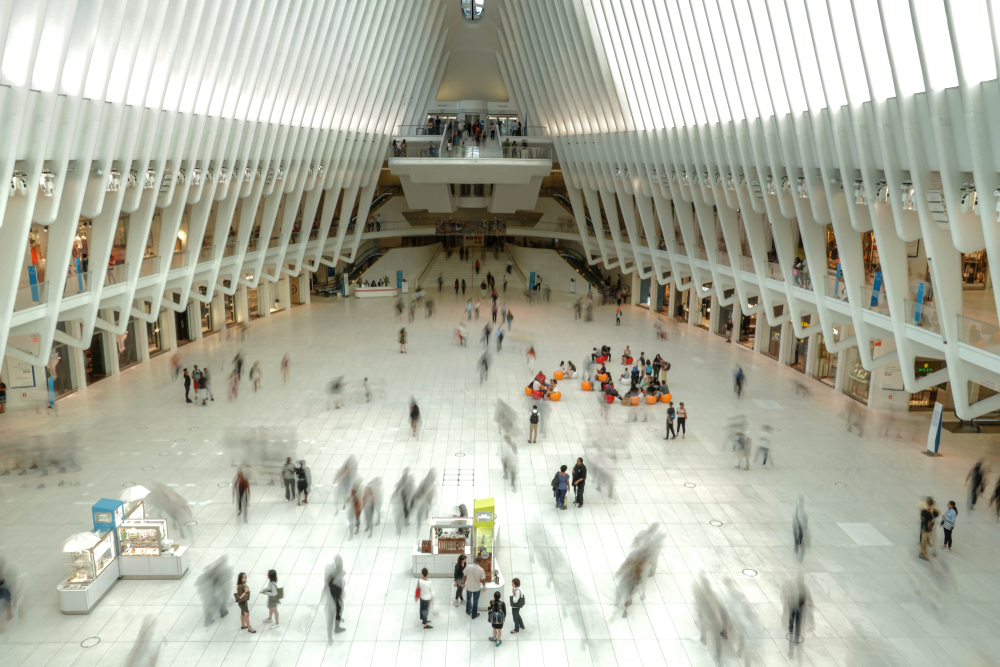
Printemps at One Wall Street anchors the luxury end of that shift, alongside a renovated Tiffany & Co. and the addition of Hermès nearby. Brookfield Place extends the corridor with its own concentration of luxury retail – Saks, Gucci, and Bottega Veneta among them – along with the French market-style food hall Le District, all overlooking the Hudson. A few blocks north, the Oculus rounds out the corridor’s retail with a denser mix of contemporary and designer names – Michael Kors, Hugo Boss, and Stuart Weitzman among them – set inside Santiago Calatrava’s cathedral-like transit hub.
But the more telling addition, for a neighborhood once defined entirely by finance, is Casa Cipriani – a private members’ club that Eyn says draws a genuinely mixed old-money-and-new-money crowd that would once have defaulted to Soho or the Upper East Side for that kind of social scene.
Down at street level, Stone Street carries the clearest evidence that the neighborhood’s evening life is no longer an afterthought. Cobblestoned and closed to cars, lined with restaurants including longtime fixture the Dead Rabbit, Stone Street is busy regardless of the day of the week, a texture Eyn compares to an old European street rather than to the traditional image of the Financial District.
What Buyers Should Know
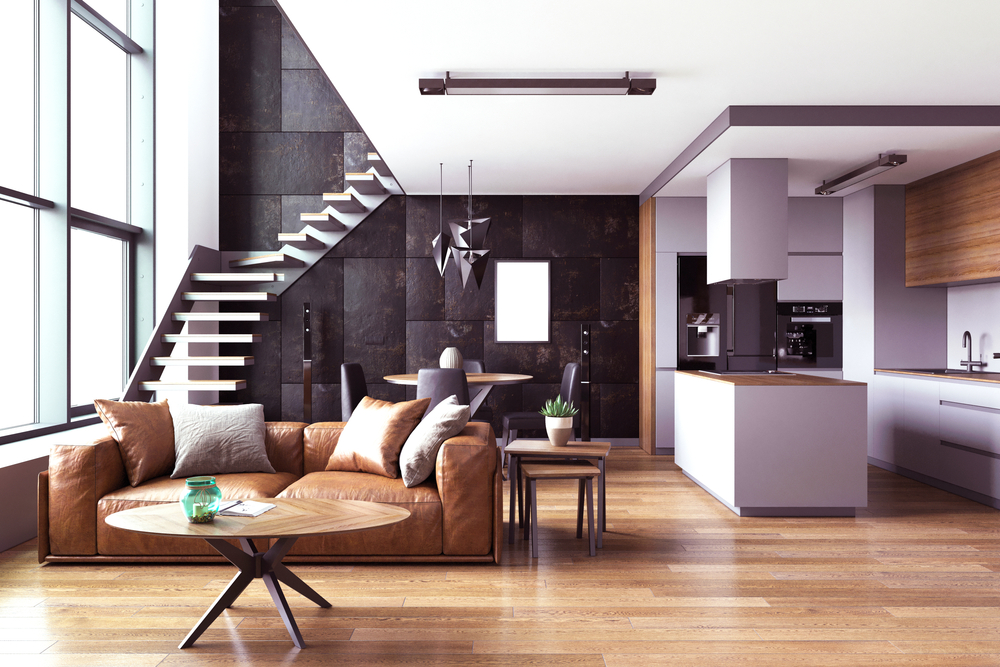
For a buyer with the means to be selective, the practical result of all this is a downtown Manhattan option that increasingly competes with its Tribeca neighbor, offering full-floor penthouses and mansion-scale square footage at what typically runs 30 to 40 percent below Tribeca pricing.
Witkoff and Fisher Brothers’ 111 Murray Street, at the crossroads of FiDi, Tribeca, and Battery Park City, has produced some of downtown’s highest sale prices, including a five-bedroom, full-floor penthouse listed at $45 million. Sir David Adjaye’s 130 William, completed in 2023, was the fastest-selling luxury condo development in New York when it launched, its top-floor Penthouse and Loggia Residences built with ceiling heights up to fourteen feet and indoor-outdoor living rooms that are difficult to find anywhere else in the city.
That combination of converted-building amenity depth, a neighborhood that finally has somewhere to go after dark, and pricing that still trails Tribeca is the case that Eyn makes for the Financial District now. This version of FiDi, a place where a resident can swim, work, dine, and go out for the evening without leaving a six-block radius, didn’t exist fifteen years ago. It exists now because the neighborhood was rebuilt from commercial bones into residential ones, and that fact, more than any single new restaurant or amenity, is what’s changed.
About the Expert: Dezireh Eyn is CEO and co-founder of Platinum Forbes Global Properties, a boutique real estate brokerage based in New York City.
This article is intended for informational purposes only and does not constitute legal, financial, or investment advice. The views and opinions expressed herein reflect those of the individuals quoted and do not represent an endorsement of any company, product, or service mentioned. Readers should conduct their own due diligence and consult qualified professionals before making any investment decisions.