Travelers know San Miguel de Allende as Mexico’s most celebrated colonial town. Ultra-luxury buyers are restoring its centuries-old homes, settling its countryside, and staying for good.
By Chris Caggiano
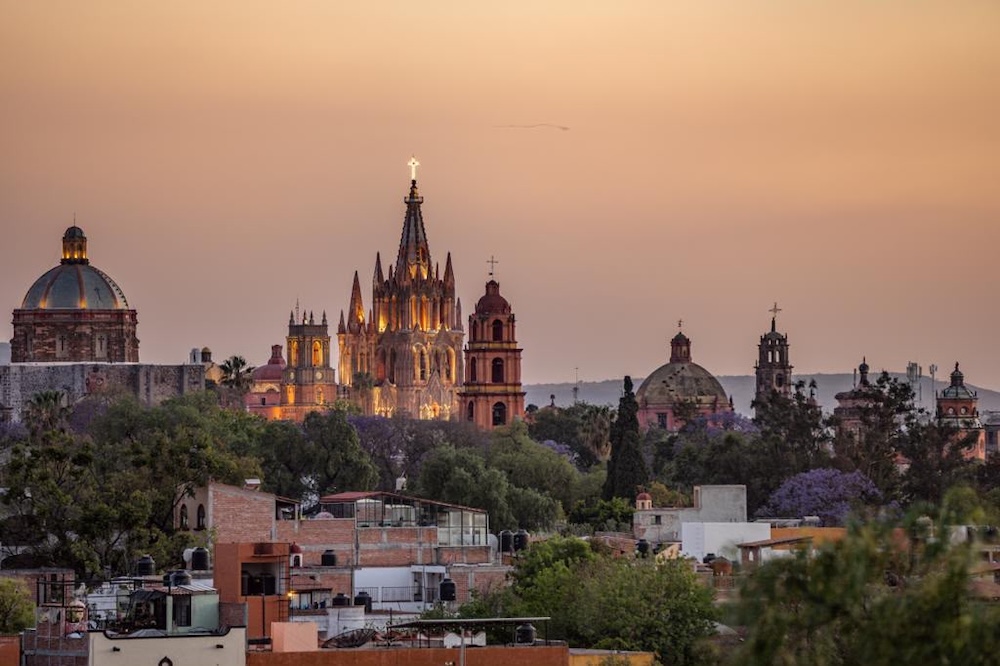
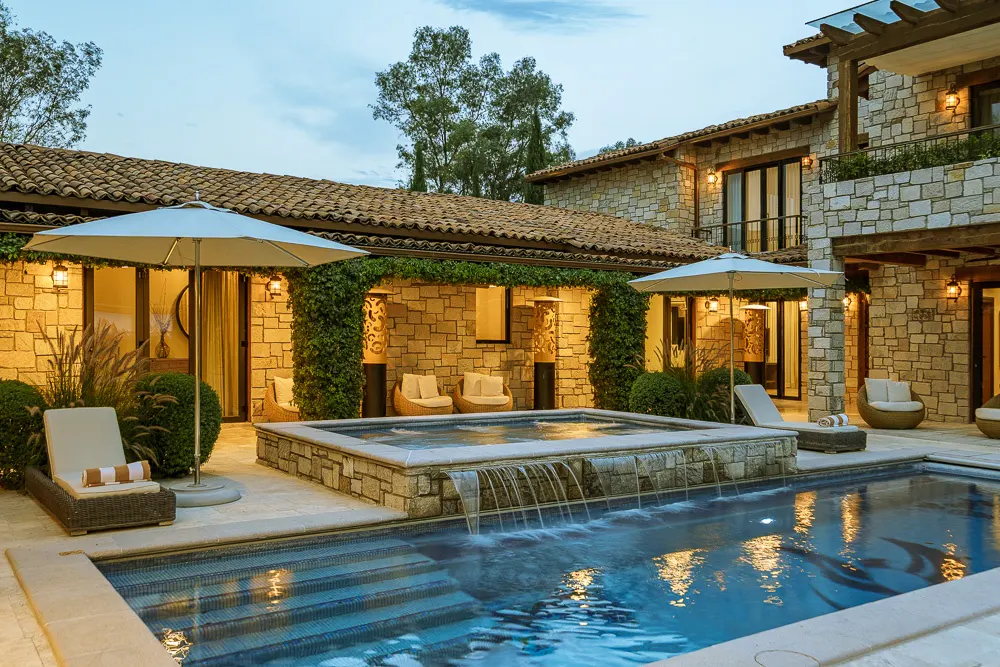
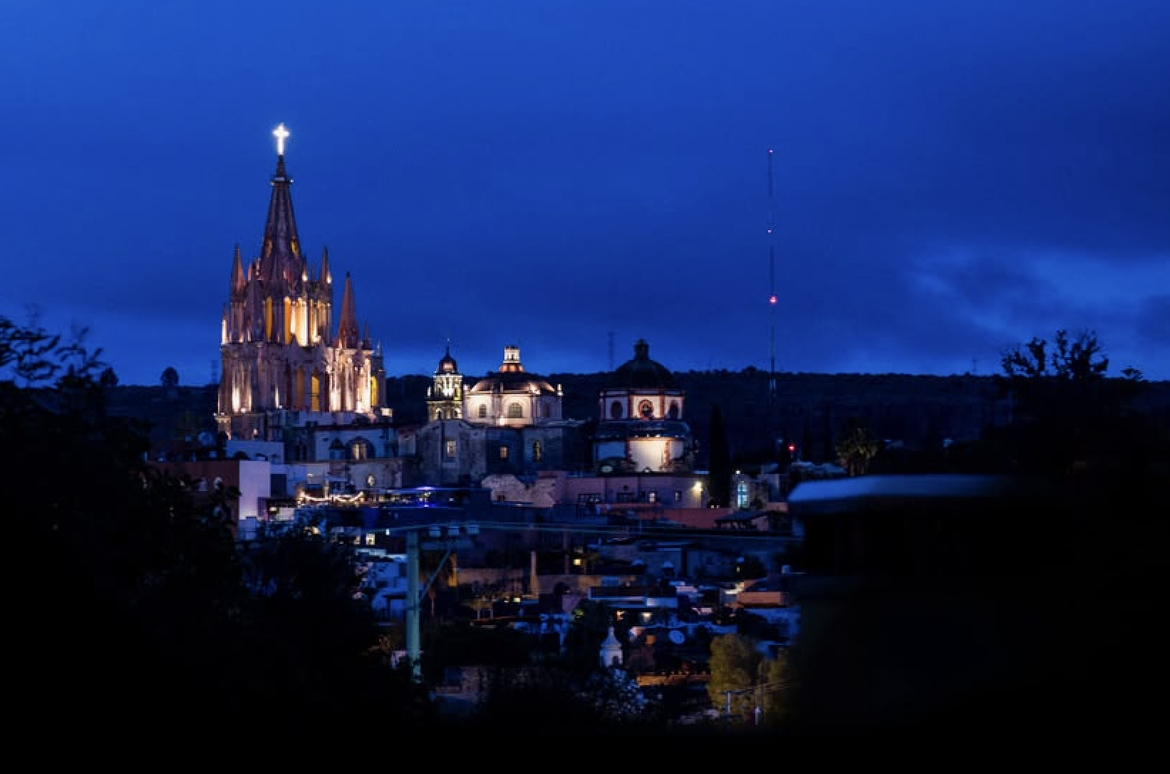
Late in the afternoon, the pink stone spires of the Parroquia de San Miguel Arcángel catch the last of the light, and the cobblestone lanes below fill with people drifting toward the Jardín. Bougainvillea spills over ochre and terracotta walls. Behind one plain wooden door, a courtyard opens onto a garden and a pool that no one passing on the street would guess was there.
San Miguel de Allende, set in the highlands of central Mexico, keeps much of its beauty out of sight, and the town has a legend to explain why so many visitors never leave: a bed of crystals beneath its streets, local lore holds, either pulls newcomers in for good or pushes them away.
For a growing number of ultra-luxury buyers, the pull has won. San Miguel is celebrated as a destination, a fixture of online travel rankings and a social media favorite for weddings, yet at the top of its market the town is increasingly a place to settle rather than to visit. “It’s like this secret until you’re here,” says Holly Houston Ortiz, a Private Office Advisor with Engel & Völkers in San Miguel de Allende, “and once you’re here, you don’t want to leave.”
That shift took hold during the COVID-19 pandemic, when Mexican nationals left Mexico City and other large cities in search of space and freedom, and many of them chose San Miguel. Until then, Houston Ortiz says, demand at the top of the market had been thin. Today she places luxury at roughly $2 million and up and ultra-luxury at $6 million to $7 million and up, with a $12.5 million compound, complete with its own spa and five separate homes, nearing a sale that Houston Ortiz says would set a record for the town.
Making Room in a Colonial Center
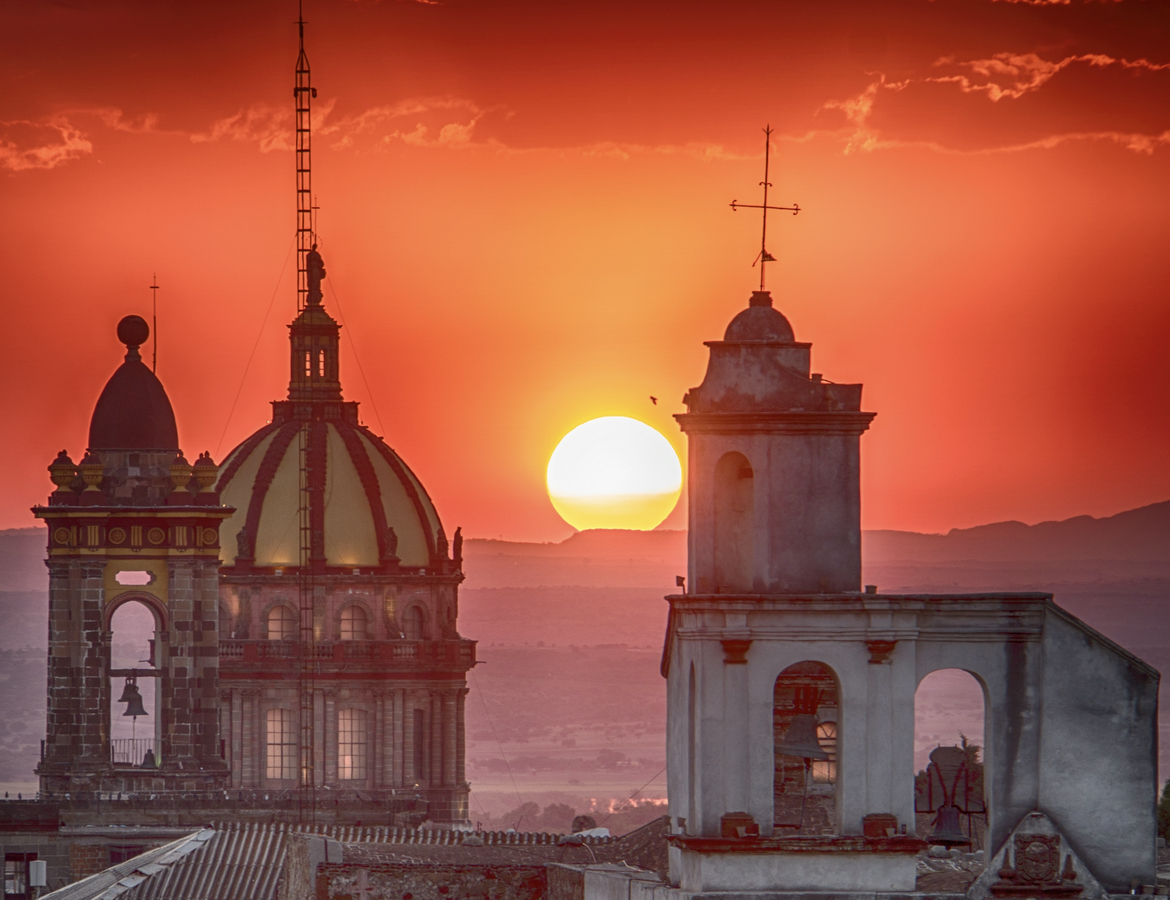
Putting down roots in Centro, the historic heart of town, means buying into its constraints as well as its charm. The district’s colonial buildings were laid out with tight rooms and narrow footprints, so at the top of the market the defining luxury is space. The most sought-after homes, some dating to the 1700s, have been fully remodeled to open up gardens, pools, and generous living areas, ideally with views of the Parroquia. “You want open spaces,” Houston Ortiz says, which is exactly what the old buildings were not designed to provide.
Creating that space takes patience, because every renovation answers to two authorities. San Miguel has been a UNESCO World Heritage Site since 2008, and the federal Instituto Nacional de Antropología e Historia (INAH) protects the street-facing portion of each historic property, roughly the first three meters from the street, which owners cannot alter. Behind that facade, what can change depends on both INAH and the municipal government. Houston Ortiz notes that enforcement shifts with each administration, and that approvals have been harder to obtain under the current one. Projects still move forward, but buyers planning a major restoration should expect to negotiate the details.
The reward is a home inside the town’s living center, and the same energy that draws people in can also test them. Centro hosts frequent parades, fireworks, and a lively bar scene, and some residents eventually look for quieter ground. Many others, Houston Ortiz says, wouldn’t trade Centro for anything.
Land, Horses, and a Garden of One’s Own
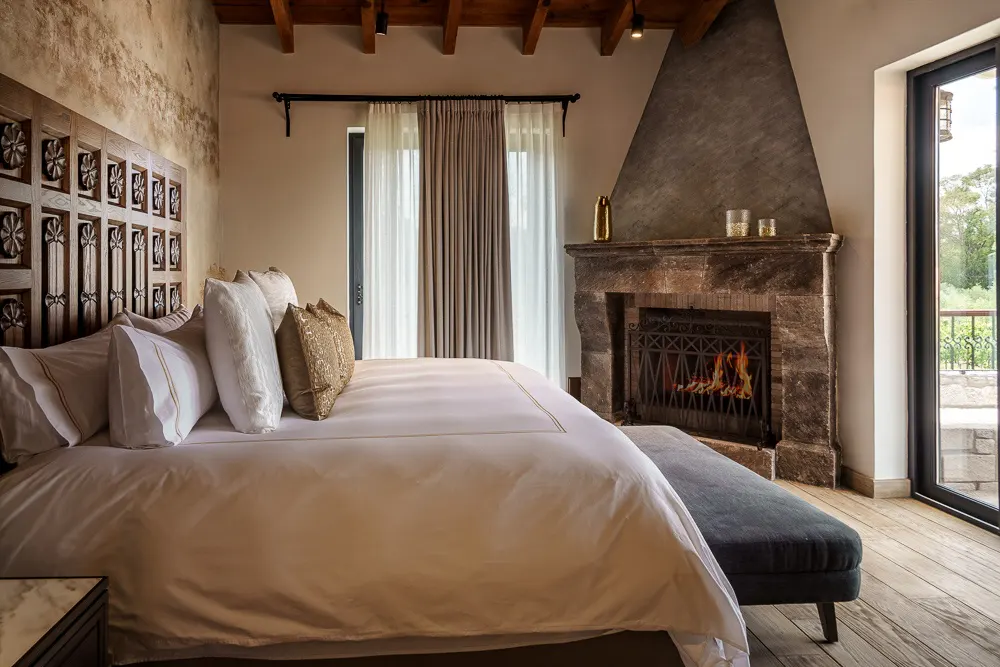
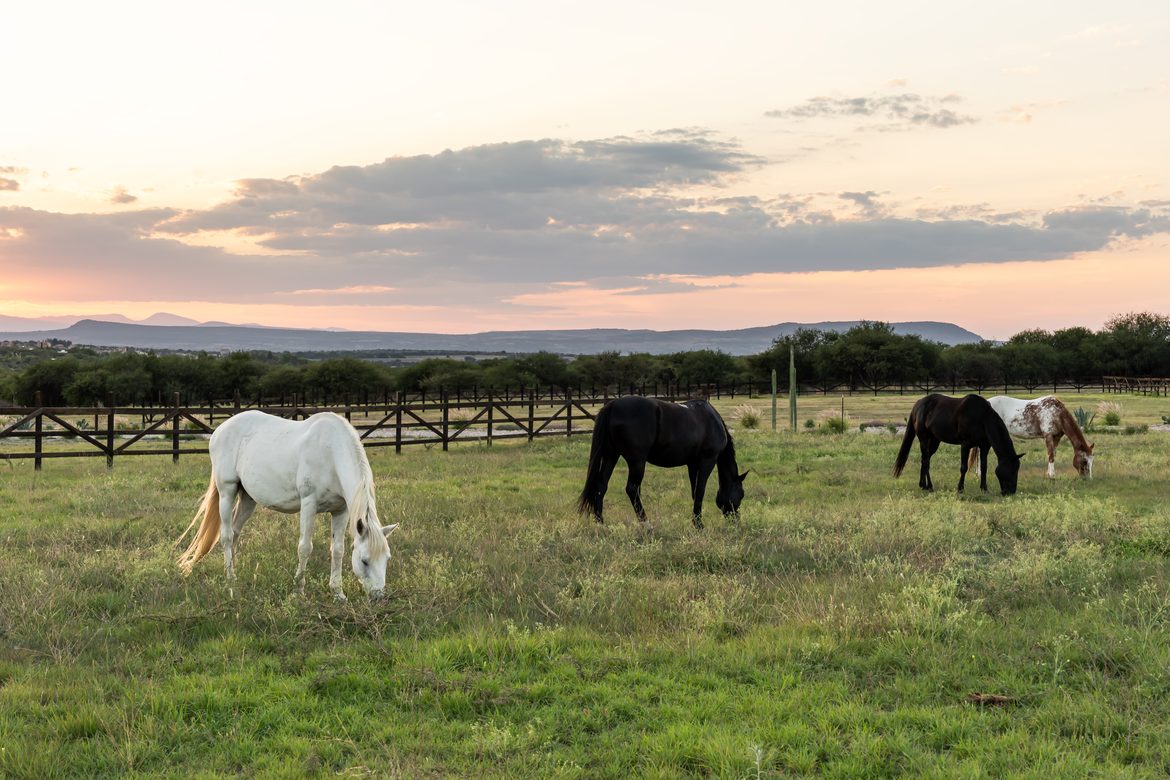
For buyers who want room and quiet rather than a restored house in town, the countryside around San Miguel offers another way to put down roots. Here luxury is measured in land and amenities rather than square footage within a historic shell. Gated communities offer trails for riding and cycling, and horses are a major draw; the area is home to substantial equestrian facilities, and one new low-density community allows owners to keep horses on lots of about an acre and a quarter. That same community is building a centralized wellness center and encouraging solar power and rainwater catchment, a sign of how much attention buyers now pay to how they live day to day.
That attention extends to the table. Many foreign buyers, Houston Ortiz says, are planting their own gardens so they can grow food without worrying about pesticides. Nearby wine country takes the idea further. In some vineyard communities, owners hold a share of the grapes, olives, and lavender grown on the property, pay a monthly fee for their care, and receive their portion at year’s end as wine, olive oil, or lavender products. Polo fields add to the appeal of the area’s estates.
Much of this countryside remains undiscovered, even by people who already live in San Miguel. Houston Ortiz estimates that only about 10 percent of residents venture out beyond town, in part because San Miguel is a walking town where it is easy to stay put. Those who do make the trip tend to have the same reaction: “Whoa! I didn’t even know this was here.”
A Life That Runs Itself
Whether owners settle in Centro or the countryside, staying is made easier by how well daily life is supported. Household staff are a normal part of life here rather than a rarity. A typical household might employ a cook, a housekeeper, and an administrator who not only manages the property, but also may drive the owners around town. “Life is easy here,” Houston Ortiz says, and she attributes much of that ease to this kind of help.
Outside the home, the town’s luxury hotels, including the Rosewood San Miguel de Allende, Live Aqua, and Belmond Casa de Sierra Nevada, have set the standard with established concierge services, and new residential developments are adding concierges of their own. Ownership costs are also modest by U.S. standards. Property taxes, Houston Ortiz notes, are minimal, and the overall cost of living is low.
Getting to San Miguel is straightforward from three airports. Querétaro is about an hour and 10 minutes away, León about an hour and a half, and Mexico City about three and a half hours. Querétaro, one of Mexico’s fastest-growing cities, now offers nonstop service to Madrid, and Houston Ortiz sees a growing number of owners who divide their time between San Miguel and homes in Spain.
A Deep Cultural Calendar
Ease alone would not keep people here; what sustains a full-time life is a cultural scene with genuine depth. That depth is what distinguishes San Miguel from Mexico’s better-known beach resorts. Where the coast draws people for sun and sand, San Miguel, as Houston Ortiz puts it, “is all about culture.”
The dining scene shows how that culture took shape. Nearly two decades ago, chef Donnie Masterton opened The Restaurant and, with little competition in town, set a new standard. Young chefs followed, many of them Mexican nationals, and San Miguel now supports a wide range of restaurants serving international as well as regional cuisine.
The calendar fills out the rest of the year. The Guanajuato International Film Festival is a major annual event, vineyards around town hold harvest festivals built around the crush, and a resident opera program brings young singers to San Miguel. Concerts take over the Jardín, the main square, where a rock band might play within sight of the Parroquia’s spires, a pairing that captures the town’s easy mix of the sacred and the festive.
Joining the Community
The clearest sign that buyers are putting down roots is how deeply they engage with the town around them. San Miguel has an extensive network of nonprofit organizations, often started by expatriates and sustained by local residents working alongside them.
Caminos de Agua teaches rural communities how to capture and store water for their homesteads. Feed the Hungry San Miguel serves hot school meals to thousands of children. Patronato Pro Niños provides free medical, dental, and psychological care to children, and visiting surgeons from the United States donate their time to perform operations that families could not otherwise afford. Amigos de Animales holds free spay-and-neuter clinics to reduce the population of stray dogs and cats. Residents often serve on several of these boards at once, and fundraising events are a regular part of the social calendar.
The city’s reputation is what brings buyers to San Miguel in the first place. The depth of its daily life, from restored courtyards and country acreage to its restaurants, festivals, and civic work, is what persuades them to stay. “It’s real here,” Houston Ortiz says.
About the Expert: Holly Houston Ortiz is a Private Office Advisor with Engel & Völkers in San Miguel de Allende, Mexico, specializing in luxury homes, new developments, and investment properties, and is a member of REALM Global, an international network of real estate professionals working in the ultra-luxury segment.
This article is intended for informational purposes only and does not constitute legal, financial, or investment advice. The views and opinions expressed herein reflect those of the individuals quoted and do not represent an endorsement of any company, product, or service mentioned. Readers should conduct their own due diligence and consult qualified professionals before making any investment decisions.
Hero Image Photo Credit: Holly Ortiz