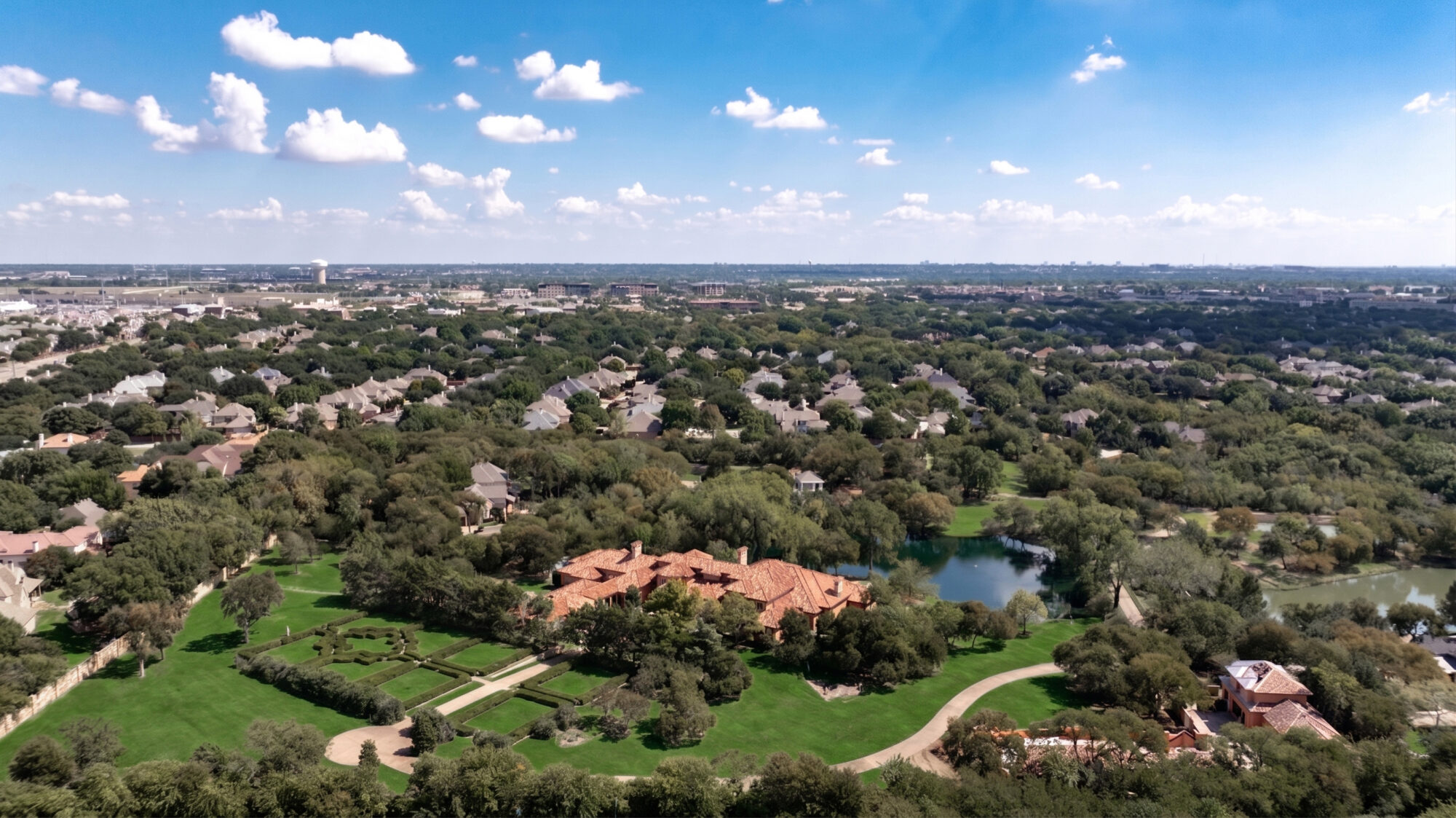
As sports franchises, airports, and dining head toward Plano and Frisco, the Metroplex’s most affluent buyers are redrawing the map of where, and how, Dallas lives well.
For generations, the geography of Dallas wealth needed little explanation. Highland Park and Preston Hollow offered established prestige, coveted school districts, and an easy drive downtown. Those addresses still carry weight. But the Metroplex’s luxury market has grown larger and more spread out, and its center of gravity is moving north.
The numbers have moved, too. “I think it used to be defined more as luxury would be over a million or $2 million,” says Cindy O’Gorman of Ebby Halliday Realtors. “Now our price points have gone up so much. It’s fairly common to see $5 to $8 million homes selling.”
What those buyers want has changed along with what they spend. The ultra-luxury home in DFW now functions as a private resort. The lake house has become a full estate. And social life increasingly runs through members-only clubs rather than crowded dining rooms.
A Second Downtown
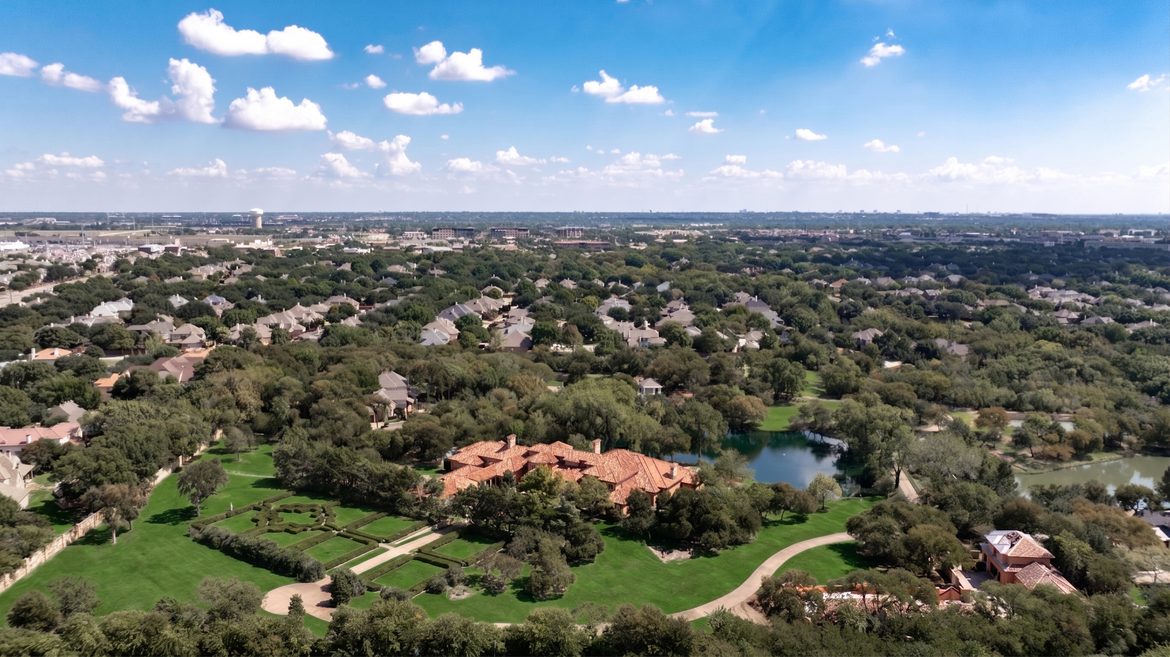
The shift began with retail and restaurants. As Legacy West in Plano and The Star in Frisco filled with high-end shops and dining, O’Gorman says, the two suburbs became “almost like another downtown.” Buyers no longer need a Preston Hollow or Highland Park address to be close to the city’s best restaurants, because many of those restaurants now have a home in the north. Buyers who want newer construction and larger lots have followed that logic. “Anybody that wants the newer features and wants more land is going north,” she says.
Professional sports are now reinforcing the trend. In June 2026, the Dallas Mavericks announced plans for a new arena and entertainment district on roughly 104 acres of the former Valley View Mall site, near LBJ Freeway and Preston Road in North Dallas. A day later, the Dallas Stars signed a nonbinding letter of intent for an arena-anchored district at The Shops at Willow Bend in Plano, which the Plano City Council backed the following week. The two teams currently share American Airlines Center downtown, where the Stars’ lease runs through 2031. Frisco, meanwhile, is already home to The Star, the Dallas Cowboys’ headquarters and practice facility.
The relocations have their critics, but O’Gorman hears the appeal from clients. “A lot of people love the convenience of not having to fight the traffic going all the way downtown anymore to get to one of the sporting events,” she says.
Air travel is moving north as well. McKinney National Airport received FAA certification for commercial service in September, and Avelo Airlines is scheduled to begin flights from its new passenger terminal on November 11. That will make it the region’s third commercial airport, after DFW International and Dallas Love Field. “They’re hoping that will one day become another DFW, maybe on a smaller scale,” O’Gorman says.
The Estate as Private Resort
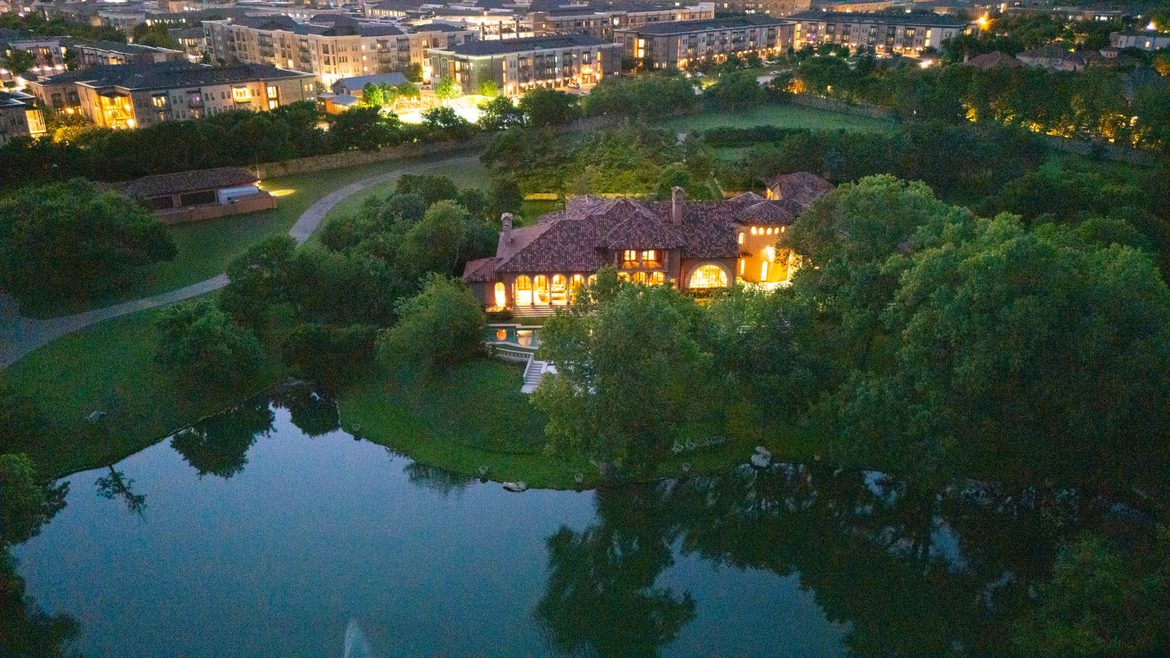
Inside the gates, the top tier of the DFW market is building homes that contain an entire day. O’Gorman describes buyers who want to move from a home office straight into a dedicated wellness wing, with red-light saunas, steam rooms, cold plunges, and rooms for meditation and yoga. “Very spa-like,” she says.
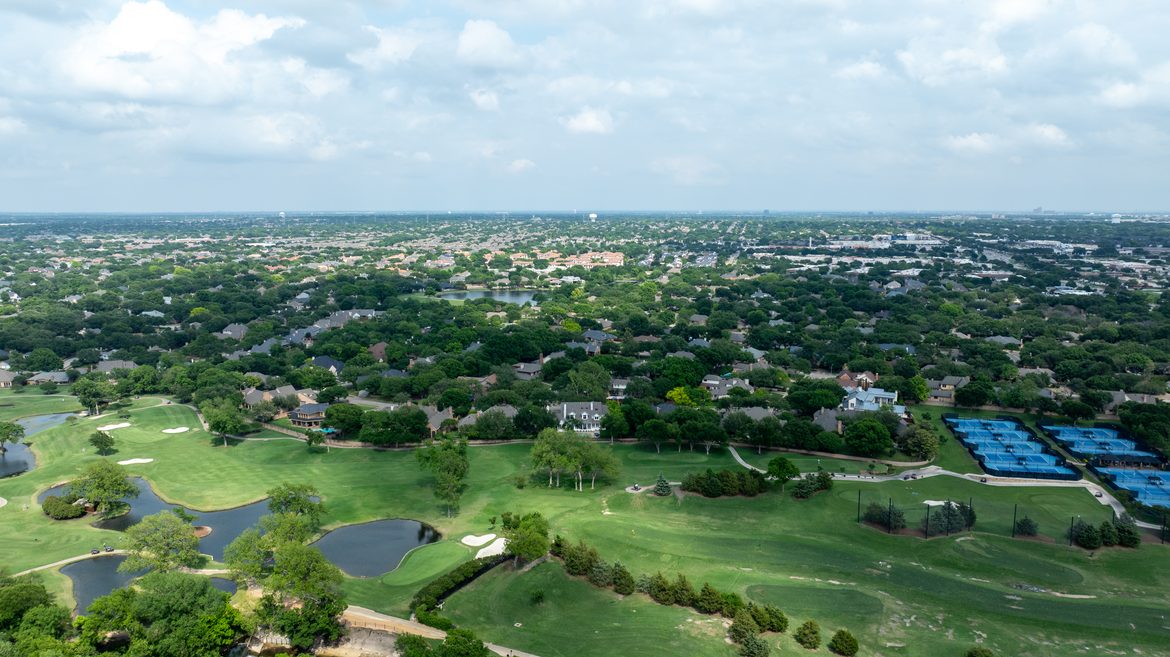
From there, the day turns to recreation and entertaining. Private pickleball and tennis courts are increasingly common on estate lots. Outdoor entertaining areas have grown large enough to host a crowd. Walls of sliding glass doors connect these patios and loggias to the living spaces inside, and motorized screens lower to enclose the outdoor areas against sun and insects. Several outdoor televisions are typical, ready for football season and other big events. In Dallas, game day is an occasion, and the home is designed for it.
Many homes now have two kitchens. In newer properties above roughly $4 million, O’Gorman says, a fully equipped prep kitchen is close to standard. “It’s almost like a second kitchen, where you can cook there, not mess up the actual kitchen, or have caterers,” she explains.
Family structure is shaping floor plans as well. Many buyers now care for aging parents at home, and a guest room no longer suffices. Instead, buyers want a separate suite where loved ones can live comfortably and privately. “It is a second master, basically,” O’Gorman says. These suites often occupy a separate wing with a private patio, and some include their own kitchens.
Design tastes are shifting, too. For years, nearly every new or remodeled home in Dallas leaned toward white cabinetry, white walls, and spare, clean-lined interiors. Now buyers want warmer materials and more architectural character: wood beams, stone, distinctive mantels and feature walls, and a blend of traditional and contemporary styles. “There’s a lot of wood elements coming in, maybe warmer tones than the white cabinets and the white walls,” she says. Behind the finishes, the technology keeps advancing: automation, voice control, and systems that let owners lock up and leave for weeks at a time.
Clubs, Courts, and a Wider Table
Dallas has never been short on restaurants, bars, or nightlife. What is changing is where its most affluent residents choose to spend their evenings. A wave of private social clubs is opening across Dallas, Plano, and Frisco, offering full restaurants, bars, office space, and rooms set aside for playing cards or mahjong.
The draw of these clubs is ease. “You don’t have to have reservations. You’re not fighting the crowds. You can stay all night. They know what you want,” O’Gorman says. Many of her clients belong to at least one country club, sometimes two, alongside a social club. Tennis, golf, and pickleball clubs are thriving, and mahjong has become a social fixture of its own.
Dallas built its dining reputation on steakhouses and Tex-Mex, but the restaurant scene has broadened well beyond them. “It’s not just the steakhouses like Dallas used to be known for,” she says. Sushi, Indian, and Mediterranean restaurants have multiplied, along with vegetarian and health-focused menus. For O’Gorman, dining is the anchor. She says she could never move away from Dallas, if only because she would miss the restaurants.
Luxury shopping in the Metroplex has evolved as well, moving out of the enclosed mall and onto the street. As two aging enclosed malls give way to the new arena districts, high-end retail is concentrating in walkable, open-air districts like Legacy West, where luxury boutiques sit beside restaurants and visitors often book hotels nearby to take in the full experience.
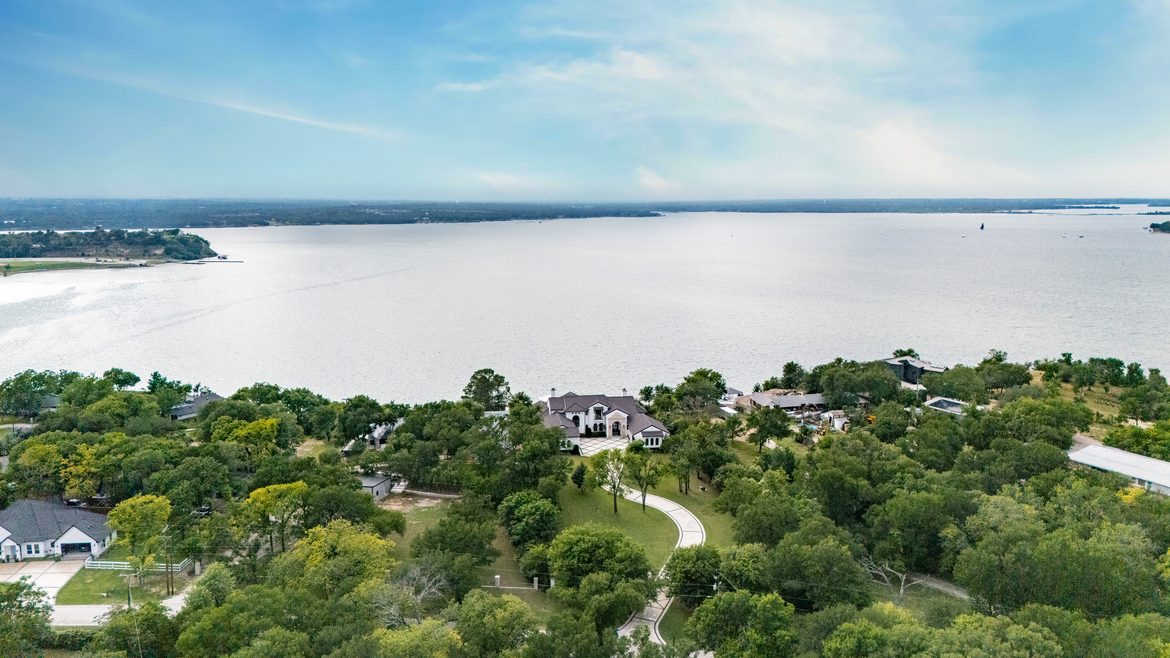
The Lake House Grows Up
When the North Texas summer peaks, Dallas heads for the water. Northeasterners have Cape Cod; Dallas has its lakes, most of them within one to two hours of the Metroplex. And the nature of the weekend retreat has changed dramatically. “People aren’t just spending the weekend at their little cabin,” O’Gorman says. “Sometimes the lake home is even more luxurious and larger than the home in Dallas.”
The options vary in scale and character. Cedar Creek Lake, southeast of the city, is large and deep enough for serious boating. Possum Kingdom Lake, west of Fort Worth, is known for its clear water and rugged shoreline. Lake Texoma, which straddles the Texas–Oklahoma border, is among the largest reservoirs in the country and draws sailors and motorboaters alike.
Smaller lakes have their own appeal. At Lake Kiowa, a gated community about an hour and 15 minutes from Dallas, O’Gorman sees buyers tearing down existing houses to build residences of 10,000 square feet. Most of the lakes favored by luxury buyers are recreation lakes, prized for water skiing, boating, and sailing, rather than the quieter fishing lakes found elsewhere in the region.
The arenas, airports, and restaurants are moving closer to where buyers want to live. The homes themselves bring the spa, the court, and the caterer’s kitchen inside the property line. And the lake house waits an hour or two away.
“I don’t think anybody would ever get bored,” O’Gorman says. “Everything is quality here.”
About the Expert: Cindy O’Gorman is a Realtor with Ebby Halliday Realtors, where she leads The O’Gorman Group, serving Dallas and the greater Dallas–Fort Worth Metroplex.
This article is intended for informational purposes only and does not constitute legal, financial, or investment advice. The views and opinions expressed herein reflect those of the individuals quoted and do not represent an endorsement of any company, product, or service mentioned. Readers should conduct their own due diligence and consult qualified professionals before making any investment decisions.
Hero Image: Patrick Flores, Real Photo Texas