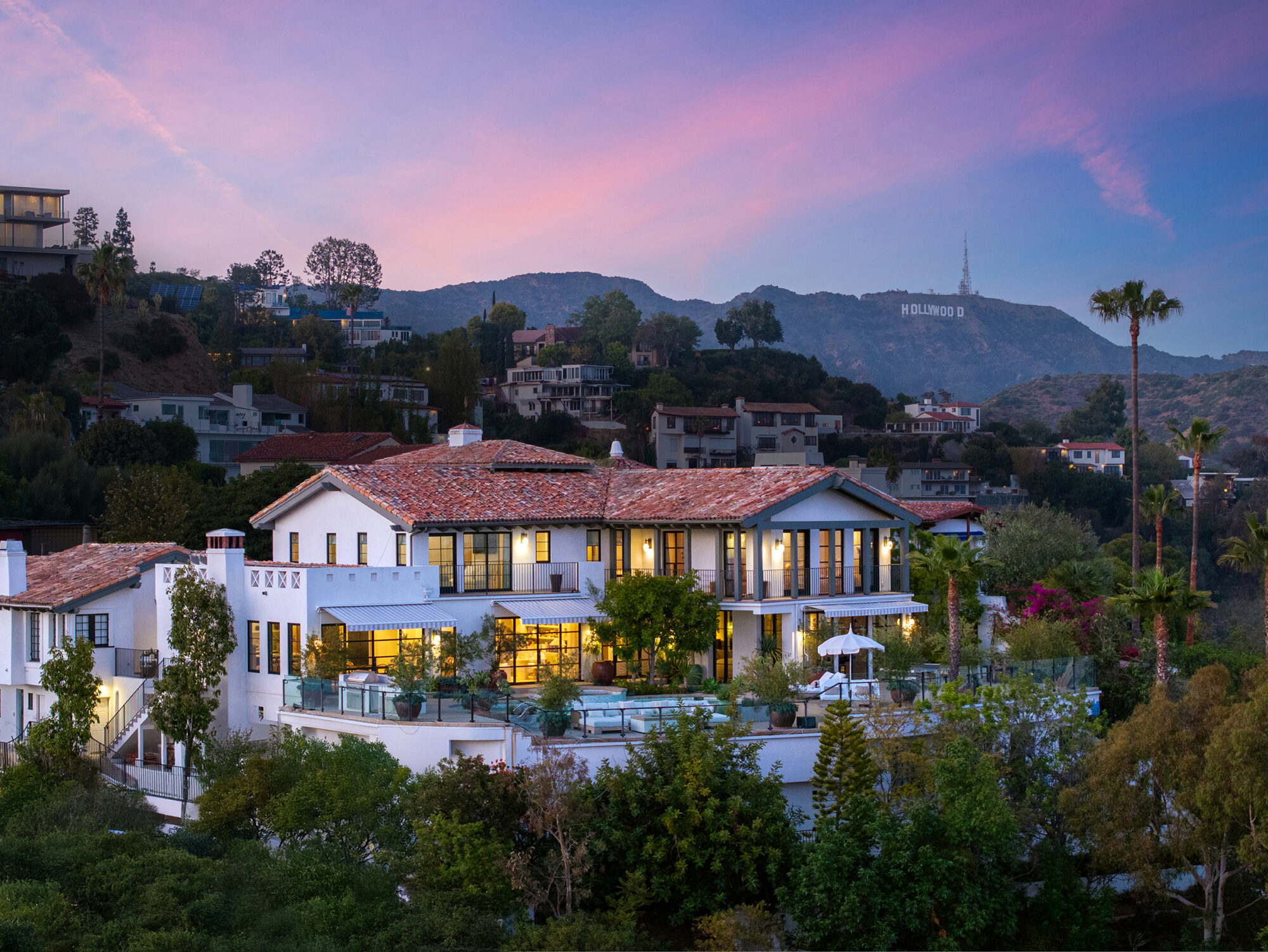
Buyers who could afford a hidden hillside compound are instead choosing level streets, city services, and neighbors within walking distance, and accepting a life in plain view as part of the bargain.
By Chris Caggiano
In the Beverly Hills flats, morning traffic moves at walking speed. Strollers and dog leashes share the sidewalks of Bedford and Roxbury, joggers cut south toward Santa Monica Boulevard, and a few residents head for coffee in the shopping district below. The houses they pass rank among the most expensive in Southern California, and nearly all of them are in plain view, their facades rising above hedges and gates that rarely clear six feet.
Just to the west, in Holmby Hills and Bel Air, comparable money buys a long driveway and a house no passerby will ever see. In the flats, it buys a front-row seat on a public street. For a growing number of luxury buyers, that exposure is not a drawback to be tolerated. It is the reason they came.
Trading Seclusion for the Sidewalk
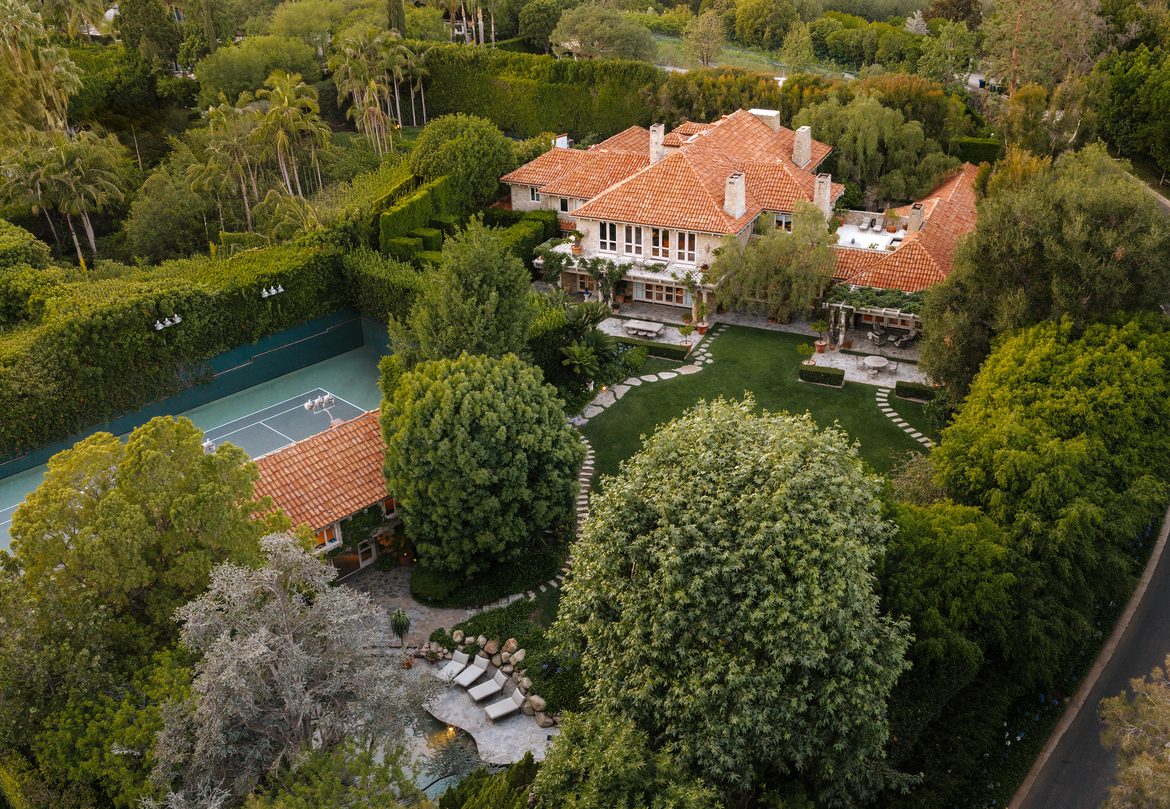
The defining compromise of a Beverly Hills address is visibility. Unlike the gated estates higher in the hills, most homes in the flats sit close to the street, and city code keeps front yards open: walls and hedges nearest the sidewalk are limited to three feet, and anything taller, up to six feet, must leave the property visible from the street unless an older structure was grandfathered in. Sam Collins, a London-born agent with Carolwood Estates who has worked the Beverly Hills market since relocating to Los Angeles, notes that the rare exceptions are older properties, often dating to the 1950s, where decades of ficus growth have turned the lot into a private compound. Everywhere else, the house is on display. “If you’re very much all about show and tell,” he says, “then Beverly Hills is the place for you.”
What buyers get in exchange is a way of living that the hillside enclaves cannot offer. The streets are flat, the blocks are walkable, and neighbors live close enough to know one another. Residents can walk to coffee, pick up groceries on Beverly Drive, or meet friends for lunch in the shopping district south of Santa Monica Boulevard. In Bel Air, Holmby Hills, and much of Brentwood, the same errands require a car.
The January 2025 Palisades fire put that trade into sharp relief. Thousands of affluent households suddenly needed somewhere to live, and many of them headed east to the flats. According to Collins, displaced families wanted ground that felt safe and familiar. Some also wanted distance from hillsides after experiencing the fire so close to home. The influx pushed rents and prices sharply higher, creating what Collins calls a “false market,” one he says has since slowed considerably.
A quieter demographic shift is reinforcing the same pull. Children who grew up in the flats in the 1980s and 1990s are now in their 30s and 40s, and many want to raise their own families on the same streets. For them, the appeal of the flats is not a discovery but a return to blocks where neighbors know one another and everything is a short walk away. And unlike the surge that followed the fire, their demand does not hinge on a single event, which gives the market a steadier source of buyers.
A City Within the City
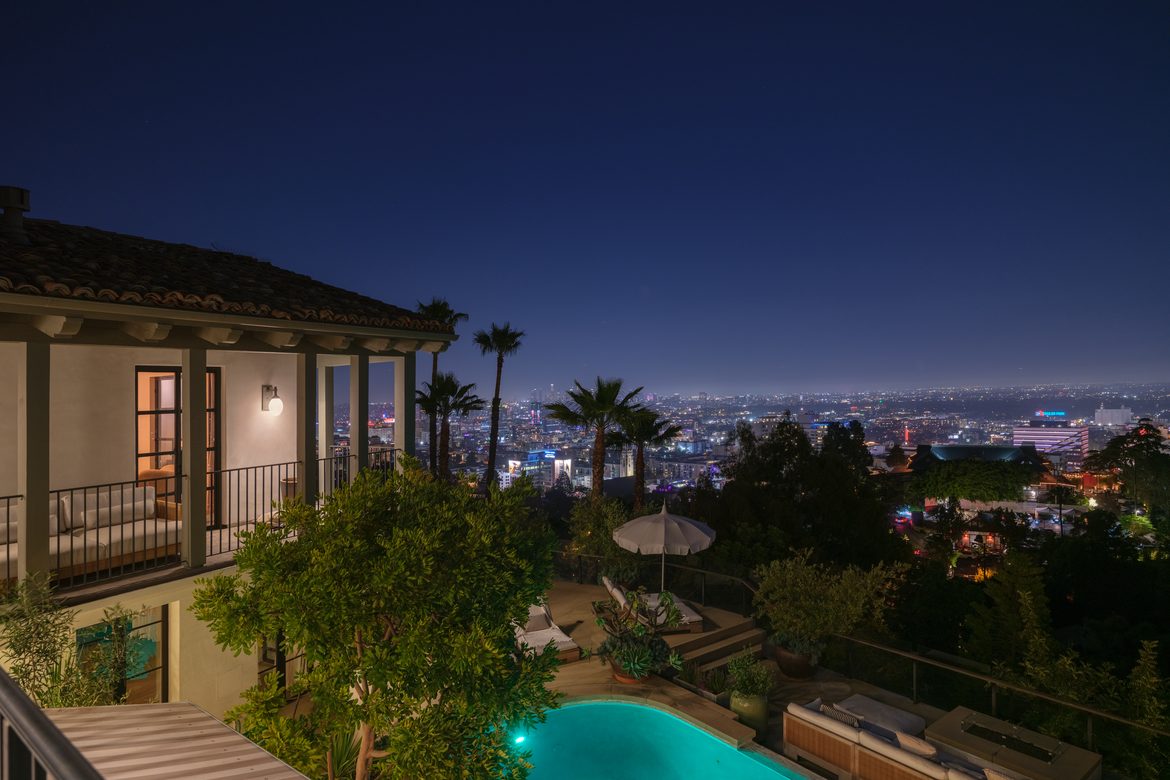
That sense of security rests on more than flat terrain. Beverly Hills has been an independent city since 1914, and its residents live under a separate government from the Los Angeles neighborhoods that surround it. In Collins’s view, that independence is the main reason the local market has held firm while much of Los Angeles has cooled.
The advantages he lists are practical. Beverly Hills runs its own police force, water utility, and emergency medical services, and, as Collins points out, its residential streets are largely free of overhead power lines. Homeowners here also avoid the steep insurance premiums now quoted for comparable houses in fire-prone hillside areas.
Families enjoy one more municipal benefit: a school district of the city’s own, separate from the Los Angeles Unified system that serves the neighborhoods around it. Children in the flats can attend school alongside the same families they see on their block. Since 2022, the district has also made room for a limited number of grandchildren of longtime residents, so a family’s roots in the city can carry into the next generation. Those places are now reserved largely for siblings of children already enrolled, which makes them one more scarce Beverly Hills asset.
A Grid That Grows Toward the Hills
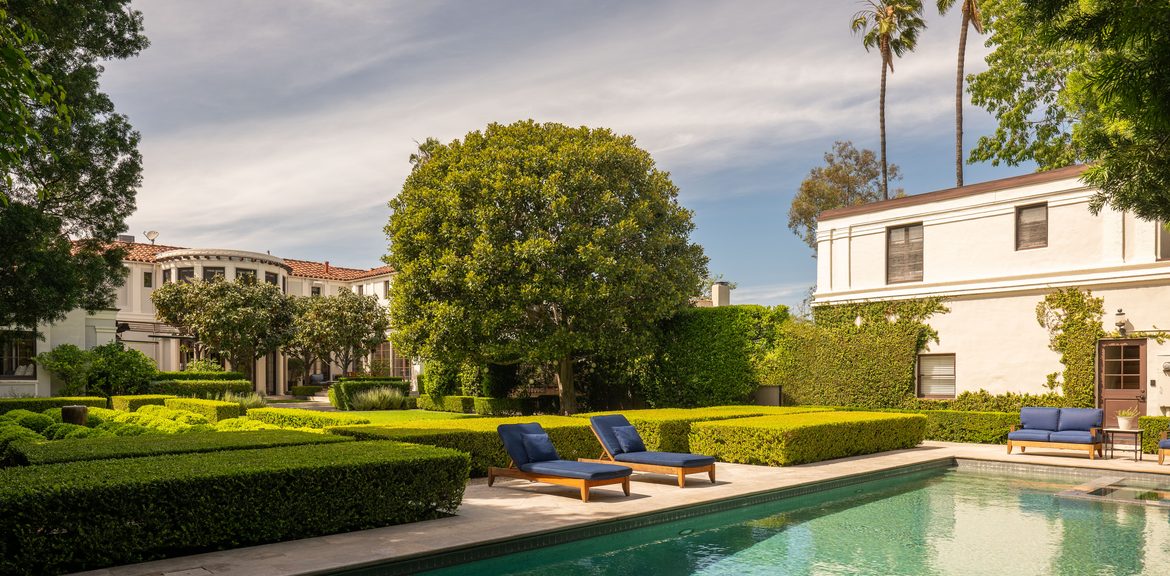
Within the city, the flats can be read like a map, because lot size climbs with the street numbers. Viewed from above, Collins says, the neighborhood widens “like a pizza slice”: modest parcels in the 100 blocks south of Wilshire Boulevard, in the 90212 ZIP code, give way to progressively larger lots heading north. Above Sunset Boulevard, in the 1000 blocks, lots approach an acre and tennis courts become common, though the shops along Santa Monica Boulevard are no longer an easy walk. The map runs east to west as well. Collins favors the western streets, among them Bedford, Roxbury, Hillcrest, and Foothill, over the slightly less sought-after streets to the east, such as Sierra and Oakhurst.
The bottom of that scale has moved quickly. Collins places the entry point for luxury in Los Angeles at about $5 million, yet that figure no longer buys a house anywhere in the Beverly Hills flats, he says, even south of Wilshire. One of his first Los Angeles transactions, on the 800 block of Bedford Drive in 2018, closed at $12.9 million. He estimates the same property would command $15 million to $17 million today, and that the land alone is now worth close to $12 million.
New Construction, Skeptical Buyers
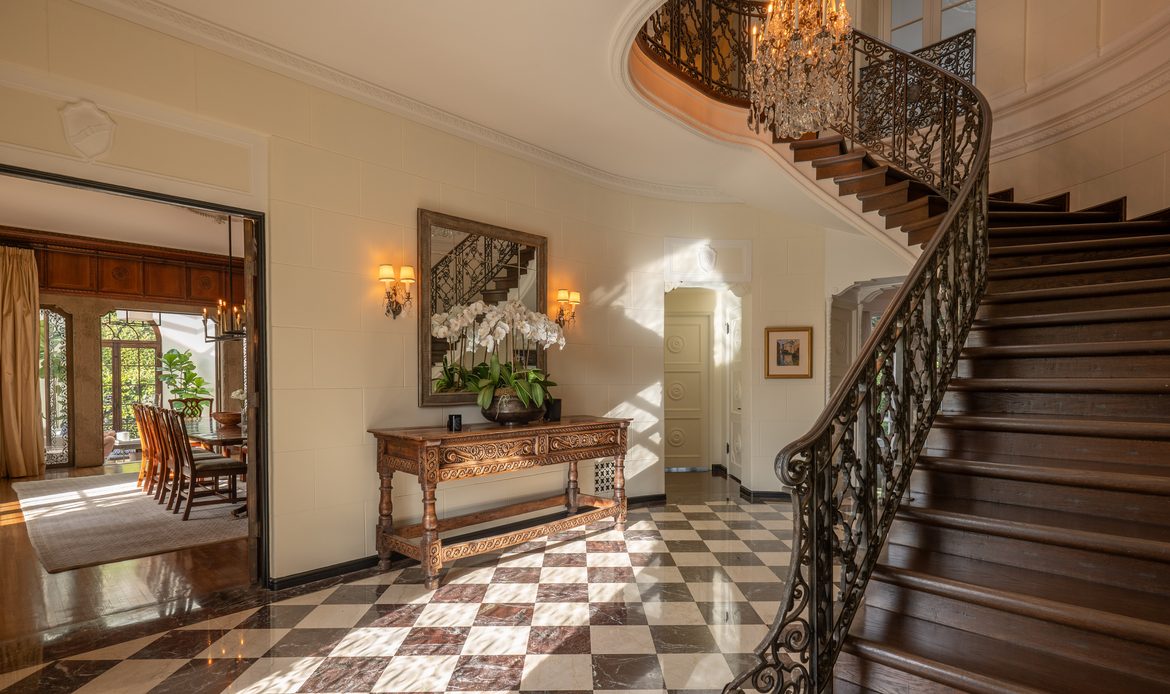
With so little land available, the flats are being rebuilt one lot at a time. Developers tear down smaller, older homes and build new ones that use every square foot the city allows, extending them as close to the property lines as the rules permit. A basement can add space beyond what the lot allows above ground, though Collins notes that digging down costs far more than building up, so the extra level does not always pencil out.
The permitting process has shaped construction practices as well. According to Collins, some builders preserve a single wall or a section of the original masonry so the project is treated as a remodel rather than a full demolition, which moves it through city approvals faster. As a result, a house of steel and glass may carry a construction date in the 1940s.
Most new houses in the flats are built on speculation, without a buyer lined up, and limited supply means they rarely lack for interest. What has changed is how much buyers are willing to pay. Collins sees a fundamental shift in how buyers approach Los Angeles: “Buyers are no longer buying the dream,” he says. “Buyers are looking to buy value.” When interest rates were lower and sentiment about the city brighter, a buyer who found problems during escrow might absorb the cost, confident the house would appreciate. Today the same buyer is more likely to negotiate.
Two recent listings illustrate both sides. In August, a newly built house of about 11,300 square feet on the 600 block of Elm Drive sold for $25 million. Collins says the buyers were a family from the Palisades, and he attributes the price largely to thin inventory. On Alpine Drive, by contrast, a new spec home that first listed at $23 million drew tours but no offers. After a series of price cuts, it now asks just under $20 million, and its developer has carried the holding costs all the while.
The city’s regulatory culture adds another layer of discipline. Beverly Hills closely guards its low-rise residential character, a number of its homes carry historic designations that restrict demolition, and neighbors are quick to report builders who overstep.
Where the Walk Leads
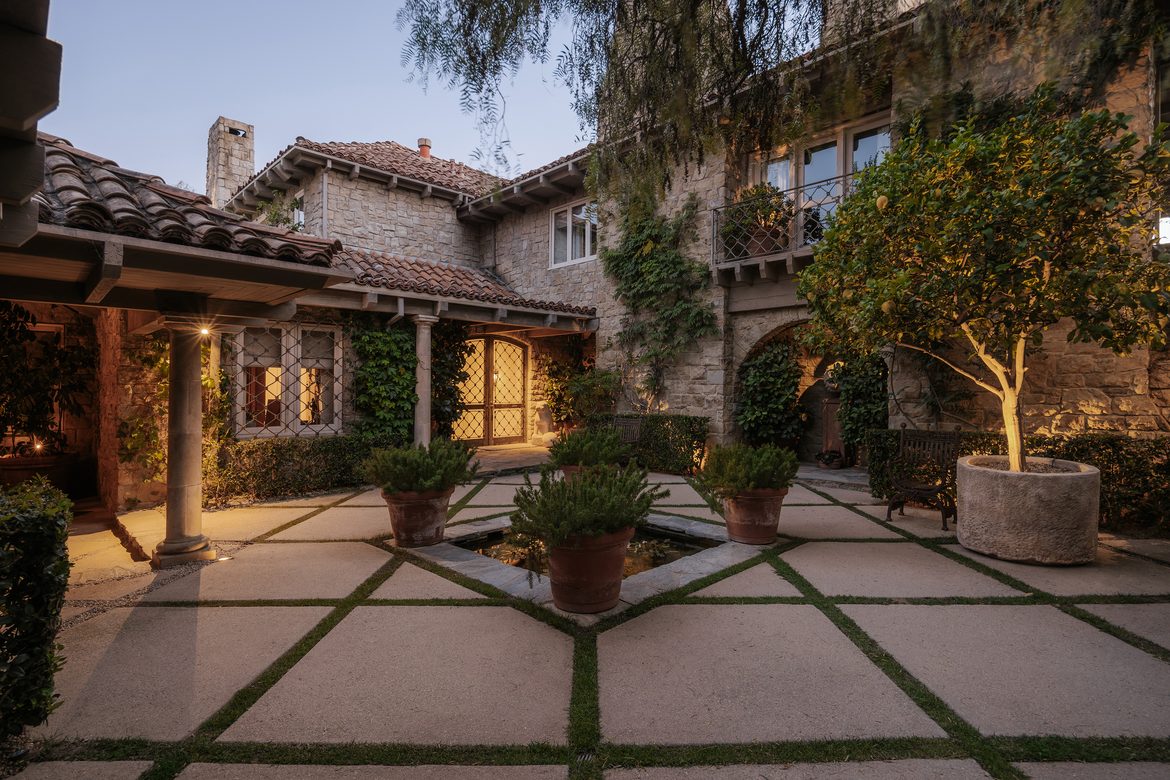
For all the attention paid to the houses themselves, the premium in the flats is ultimately a premium on what lies within walking distance. Heading north, residents reach the Beverly Hills Hotel on Sunset Boulevard, with the Polo Lounge and the pool bar, and Will Rogers Memorial Park across the street. Heading south, they reach the shopping district along Rodeo, Beverly, Cañon, and Crescent drives, where a wave of new restaurants has opened since the pandemic.
The hotels in that district double as neighborhood meeting places. Collins singles out The Maybourne Beverly Hills, the former Montage, which London’s Maybourne Hotel Group acquired in 2019 and has spent the years since overhauling. Nearby on Beverly Drive, the Erewhon market, open since 2022, is among the most expensive grocery stores in the country. Yet Collins says its crowds rival those of the cheapest store on the planet: long lines for smoothies and hot food, with shoppers stopping to photograph their purchases.
That scene captures the trade the flats offer. A buyer in Beverly Hills gives up the invisibility of a hillside compound and gets, in return, a life lived partly in public, on streets that are safe, level, and full of neighbors. Increasingly, buyers are deciding that visibility is not the price of living there but part of what they are paying for.
About the Expert: Sam Collins is a real estate agent with Carolwood Estates, serving Beverly Hills and the greater Los Angeles area.
This article is intended for informational purposes only and does not constitute legal, financial, or investment advice. The views and opinions expressed herein reflect those of the individuals quoted and do not represent an endorsement of any company, product, or service mentioned. Readers should conduct their own due diligence and consult qualified professionals before making any investment decisions.
Hero Image Photo Credit: Tyler Hogan