
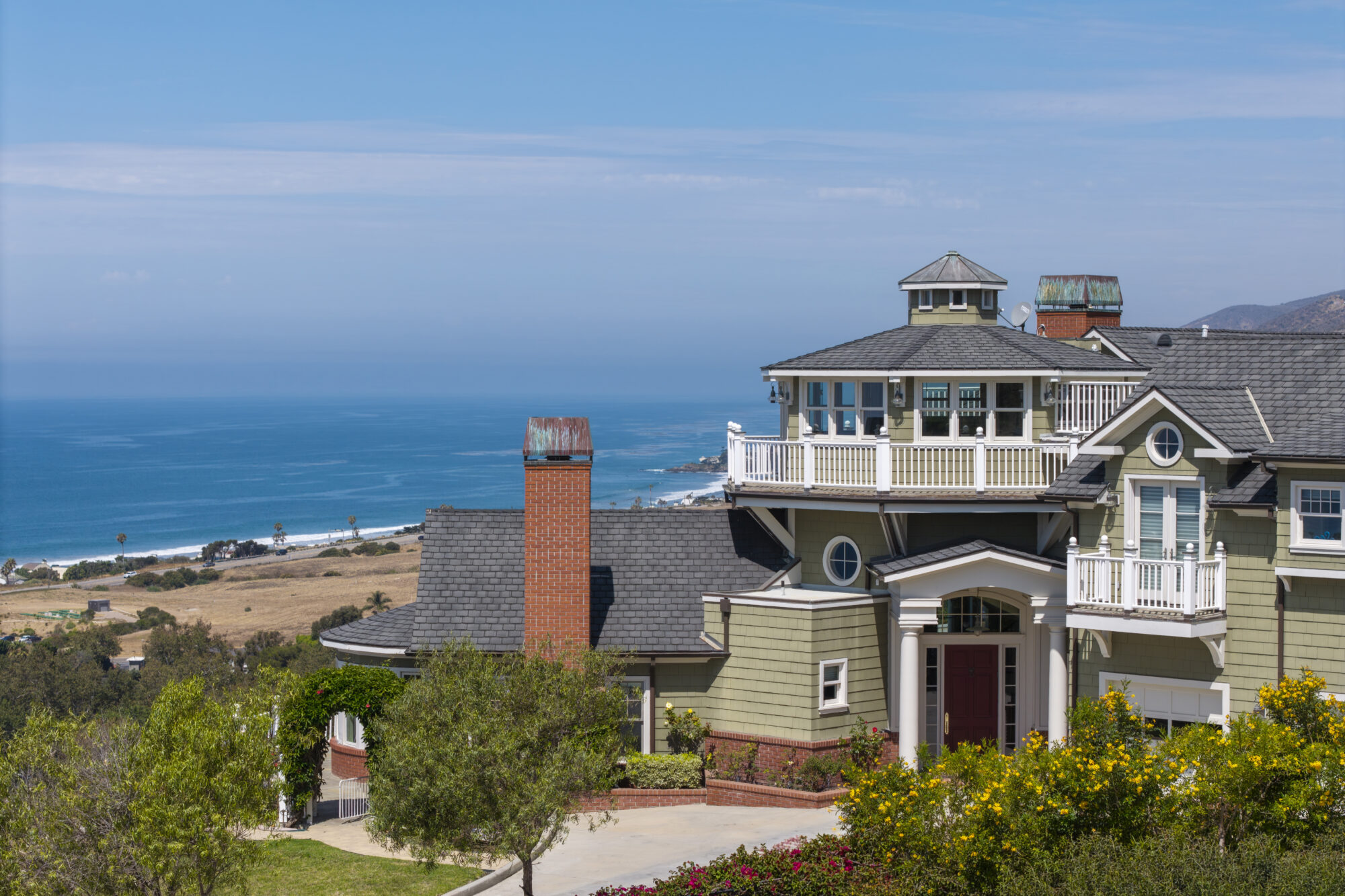
Beyond the celebrity image is a town where wealth goes unannounced, neighbors meet over coffee in flip-flops, and the Pacific is the ultimate amenity.
By Chris Caggiano
On a weekday morning in Malibu, the line at the local coffee counter gives very little away. Surfers come up from the breaks off Point Dume. On Broad Beach, neighbors walk their dogs along the sand toward Starbucks. Parents back from school drop-off linger over a second cup in t-shirts, shorts, and flip-flops, in no hurry to be anywhere. Up the canyons and along the bluffs, behind gates and hedges, stand homes worth tens of millions of dollars. Down at sea level, though, it is hard to tell who owns them.
This is not the Malibu most outsiders imagine. The name tends to conjure movie stars, guarded compounds and a coastline built for show. The town that residents actually live in is more casual and more closely knit than its reputation would suggest.
“There’s a quietness to the luxury,” says Jill Reeder, a Compass agent who has lived and sold in Malibu since 1997. “There is excessive wealth here, but it’s very different from the look of Beverly Hills.”
By Reeder’s measure, luxury in Malibu begins at roughly $7 million and runs to about $15 million. Ultra-luxury sits above that, with some estates trading in the $80 to $100 million range. What those numbers buy, though, is less a showpiece than a way of life: privacy when you want it, community when you don’t, and the Pacific at the end of the driveway.
Beyond the Gates
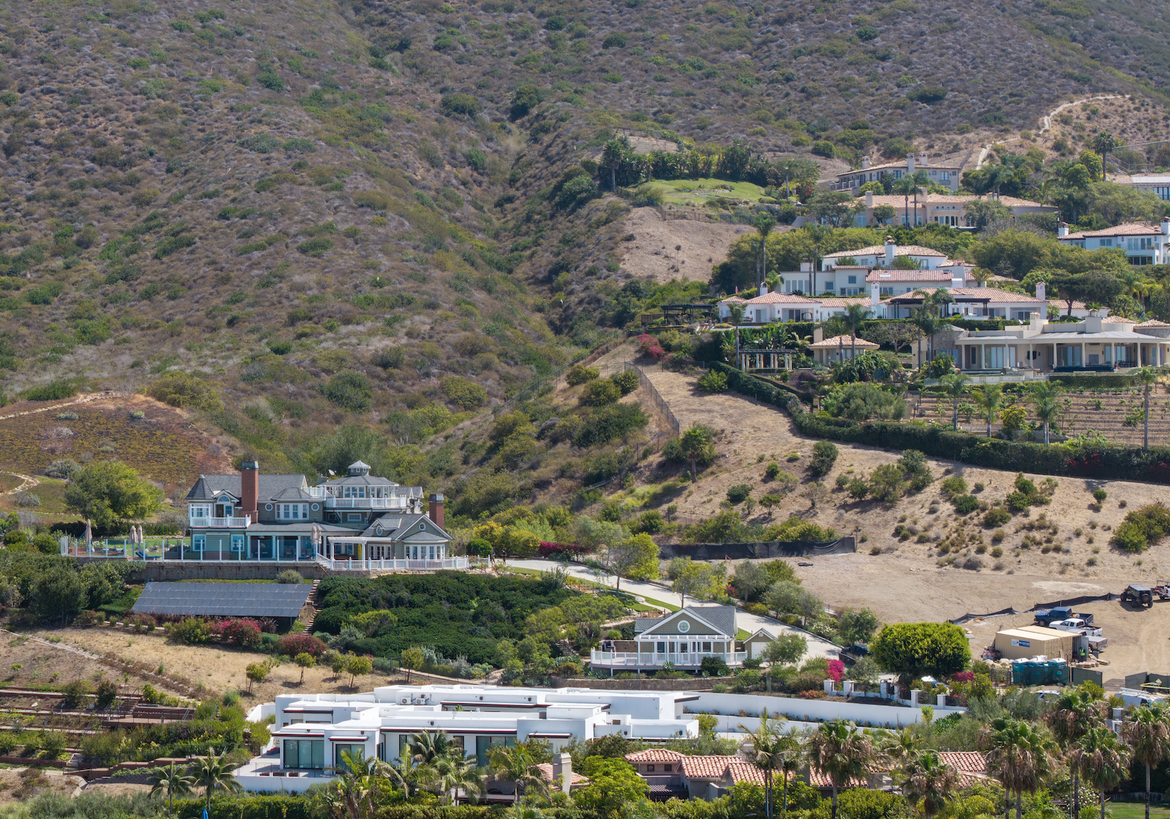
Privacy in Malibu is a choice rather than a requirement. Most homes are gated, fenced, and screened from the road, and anyone who never wants to leave home can live that way. But Reeder says most residents don’t, and daily life plays out in a handful of shared places that locals know well.
Visitors arrive thinking they have to go to Nobu, the oceanfront sushi spot known for celebrity sightings. Locals are more likely to be at Malibu Farm at the foot of the pier, at the new Clark’s Oyster Bar, or grabbing a slice at D’Amore’s in Point Dume Plaza. At lunchtime, residents drift over to the plaza’s outdoor seating at Le Café de la Plage and Lily’s. “You can go grab a coffee and see four or five people you know in a matter of 10 minutes,” she says.
The options keep growing. A wave of new and reopened restaurants and the new Cross Creek Ranch shopping center have arrived in the past year, putting more people out and about. In summer, the free Friday-night concert series at Trancas Country Market draws families and couples and has become one of the most anticipated rituals of the season. “It’s very, very local,” Reeder says.
What makes it work is that nobody makes a fuss. Celebrities can run errands without being stopped for photos, and wealth draws no particular attention. “People are just kind of people here,” Reeder says. Residents can easily head into the city, whether for an afternoon in Santa Monica or dinner in Beverly Hills, but the farther west they live, the more they tend to stay within Malibu.
Sun, Surf, and Center Court
Ask how Malibu residents spend their free time, and Reeder describes people making full use of where they live. They play tennis, surf, hike, and walk the beach. Tennis is a social anchor. The private Malibu Racquet Club, founded in 1973, has eight lighted courts and dedicated pickleball courts, and it is one of the community’s main gathering places.
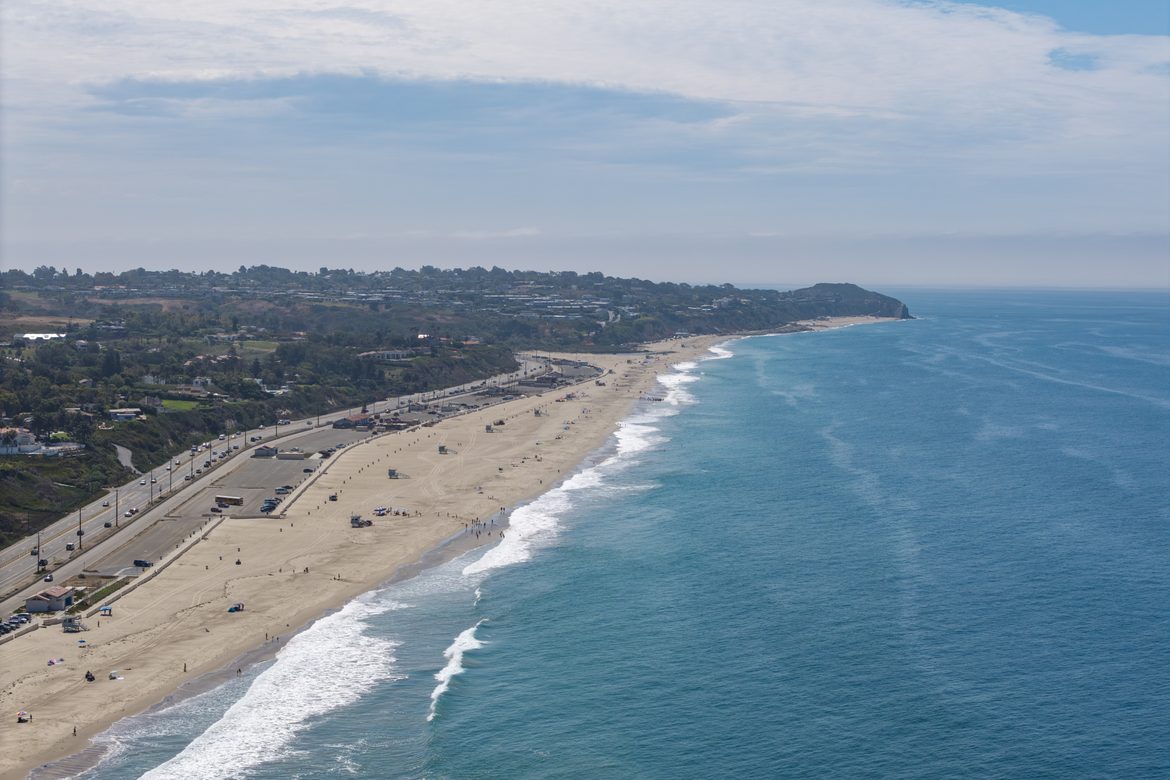
The surf is just as central. First Point at Surfrider Beach, beside the pier, is where modern California surf culture took shape. Gidget was written there in 1957, and in 2010 it became the world’s first World Surfing Reserve. Farther west, Zuma offers nearly two miles of beach break between Point Dume and Broad Beach. On Point Dume, a private beach key opens the way to Little Dume, a break sheltered from the prevailing westerly winds. At the western edge of town, Leo Carrillo State Beach adds tide pools, sea caves, and a winter point break that draws smaller crowds than the central spots.
Malibu’s other playground is the Santa Monica Mountains, which rise steeply just behind the shoreline. In Solstice Canyon, a popular trail leads to the ruins of an old ranch house and a waterfall. Escondido Canyon Park, recently expanded, offers views of Escondido Falls, the tallest waterfall in the range. For something shorter, the bluff-top trails of Point Dume Natural Preserve climb to ocean overlooks that are prime spots for watching migrating whales in season.
Areas, Not Neighborhoods
Malibu has no master-planned communities, so Reeder avoids the word “neighborhood” in its usual sense. Instead, when she drives buyers along the coast, she introduces buyers to distinct areas, each with its own character.
For families, few places are more sought-after than Malibu West, a small pocket off Trancas made up mostly of ranch-style homes. Residents belong to the Trancas Malibu West Beach Club. Kids ride their bikes to Trancas Market after school and play in the street. Reeder recalls homes here selling for $1 million to $2 million a decade ago. Today they generally trade between about $3 million and the low $4 millions, and the community is now gate-guarded.
The best-known address in town is Point Dume. Its main draw is the beach key, which unlocks one of three private access paths to the sand. Only certain streets come with one, so a key can add real value to a home. “There’s a mystique to Point Dume as far as having it all,” Reeder says, pointing to the privacy, the surf, and the acreage. Single-family homes start around $5 million, and bluff-top estates go far higher. Johnny Carson’s former estate on the point was listed in 2025 at $110 million.
Buyers who want to be closer to the center of town often look to Malibu Country Estates. Residents have access to the Pepperdine courts and club, and the good-sized homes typically sell for about $4 million to $8 million. On the water, the homes along Broad Beach don’t form a neighborhood in the formal sense, but the stretch is communal in its own way. Neighbors walk their dogs along the sand and pass one another on their morning walk.
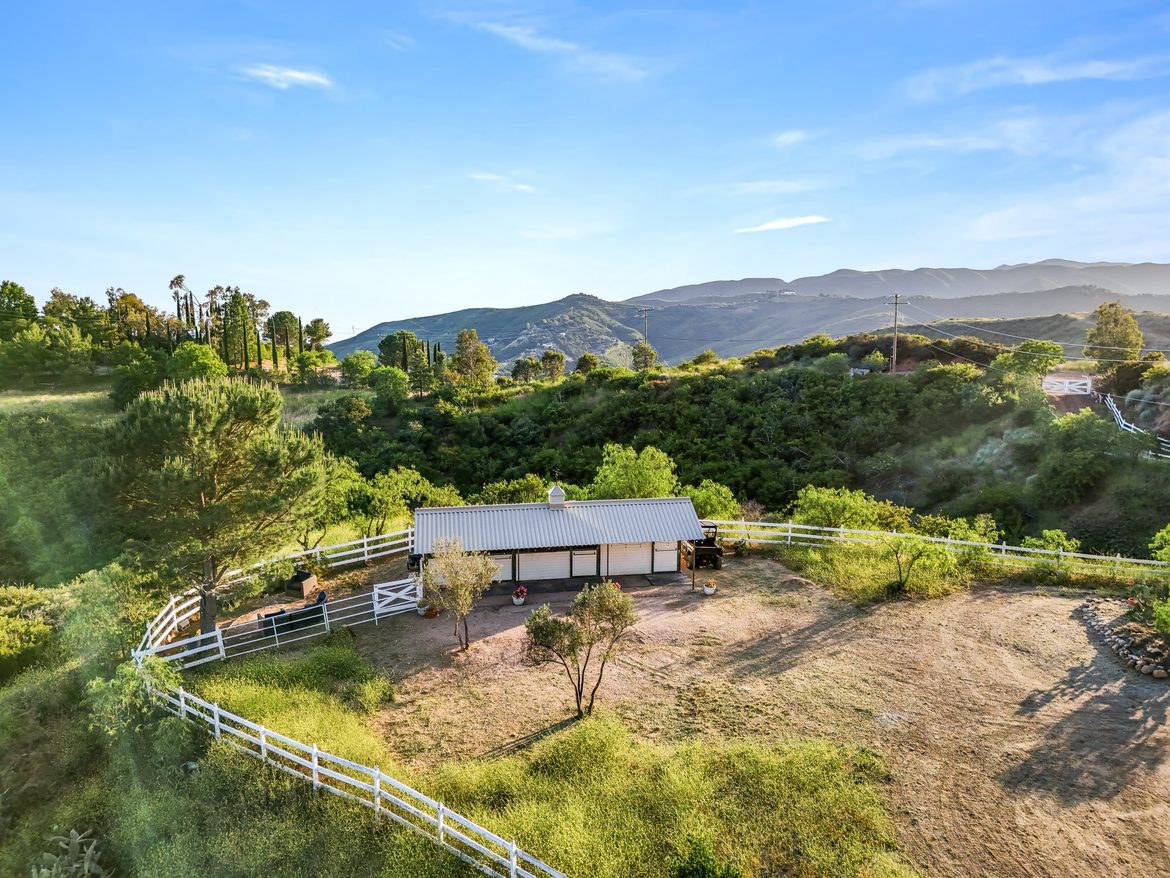
Geography matters too. Malibu divides roughly at Malibu Canyon and Pepperdine. Buyers who commute to Century City tend to choose the east side, closer to Santa Monica, while the west side runs out past Point Dume toward the Ventura County line. Back from the shore, the canyons have long been the most accessible way into Malibu, and buyers under $3 million are now seeing them as an opportunity.
Room to Entertain
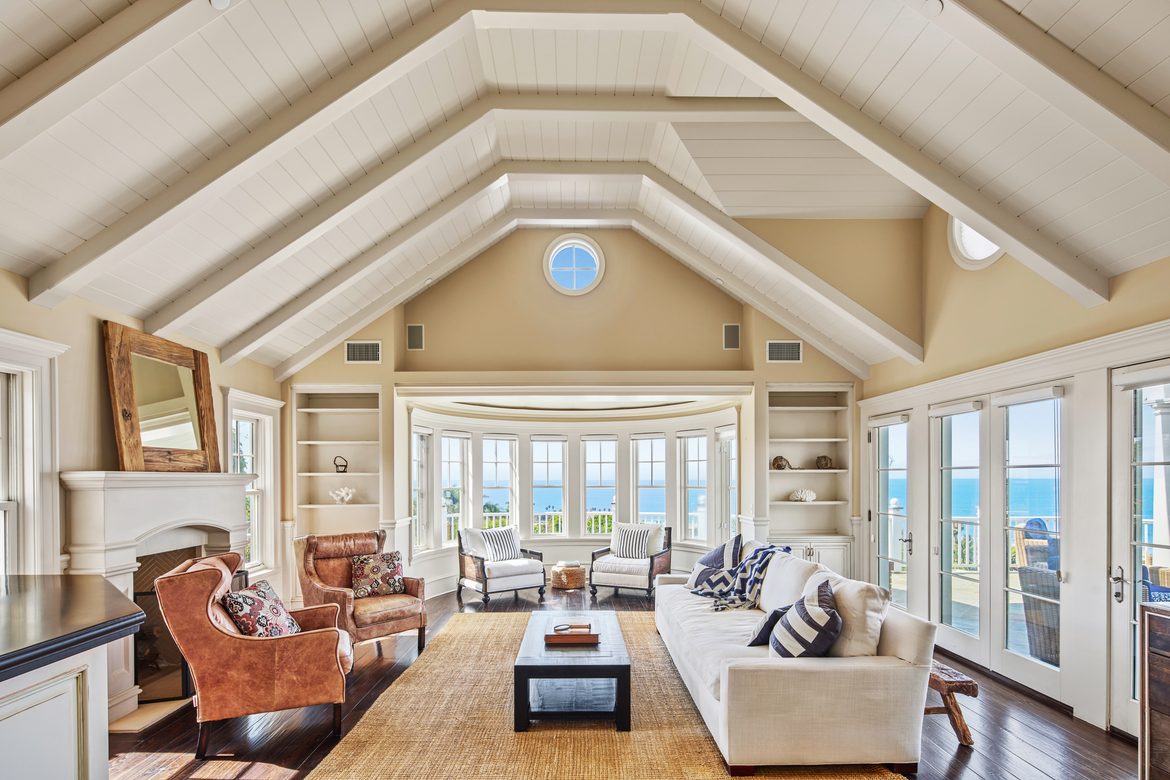
A few years ago, Reeder noticed buyers wanting to scale down, but that trend has reversed. Today’s buyers want bigger homes, guest houses, and large entertaining spaces. And theses buyers aren’t necessarily the ones with big families. “It could be a couple who just entertains and wants space,” she says.
She traces part of the shift to the pandemic, when many people moved to Malibu, stayed close to home and drew together as a community. Dinner parties at home came to feel more appealing than meeting at a restaurant, and the habit stuck. Distance plays a role too. Because friends think of Malibu as far out, an invitation often becomes “come stay for the weekend,” which calls for guest quarters. Many households also want space for a live-in nanny or housekeeper while keeping privacy for everyone.
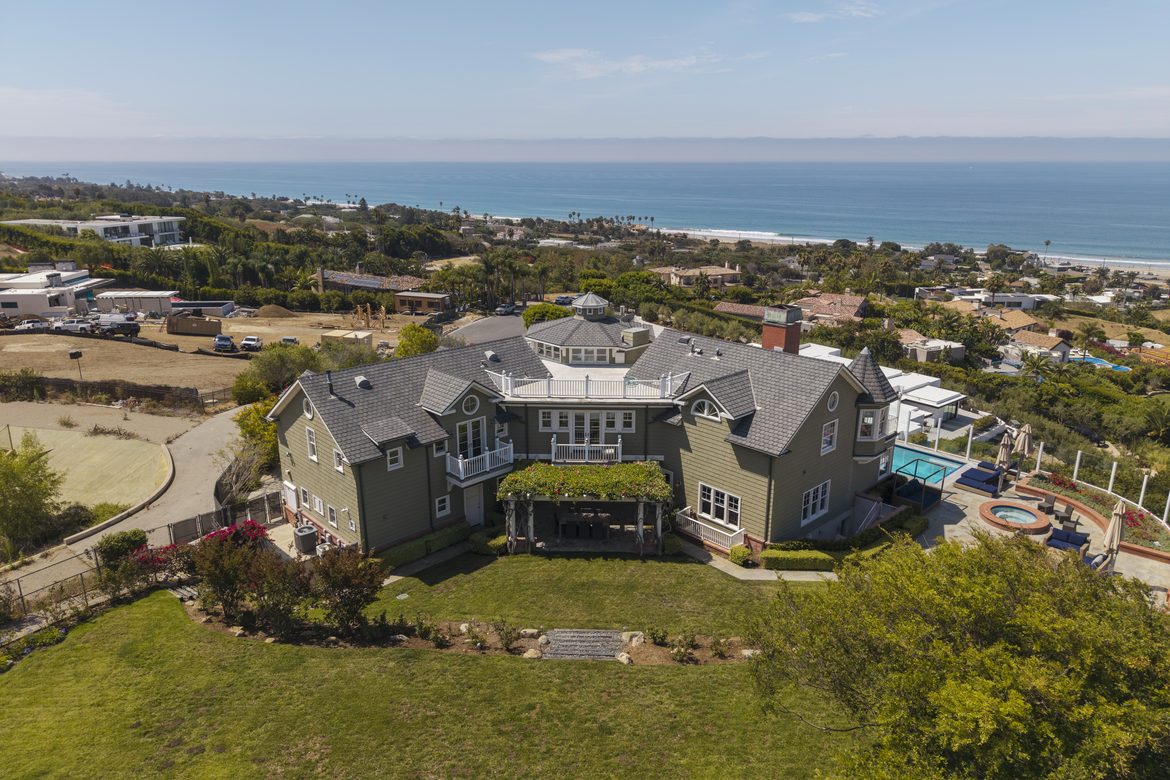
The architecture is changing with the appetite for space. Since the Woolsey Fire, modern builds have become far more common, with glass, square forms, and clean lines. The shift is most visible in Malibu Park, an area once known for ranch homes on large lots with big yards, pools, and room to roam. New homes there make the most of the lot instead. “They want the square footage of the house,” Reeder says, “and not just the square footage of the lot.”
The result, she says, is that Malibu offers a scale people associate with Beverly Hills estates, plus something Beverly Hills can’t: the ocean.
A Season of Renewal
But if you ask Reeder what draws people here, and she doesn’t start with square footage or ocean frontage. She talks about how life feels. “People will always love Malibu,” she says. In nearly three decades, she has watched buyer after buyer fall for the same things: the beaches, the privacy when they want it, and a community that is there when they don’t.
That town is now in a season of renewal after the fires. New homes are rising, new restaurants are opening, and families who know this coast are coming back to it. To Reeder, it all confirms what she has long believed: Malibu will always hold its value, because for so many buyers the Malibu estate remains the epitome of luxury.
About the Expert: Jill Reeder is a real estate agent with Compass, serving Malibu and surrounding communities.
This article is intended for informational purposes only and does not constitute legal, financial, or investment advice. The views and opinions expressed herein reflect those of the individuals quoted and do not represent an endorsement of any company, product, or service mentioned. Readers should conduct their own due diligence and consult qualified professionals before making any investment decisions.
Hero Image Credit: Steven Lippman
