
As trillions of dollars in luxury real estate begin changing hands, families are confronting difficult questions about stewardship, inheritance, and whether legacy properties still make sense for the next generation.
The largest transfer of wealth in modern history is already underway. According to a recent report from REALM Global, over the coming decades, trillions of dollars in assets will pass from Baby Boomers to their children and grandchildren, reshaping everything from investment portfolios to family businesses.
Real estate accounts for one of the largest components of that transfer, particularly in the luxury market, where estates, ranches, vacation homes, and legacy properties often carry not only extraordinary financial value but decades of family history.
Unlike stocks or cash, however, real estate cannot simply be divided into equal shares. Someone has to maintain it. Someone has to pay the taxes, insurance, and operating expenses. Someone has to decide whether the property remains part of the family’s future or whether its greatest value lies in being sold.
Those are the conversations that, according to Julie Faupel, founder and CEO of REALM Global and a longtime luxury real estate advisor through Compass, have become a routine part of advising affluent families. For luxury real estate advisors, the question is no longer simply who will inherit a property. Increasingly, it is whether the next generation actually wants the responsibility.

Ownership vs. Stewardship
Estate planning often focuses on transferring ownership. In practice, Faupel says, that’s only the beginning. “Each situation is nuanced,” she says. “You’ve got families that have planned down to the absolute detail how they want it to go. And then, of course, you’ve got children that don’t get along, as well as dynamics or interests that change.”
Unlike a financial portfolio, a luxury property cannot always accommodate competing priorities. One sibling may hope to preserve the family retreat for future generations. Another may live across the country and never use it. A third may prefer to sell and invest the proceeds elsewhere.
Even when families agree philosophically, the practical realities of maintaining a significant property can quickly complicate those intentions. As a result, Faupel says, the advisor’s role increasingly resembles that of a facilitator, helping families think through questions that extend well beyond the real estate transaction itself.
The Reality
Popular culture has a way of romanticizing inherited estates. “People watch Yellowstone on television,” Faupel says. “They think they’re going to inherit this incredible ranch, and it will be all glamorous and wonderful.” Then reality arrives. Many heirs, she says, are surprised to discover that these properties often come with annual operating costs in the six- or seven-figure range, along with the responsibility of managing the staff required to maintain them.
What those employees are maintaining often extends far beyond the home itself. Many luxury estates function more like small enterprises, with responsibilities that can include historic preservation, private roads, waterfront infrastructure, and mineral rights accumulated over generations.
For families inheriting those assets, ownership can quickly become a full-time management responsibility. That is why Faupel increasingly frames these discussions around stewardship rather than ownership. “The best thing we can do is get everybody around the table,” she said. “Let’s talk about what it means to be a steward of this property.”

Buying for the Next Generation
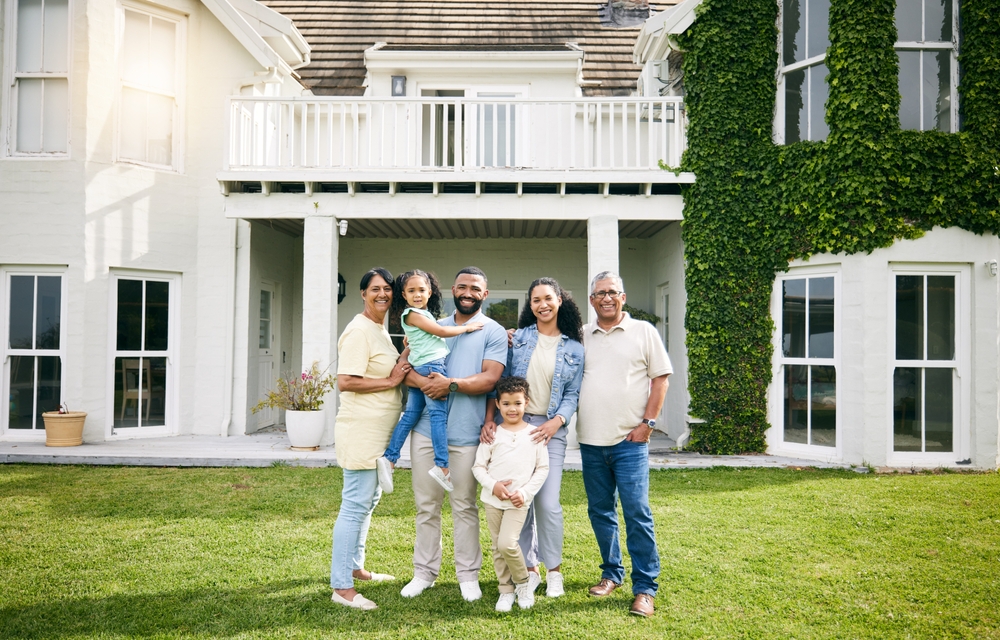
The inheritance conversation, Faupel says, often begins long before anyone dies. Increasingly, affluent grandparents are making purchasing decisions with future generations already in mind, thinking not only about where they themselves want to live but where children and grandchildren will want to spend time together.
“When you become a grandparent, it’s a highly competitive sport,” Faupel says. “If we have real estate in desirable places, our grandkids are going to want to come visit us.” That shift reflects a broader change in how many wealthy families think about real estate. The grandparent may still be writing the check, but the preferences influencing those decisions increasingly belong to younger generations.
Rather than buying solely for today’s lifestyle, families are asking whether a property will remain desirable twenty or thirty years from now. The goal is no longer simply acquiring an appreciating asset. It is creating a place future generations will actually want to inherit.

Planning Beyond the Transfer
Those long-term considerations have also changed how many affluent families structure ownership. Some properties are placed into trusts designed to establish governance, clarify responsibilities, and create a framework for decision-making that extends well beyond the current generation. Rather than leaving heirs to negotiate every future question themselves, these structures can spell out how expenses are shared, how major decisions are made and under what circumstances a property may eventually be sold.
The legal details vary from family to family, Faupel says, but the underlying objective is consistent: reducing uncertainty before it has a chance to create conflict.
Even then, no amount of planning eliminates the need for negotiation. Family dynamics evolve. Financial circumstances change. Children who once envisioned raising their own families at the lake house may build careers on the opposite coast. Properties that once anchored a family’s identity may no longer fit the lives of the people inheriting them.
In those moments, Faupel says, the conversation shifts from preserving the family’s original expectations to finding the outcome that best serves both the property and the people responsible for it. “The best solution for the land is not necessarily what the family wants,” Faupel says, “but it ends up being the best outcome for everyone.”

Two Different Legacies
In Faupel’s experience, most families eventually arrive at one of two conclusions. Some conclude that the property’s greatest value lies in preserving it. They establish trusts, management structures, and long-term funding to ensure it remains part of the family’s legacy for generations. Others conclude that selling is better for both the family and the property itself, allowing the proceeds to be reinvested while avoiding years of disagreement or mounting operating costs.
Neither outcome necessarily represents success or failure. The larger point, Faupel says, is that the coming wealth transfer is changing the questions families ask. For decades, luxury real estate has often been viewed primarily as a store of wealth. Increasingly, it is also becoming the setting for conversations about legacy, responsibility, and what families actually hope to pass from one generation to the next.
The legal transfer of a luxury estate may take only an afternoon. Deciding what comes next can take years.
About the Expert: Julie Faupel is Founder and CEO of REALM Global, a membership organization for luxury real estate advisors. Based in Jackson Hole, Wyoming, Faupel has worked in the local luxury real estate market for over two decades, advising clients on high-end residential transactions throughout Teton County.
This article is intended for informational purposes only and does not constitute legal, financial, or investment advice. The views and opinions expressed herein reflect those of the individuals quoted and do not represent an endorsement of any company, product, or service mentioned. Readers should conduct their own due diligence and consult qualified professionals before making any investment decisions.