A widening buyer pool of tech and venture wealth is converging with old-guard money, as Michelin-starred dining, invitation-only clubs, and a busier entertainment calendar reshape what luxury looks like in the capital.
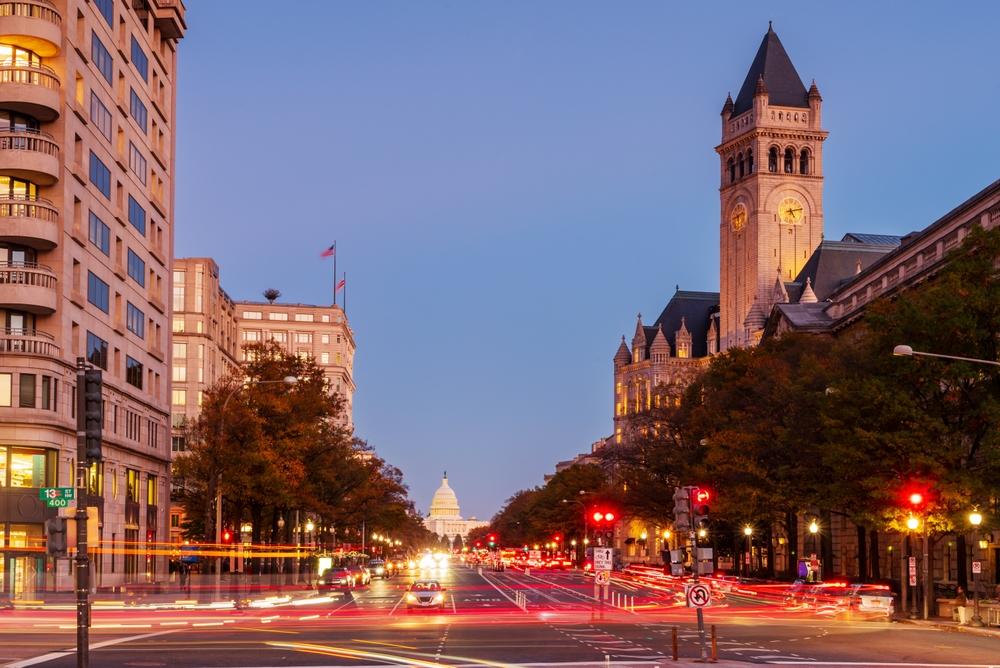
Washington, D.C. carries a reputation that rarely matches the reality on the ground. Visitors expecting a city defined by government buildings and Congressional gridlock instead find tree-lined streets, outdoor cafés, and a skyline that never rises above 14 stories – a restriction tied back to the Cairo, a Beaux-Arts apartment building on Q Street whose height sparked enough public outrage in 1894 that the city has capped new construction ever since.
That low skyline is only part of what makes the capital’s real estate market distinctive. According to Daryl Judy of Washington Fine Properties, a longtime agent serving the D.C. metro area, the city is also the greenest in the country by canopy coverage, with more parkland than any other major American metro. The result is a housing market with built-in scarcity: little room to build up, strict preservation rules on what already exists, and steady demand from a buyer pool that keeps expanding well beyond the federal government.
Beyond the Beltway’s Reputation
The government is still part of the story, Judy notes, but it’s no longer the whole story. Law firms, lobbying groups, and think tanks remain a major economic engine, but they now share the stage with a tech corridor running from Reston out toward Dulles Airport, a biotech corridor stretching north through Maryland along Route 270, and a growing venture capital presence drawn by the concentration of government connections and institutional money. Amazon’s headquarters in Crystal City and Microsoft’s regional presence have reinforced that shift, alongside companies drawn to a market that Judy describes as unusually well-educated and affluent.
The buyer pool reflects that same tension between old and new. Judy sees plenty of inherited wealth and multigenerational trust funds – the kind of money that has quietly anchored certain D.C. neighborhoods for decades – sitting alongside a newer class of self-made buyers: venture capitalists, biotech executives, and law firm partners who built their fortunes rather than inherited them. It’s not unusual, Judy says, for those two buyer types to end up competing for the same house.
That mix extends to the international community as well, tied to the city’s embassies and global institutions, and to the occasional headline name; Jeff Bezos, owner of the Washington Post, keeps a home in the area. The result is a buyer pool with no single profile – old-guard and newly minted wealth, government-adjacent and entirely independent of it, all drawing on the same limited stock of high-end properties.
‘City Burbs’ to City Center
D.C.’s low-rise skyline shapes daily life in ways that go beyond zoning. Judy calls the city “a big small town,” dense in population but contained in scale. That containment gave rise to what locals call “city burbs”: neighborhoods like Kent, Palisades, Spring Valley, Cleveland Park, and Chevy Chase that sit ten to fifteen minutes from downtown but feel, with their mature trees and quiet streets, more like the suburbs than the city.
These are neighborhoods of large lots and older houses – Colonials, Tudors, and center-hall stone homes set well back from the street, many dating to the early twentieth century. A resident can walk a dog under a canopy of oaks in the morning and be at a K Street office twenty minutes later.
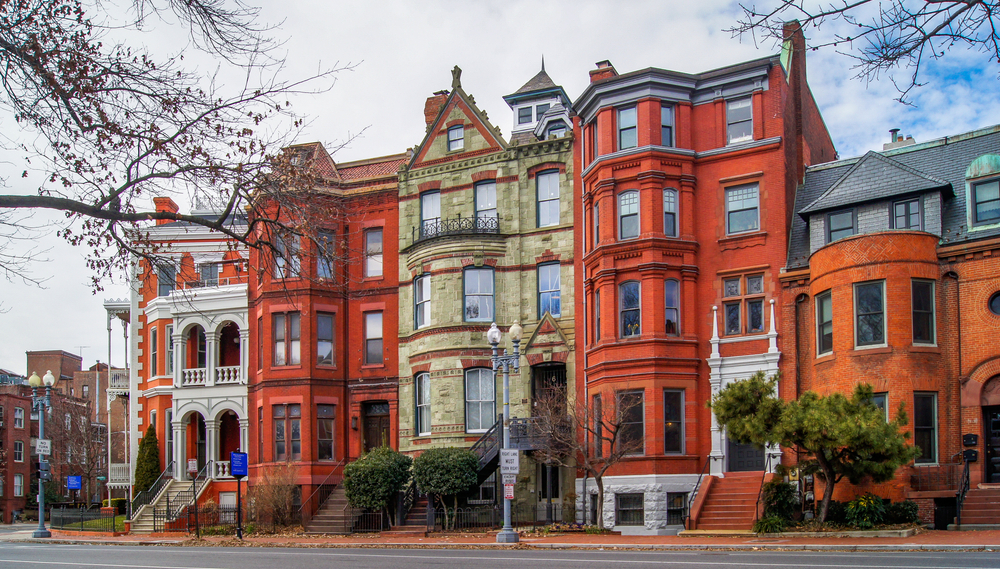
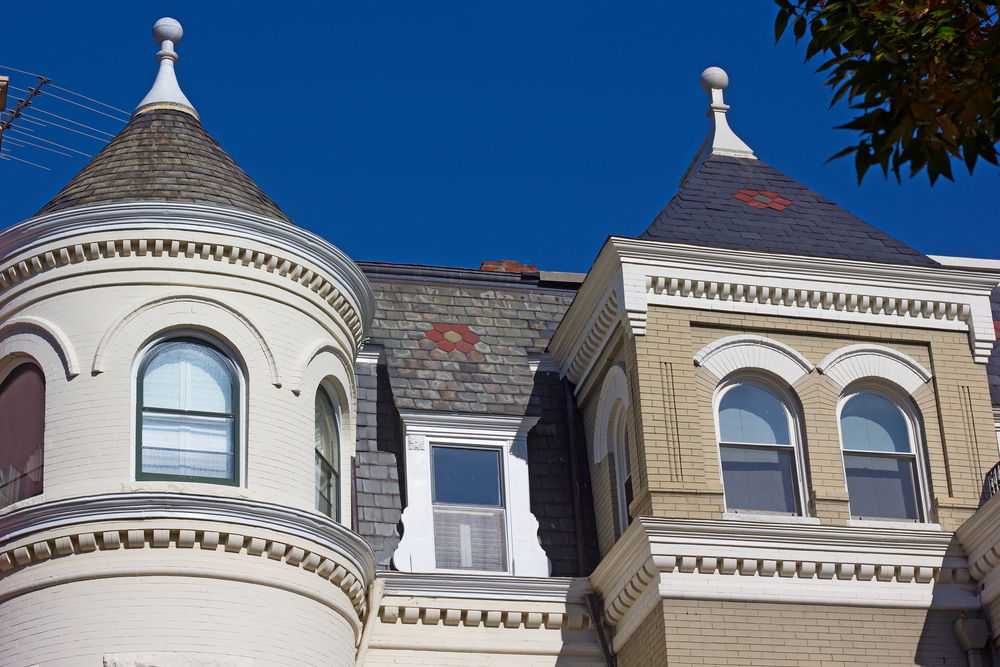
Downtown living has its own draw. Neighborhoods like Logan Circle – which Judy compares to New York’s West Village for its brownstone homes and walkability – offer a European-style pace: outdoor cafés, small boutiques, and a mix of longtime restaurants and new retail arrivals rather than the flagship brands found in the City Center shopping district, home to Dior, Hermès, and Ferragamo. Logan Circle’s streets are lined with Victorian rowhouses, many restored to their original brick-and-bay-window facades, radiating out from the traffic circle and its Civil War-era statue at the center.
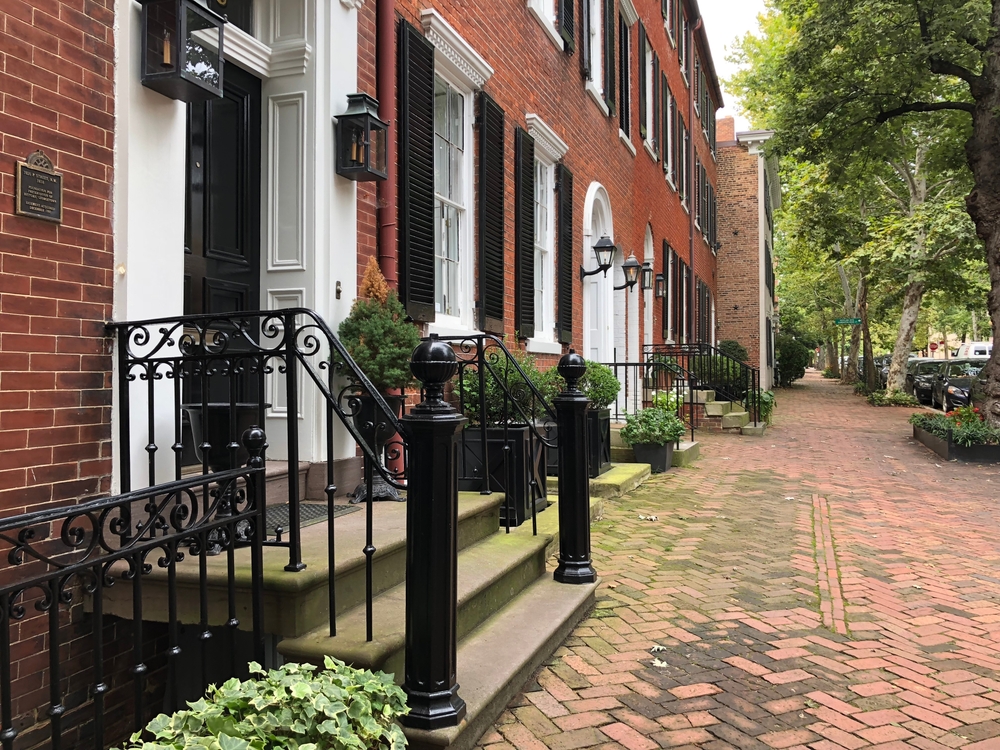
A few blocks north, Dupont Circle carries a similar hip character but a more established, old-Washington feel, with embassies and private clubs tucked among its residential blocks. Georgetown, further west along the river, adds cobblestone streets and Federal-era architecture to the mix, along with some of the highest property values in the city.
A Market Transformed
Judy has lived in D.C. for more than 30 years and has watched the city’s high-end lifestyle shift substantially in that time. The restaurant scene, once thin enough to be called a “food desert,” now draws national attention: the Michelin Guide added D.C. to its coverage in 2016, and the city has built a reputation for serious dining ever since. Chef José Andrés has been central to that rise – his Jaleo helped establish D.C.’s tapas scene in the 1990s, and his tasting-counter restaurant, called minibar, now holds two Michelin stars and remains one of the hardest reservations in the city. That caliber of dining now extends across the city rather than concentrating in one district.
The entertainment scene has grown alongside the dining. Concert venues like The Anthem at The Wharf and Capital One Arena have made the city a viable stop for major touring acts, a marked shift from the days when the city’s live music scene ran through smaller rooms like the 9:30 Club or outlying venues like Merriweather Post Pavilion and Wolf Trap. Judy notes that top performers now routinely add a second night in D.C., confident the market’s wealth will fill both.
The Wharf itself, once an underdeveloped stretch of waterfront, has become a draw in its own right, anchoring a broader wave of development that includes the ballpark district around Nationals Park. Sports have followed a similar arc: the World Series-winning Nationals, the Commanders, and a passionate hockey and soccer following have turned game nights into another fixture of the city’s social calendar.
Ride-sharing has reshaped the map rather decisively. Before Uber and Lyft, Judy says, getting from one part of the city to another reliably was difficult enough to limit where people chose to live: the Metro only reaches so far, and the old cab system, with its confusing zone-based fares instead of meters, discouraged casual cross-town trips. Ride-sharing changed that calculus, turning neighborhoods that once felt inconveniently far from downtown into realistic options. The result, in Judy’s view, is a metro area that has spread out considerably, with buyers now willing to consider a much wider map than they would have a decade ago.
Clubs, Old and New
Private clubs remain deeply woven into the city’s social fabric, and D.C.’s roster spans generations of institutions. On the old-guard end, Judy points to the Georgetown Club and the University Club, along with a cluster of golf and country clubs that have long anchored the area’s social calendar: Chevy Chase Country Club, Columbia Country Club, Congressional Country Club, the Army Navy Club, and the Washington Golf and Tennis Club. Membership at many of these clubs is generational, passed down within families and tied closely to specific neighborhoods.
That traditional landscape now sits alongside newer, more exclusive arrivals. Ned’s Club, an invitation-only members’ club with outposts in London and New York, opened its D.C. location roughly two to three years ago, bringing a more international, by-application model to a club scene that had largely run on longstanding family ties. The mix, Judy suggests, reflects the same push and pull that defines the broader luxury market: an established old guard maintaining its institutions even as newer forms of exclusivity stake out their own place in the city’s social hierarchy.

Global Appeal
For many of D.C.’s wealthiest residents, the district is one fixed point in a life that moves constantly between others: a ski house in Aspen, a winter place in Palm Beach, a beach house in Nantucket. Some clients keep three or four homes rather than two; others maintain their primary residence elsewhere entirely, often for tax reasons, and treat D.C. as a pied-à-terre for the weeks they’re in town for business or government work.
That rhythm says something about what D.C. has become. It’s not a city people retreat to, but one they build into a broader itinerary, alongside second homes, family scattered across continents, and a calendar that is constantly shifting. For a market once defined almost entirely by its relationship to federal power, that’s a meaningful shift: D.C. has earned a place on the same circuit as the Hamptons and Napa Valley, a city wealthy families willingly choose to be part of rather than one they’re simply stationed in.
About the Expert: Daryl Judy is a real estate agent with Washington Fine Properties, based in Washington, D.C. He serves clients throughout the district and the surrounding Virginia and Maryland suburbs, including McLean.
This article is intended for informational purposes only and does not constitute legal, financial, or investment advice. The views and opinions expressed herein reflect those of the individuals quoted and do not represent an endorsement of any company, product, or service mentioned. Readers should conduct their own due diligence and consult qualified professionals before making any investment decisions.