
As seasonal buyers give way to full-time families, deliberate limits on growth are keeping Naples from becoming the next Miami.
By Chris Caggiano
Picture a typical evening in the Naples that longtime residents remember: the sun dropping toward the Gulf in a slow burn of orange and pink, a crowd gathering along the pier or the beach, not to see and be seen, but simply to watch it go down, the way people here have done for decades. Afterward, dinner on Fifth Avenue wouldn’t run late. The shops would close early, the sidewalks would empty out, and by ten o’clock the loudest sound in town might be the palms moving in the breeze off the water.
For most of its history, Naples has been defined by what it wasn’t. It wasn’t Miami, with its high-rises and its traffic and its nightlife. It wasn’t even quite Palm Beach, with its old-guard formality. That was the appeal: golf courses instead of nightclubs, boating instead of boat shows, an evening that ended quietly instead of one that was just getting started. Buyers claimed that rhythm for a few winter months each year and then left it largely to itself. By May, the restaurants thinned out, the tee times opened up, and Naples exhaled until the following January.
No More Off-Season
That rhythm has broken. Real estate agent Andrea Rosil of Coldwell Banker in Naples didn’t manage her usual month off this summer – she took one week, because transactions in the town didn’t slow down enough to let her take the full month. The shift shows up just as clearly in the numbers as in her schedule: her daughter’s school grew from roughly 300 students to 700 in two to three years, and the growth isn’t confined to the classroom. Collier County’s population climbed from 375,752 residents at the 2020 census to an estimated 417,131 in 2025, an increase of roughly 11% in five years. The Naples that used to go quiet every spring is now, for the first time, staying full. And it isn’t filling up with second-home buyers anymore so much as it’s filling up with residents.
But those numbers only mean something once you know what “luxury” and “ultra-luxury” mean here. Rosil draws the line at $3 million: that’s the entry point for the luxury tier in Naples. Ultra-luxury starts considerably higher, in the $20 million to $35 million range, and sales at or above $35 million – once the province of a handful of waterfront estates – have become markedly more common over just the past two years. That’s the scale against which the rest of this market needs to be read.

A New Kind of Arrival
The families driving that growth aren’t arriving from out of state so much as they’re arriving from Miami. Recent homebuyer search data indicates that Miami sends more prospective buyers into the Naples market than any other metro area, ahead of Chicago and New York. As Miami’s own boom has intensified – pulling in tech money, New York transplants, and a fast-paced, high-traffic lifestyle to match – a segment of its residents has decided they’d rather not keep up with it.
What they’re moving toward has real numbers behind it. U.S. News & World Report ranked Naples the single safest place to live in the entire country for 2022–2023, based on crime data. The school district carries an “A” state rating. Neither of those rankings is new, exactly – Naples has shown up near the top of “best places to retire” lists for years – but what’s changed is who’s reading them. A ranking built to reassure retirees is now doing the same work for parents.
That distinction matters, because the calculation for a family relocating full-time is different from the one a retiree makes. Florida’s lack of a state income tax has always been a draw, but Rosil points to a more specific mechanism now shaping the timing of who moves and when: establishing residency for tax purposes requires living in the state at least six months and a day each year. Combined with remote work flexibility and a renewed emphasis on wellness, that’s pulled Naples’ unofficial high season away from the traditional January-through-March window and toward October through May, a shift that tracks with families building a real, year-round life here rather than visiting one.
Growth by Design
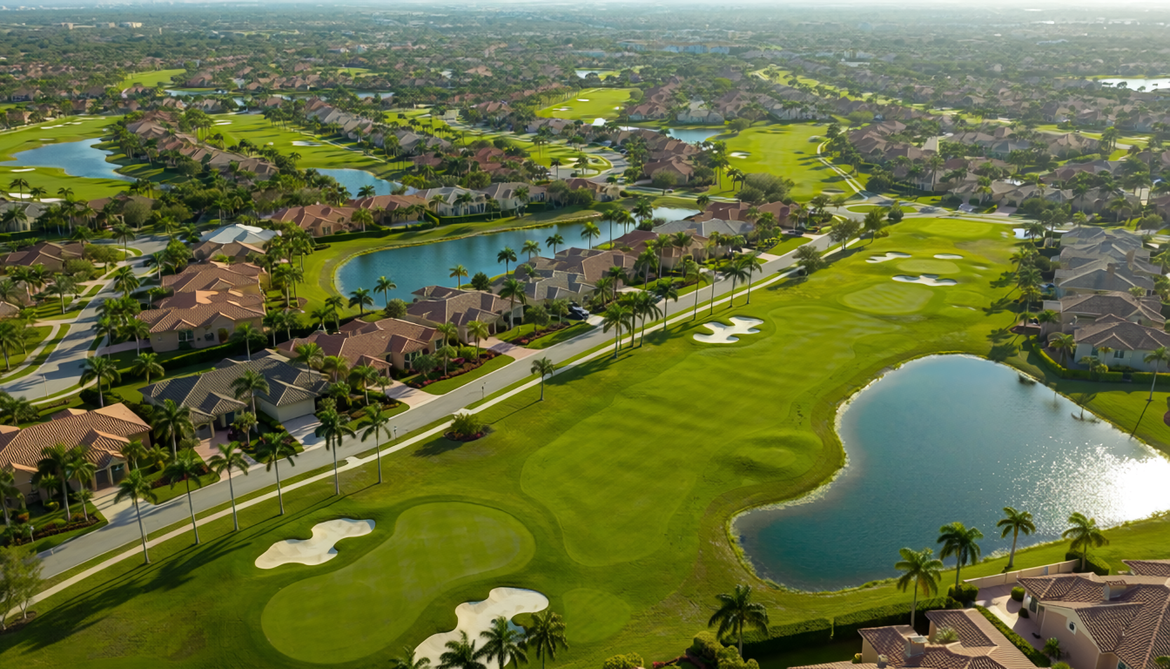
That raises the obvious question: with Palm Beach and Miami both competing for the same wealth, why does it land in Naples? Part of the answer is that Naples has made itself harder to get to on purpose. There’s no international airport – flights land in Fort Myers and visitors drive about 35 minutes to Naples. That means that tourists don’t have quite the same easy access to Naples that they do to other Florida destinations. The town is also organized into more than 100 gated communities, each with its own clubhouse and calendar of member events.
At the market’s highest tier, that infrastructure functions as more than amenity – it’s a form of privacy that buyers moving eight-figure sums increasingly treat as a baseline requirement, not a luxury. None of this is incidental. It’s a set of deliberate constraints that keeps Naples from scaling the way Miami has, even as demand pushes in the same direction.
The building height cap is the clearest example of that intent, because Naples has actively fought to keep it. Commercial construction in the city is limited to roughly three stories, although for years developers found workarounds through case-by-case variances. In 2020, the city closed that loophole for good, voting to eliminate exceptions entirely. The decision leaned on a formal planning study that concluded the low skyline wasn’t incidental character – it was the mechanism protecting the town’s identity as growth accelerated around it.
The changes underway on Fifth Avenue follow the same logic. In 2022, the city’s Community Redevelopment Agency completed a formal master plan for what’s now called the Naples Design District, developed with DPZ Co-Design, the planning firm behind the New Urbanism movement. Around the same corridor, a nearly two-block redevelopment now under construction, on the site of a longtime restaurant near Fifth Avenue’s Four Corners, is combining luxury condominiums with new retail and dining, extending the avenue’s footprint toward Third. None of it happened by accident. The town is absorbing growth according to a plan, not simply reacting to it.
Restrained on the Surface, Fast Underneath
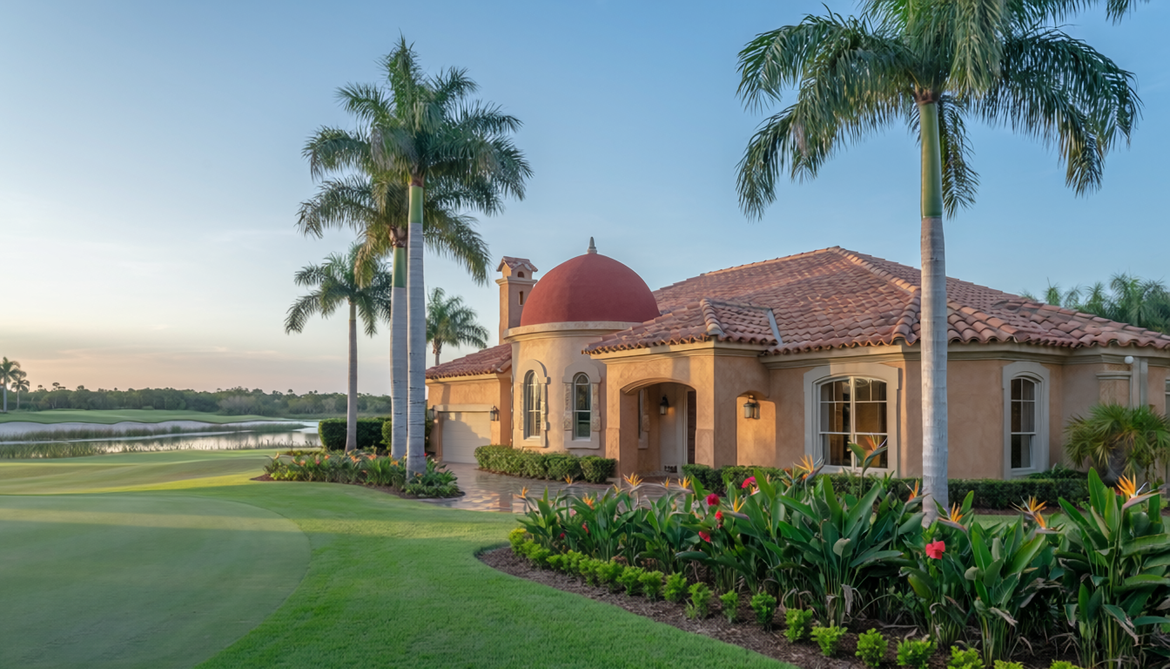
That control runs up against something else happening at the same time: Naples is changing fast while insisting it hasn’t changed in character. Rosil is careful to distinguish the town from its neighbors – less flashy than Miami, more family-oriented than the party scene further north, a different kind of wealth than Palm Beach’s. At the same time, she describes a market moving quickly enough to be hard to track: three new restaurants announced in a single month, a fourth private club opening where only one existed for years, luxury condo development starting at $2.5 million and climbing.
The numbers back up her sense of acceleration. In the first quarter of 2025, Naples-Marco Island ranked ninth nationally among the country’s most expensive single-family home markets – the only market outside California to crack the top ten. The hospitality landscape tells a similar story: Naples is one of the few markets in the country with two Ritz-Carlton properties, alongside a newly opened Four Seasons, and branded residential development – long a fixture of markets like Miami and Palm Beach – has now arrived here too, with new projects underway from both brands. And in 2024, a waterfront property in Port Royal sold for $36.49 million, the highest price ever paid for a home in the neighborhood – a record that would have been unthinkable in the Naples Rosil describes from a decade ago.
Naples isn’t choosing between staying quiet and growing up. It’s doing both, on its own terms – restrained in its physical footprint and its self-image, expansive in nearly everything else. Whether that balance holds as more of Naples starts drawing comparisons to Beverly Hills and Monaco, rather than to a Florida retirement town, may be the more interesting question for the market’s next few years.
About the Expert: Andrea Rosil is a real estate agent with Coldwell Banker in Naples, Florida, specializing in luxury residential real estate, and is a member of REALM Global, an international network of real estate professionals working in the ultra-luxury segment.
This article is intended for informational purposes only and does not constitute legal, financial, or investment advice. The views and opinions expressed herein reflect those of the individuals quoted and do not represent an endorsement of any company, product, or service mentioned. Readers should conduct their own due diligence and consult qualified professionals before making any investment decisions.