Dana Point’s oceanfront communities have long held some of Orange County’s most coveted addresses. Now a sweeping harbor redevelopment aims to give the town a public life on the same level.
By Chris Caggiano
In Dana Point’s gated enclaves, a social life comes with the address. At the Monarch Bay Beach Club, every homeowner is a member, and a member’s number is simply their house number. Neighbors arrive by golf cart, attendants set out chairs and umbrellas, and the bar is a reliable place to run into someone you know.
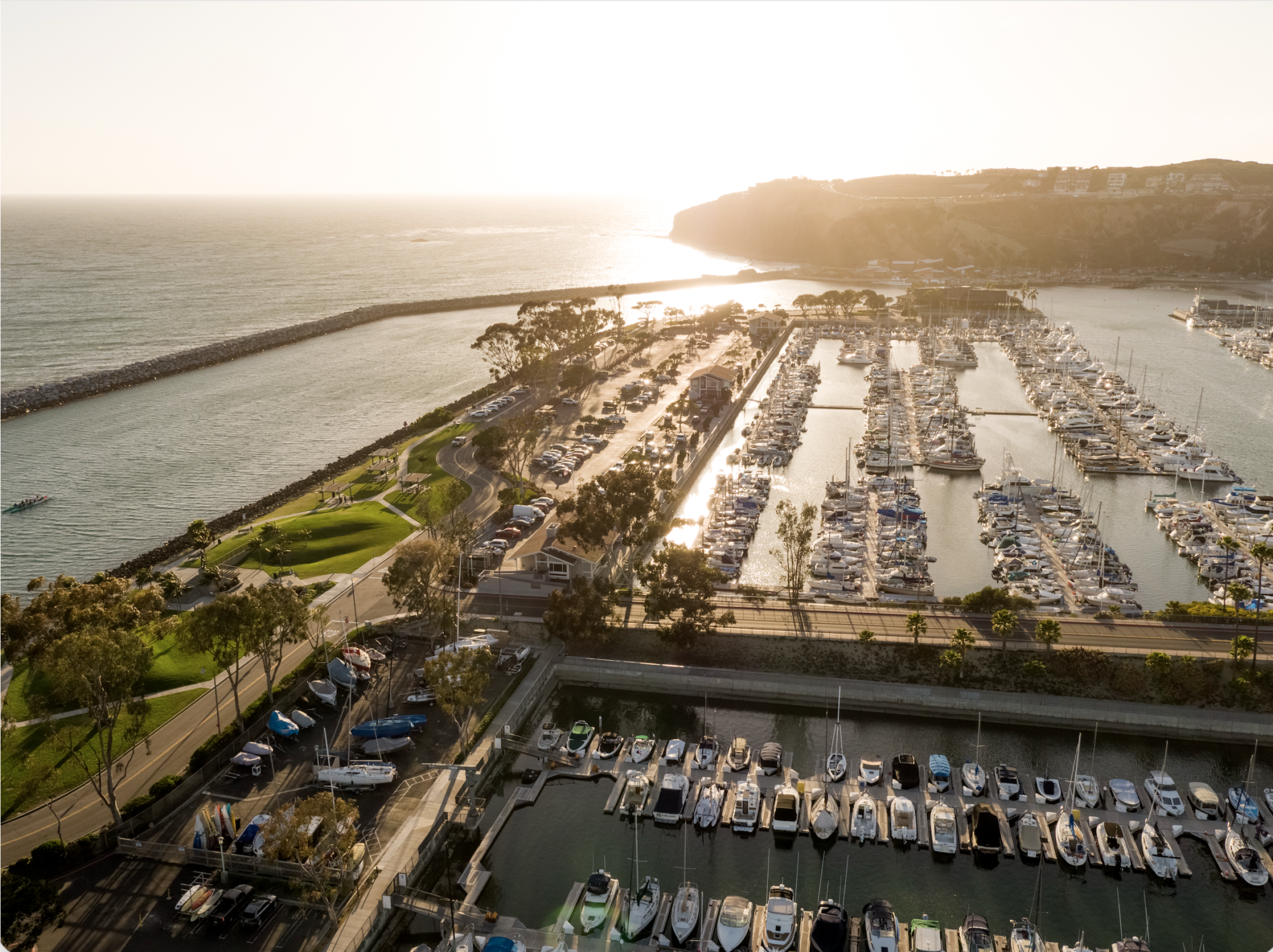
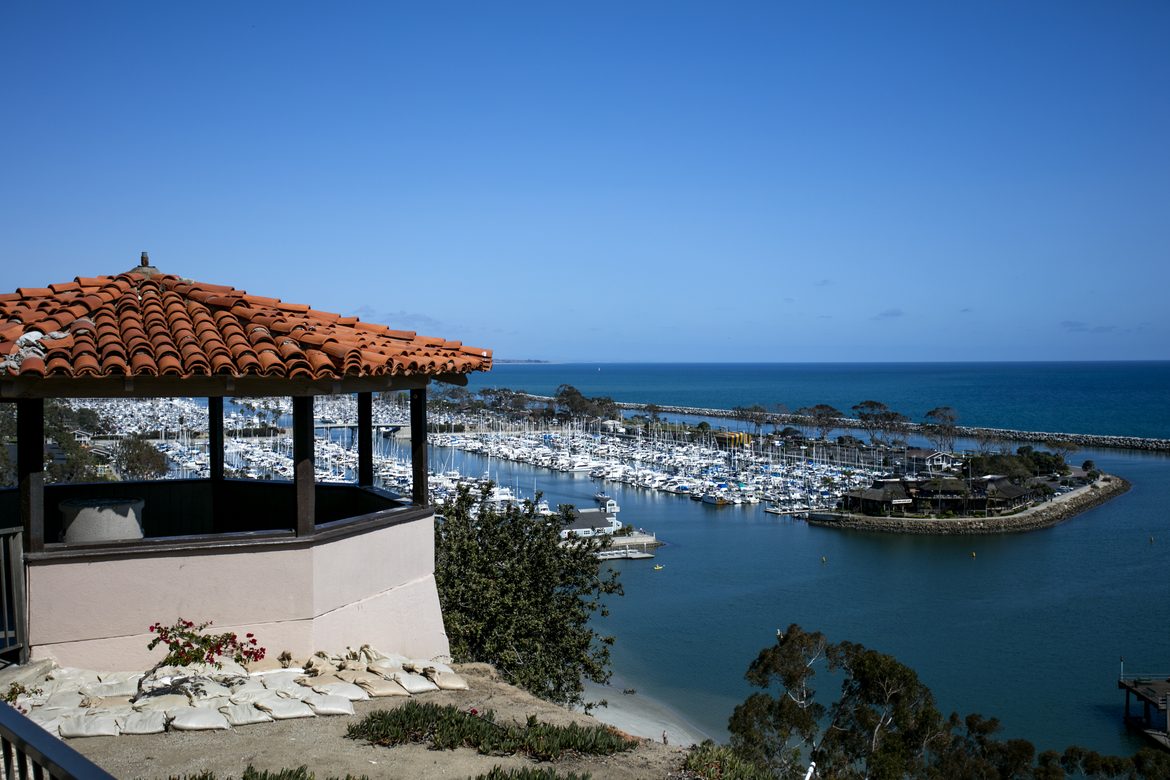
A short drive south, Dana Point Harbor is a construction zone. New docks are already in the water, and older waterfront buildings are coming down to make room for restaurants, shops, a food hall, and two new hotels.
That contrast defines Dana Point, California, today. The city’s guard-gated oceanfront enclaves are firmly ultra-luxury, though a small step below the county’s most expensive communities farther north. The town around them, however, has remained in many respects a low-key surf town. A redevelopment of the county-owned harbor, now expected to cost more than $600 million, is intended to give Dana Point an upscale public life to match its private one. The town is setting out to make that change while preserving the surf-town character that drew many of its residents in the first place.
Where Luxury Begins
Dana Point’s guard-gated oceanfront enclaves sit squarely in the ultra-luxury tier. Although Dana Point doesn’t have the spectacular numbers of its northern neighbors, where a home sold for a county-record $110 million in June, its own record stands at about $33 million, set in Monarch Bay. What the city offers in place of a higher price ceiling is space, coastline, and communities organized around how residents want to live.
Within that market, Roderic Stadelmann, co-founder and principal of White Label Home Collective at Compass, thinks in terms of “prime” and “super prime” rather than fixed thresholds. In his view, luxury in Dana Point begins around $5 million, prime territory starts near $8 million, and the super-prime tier begins somewhere north of $10 million to $12 million.
Nearly all of that top tier sits inside the city’s guard-gated oceanfront enclaves. Some of those enclaves arrived at their current values only recently. Monarch Bay, for decades, sat on land leased from one of the county’s oldest landowning families. In 2020, residents paid $225 million to buy out the ground lease. Homes that had typically sold for $2 million to $6 million have since traded for $12 million to $33 million.
What drives demand for those addresses, in Stadelmann’s experience, is room. He describes a migration that moves in steps: buyers from Los Angeles settle in Newport Beach, and Newport Beach buyers, in turn, increasingly look south to Dana Point, which offers lower density, wide streets, and less congestion. Stadelmann says that buyers tell him, “Man, when I come down here, I can breathe.”
The buyers themselves span generations. Alongside retirees and established multigenerational families, Stadelmann sees younger families who have done well over the past decade stepping up into the gated communities. Some still work in Los Angeles, driving to offices in Santa Monica a few days a week.
Social or Secluded
Once buyers arrive, the choice among Dana Point’s enclaves turns less on price than on temperament. Stadelmann’s first question is what a buyer wants to prioritize: a sociable, walkable life built around shared amenities, or privacy.
For privacy, he points to the Strand at Headlands. The community occupies 121 acres on the bluffs above the Dana Point headland, land that was a mobile home park until the late 1980s. It was one of the last large undeveloped coastal parcels in Orange County. Since opening in 2006, the Strand has filled its 118 custom-home sites with new construction. Stadelmann describes it as quieter and more reserved, with fewer young children: residents use the clubhouse and gym, take beach walks, and largely keep to themselves. By his estimate, entry prices now start around $18 million to $20 million.
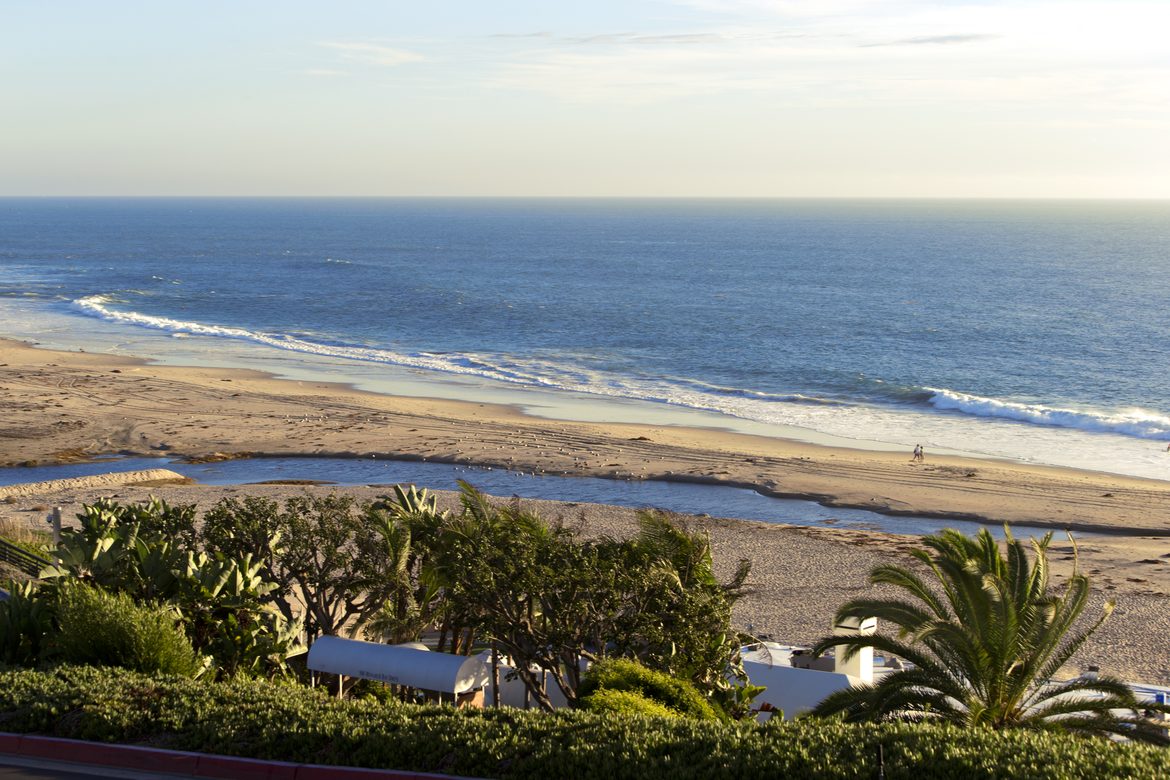
Monarch Bay, at the city’s northern end, is the most social of the enclaves, built around a shared beach club where neighbors see one another daily. Its 214 lots hold mostly 1970s-era homes, which Stadelmann says typically run 2,000 to 3,500 square feet under single-story height limits. Every homeowner belongs to the beach club, which is operated with the neighboring Waldorf Astoria resort and offers beachfront dining, a bar, and chair and umbrella service. The public can reach the beach, but the walk from public parking is long enough that the club’s stretch of sand feels nearly private.
In Monarch Bay, buyers mostly pay for the land and the address rather than the house. Renovating one of the original homes can cost $2 million, and adding square footage to an existing home costs more, so many buyers just tear down and rebuild instead. By Stadelmann’s estimate, a teardown without a view now starts in the $7 million range, and an original home with any view begins around $10 million to $12 million. New construction trades at a significant premium. Not every buyer wants a bigger house, though. The smaller homes suit many of Monarch Bay’s retirees, who could easily afford a 10,000-square-foot house but have no need for one.
Ritz Cove sits between those two poles. Its homes are larger, typically 6,000 to 12,000 square feet, and older, many in a Mediterranean or Northern Italian style. The community has loosened its design rules to allow more contemporary architecture, which Stadelmann sees as an opportunity, though remodeling a home that size is a much larger undertaking.
Life Outside the Gates
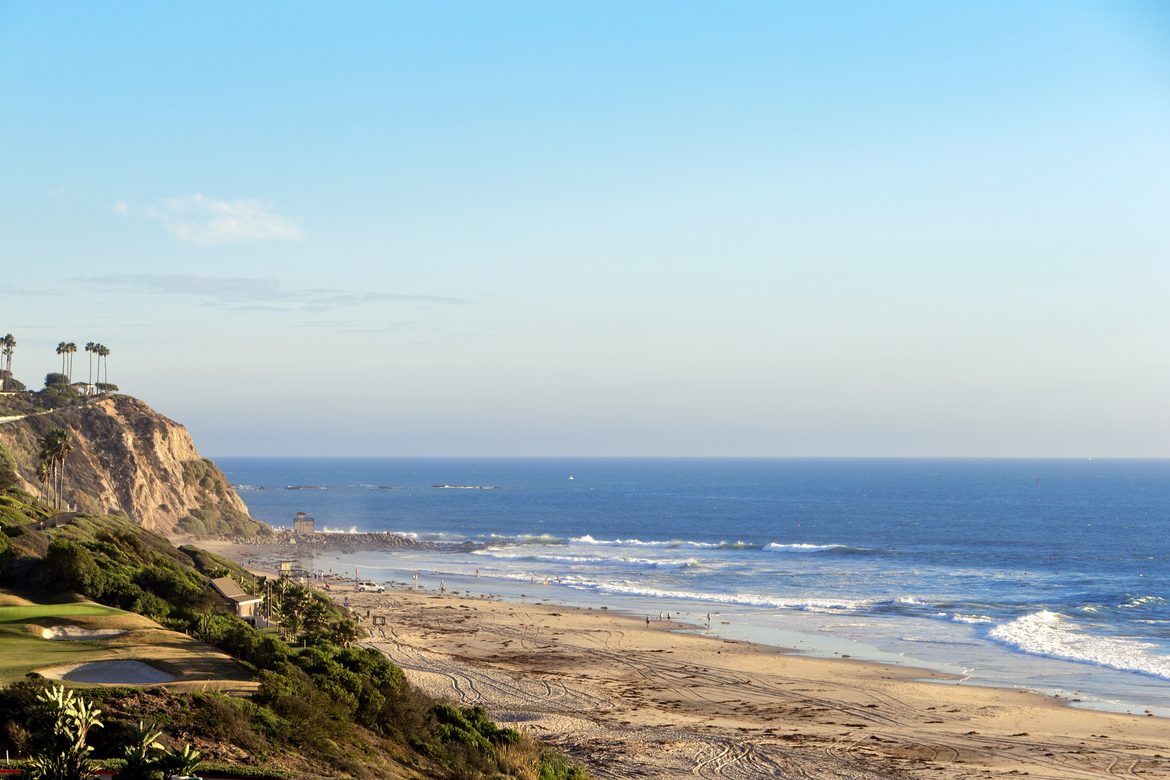
Whatever their temperament, residents across the enclaves share one habit: they spend their time outside. Two oceanfront resorts anchor that life. The Ritz-Carlton, Laguna Niguel, sits on the bluffs above Salt Creek, and across the road the Waldorf Astoria Monarch Beach backs onto the 18-hole Monarch Beach Golf Links. Many residents buy memberships at the Waldorf, which opens its beach club, pool, gym, and spa to them, and the resort’s restaurants double as neighborhood gathering places. Bourbon Steak, Michael Mina’s steakhouse there, has earned a Best of Award of Excellence from Wine Spectator for its wine list.
For private golf, residents turn to El Niguel Country Club, an 18-hole course minutes from each of the enclaves. Opened in 1963, the club sits in Laguna Niguel, the inland city bordering Dana Point, and adds a traditional country club to the beach clubs and resort memberships.
The coastline shapes daily routines as well. North of the headland, Dana Point’s shore breaks into rocky points and small bays that keep currents low, so the water stays clear rather than clouded with churned-up sand. South of the headland, Capistrano Bay opens to the full ocean, with stronger currents and deeper water, which is why the harbor sits where it does. The same geography sets the surfing map. Salt Creek and Strands, north of the harbor, feature the more demanding breaks, while Doheny State Beach, just south of it, is known as a beginner-friendly surfing spot.
The result is a social life that crosses generations. Stadelmann describes residents in their 30s to 50s mixing constantly with neighbors in their 60s to 80s, a blend he attributes to low density and abundant shared space. The places where those generations meet, however, are almost all private or semi-private: beach clubs, resort memberships, and country clubs.
A Harbor and a Surf Town
What Dana Point has lacked is a public center on the same level as those private settings, and the harbor redevelopment is designed to supply one. The county-owned harbor covers about 277 acres of land and water, and since 2018 much of it has been leased to Dana Point Harbor Partners, a venture of three Newport Beach-based developers, under a 66-year agreement to fund, rebuild, and operate it.
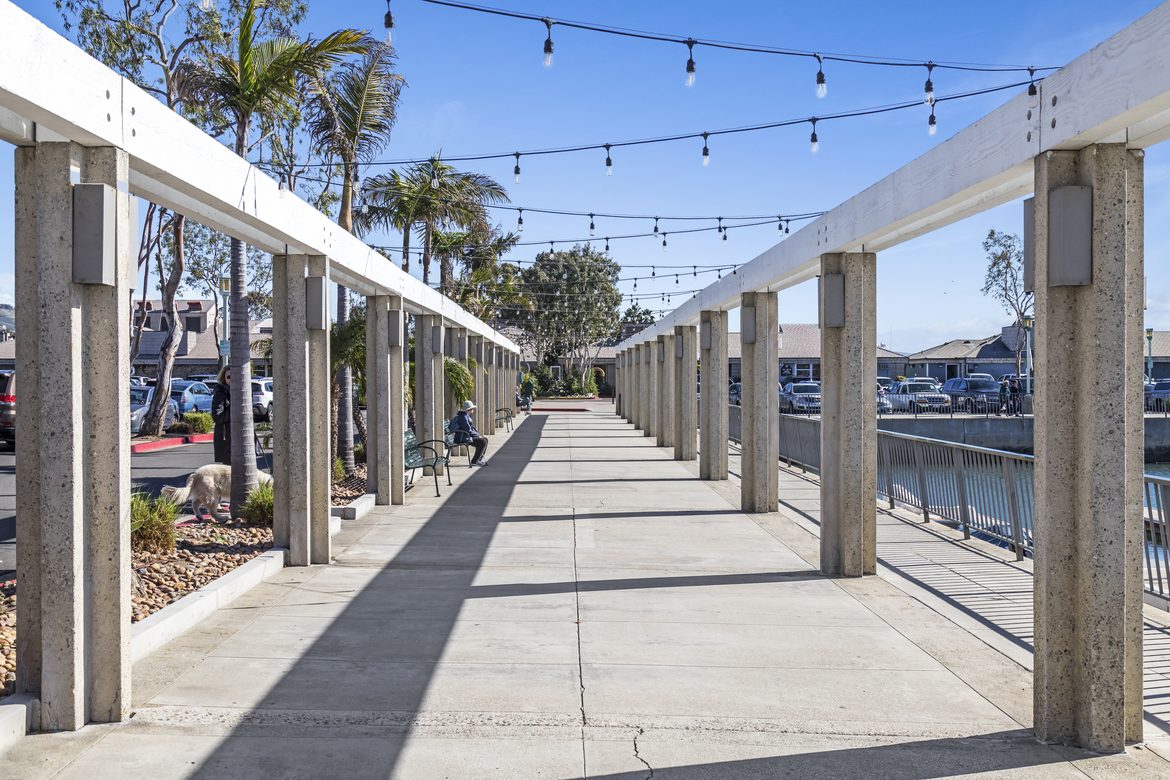
On the water, about 580 aging docks have already been replaced, with the marina scheduled for completion in 2027. On land, the plan calls for roughly 120,000 square feet of restaurants and shops in 12 new or remodeled buildings, a food hall, rooftop decks, and public green space for concerts and farmers markets. Two new hotels, one upscale and one aimed at younger travelers, are targeted to open before the 2028 Summer Olympics, when nearby San Clemente will host the surfing competition.
Stadelmann sees the project as a response to demand already visible up the coast at Newport Beach’s Lido Marina Village, a small waterfront district of shops and restaurants where, in his words, the demand “is insatiable.” He is careful about what the harbor is meant to do. It will not expand the footprint of Dana Point’s luxury housing, he says; instead, it reinforces the values of the super-prime communities that already exist.
Any change, though, has to reckon with Dana Point’s long identity as a low-key surf town, and Stadelmann is clear about what should survive it. “That needs to be preserved,” he says. “It really does.” In his view, super-prime development was coming regardless, and the harbor plan shows how the town can shape it: it keeps working institutions such as Dana Wharf Sportfishing and the Catalina Express while adding the restaurants, hotels, and public space Dana Point has never had, a center to match the enclaves around it.
For now, the two halves of Dana Point still sit a short drive apart. One is a private world of beach clubs and guarded gates; the other is a working harbor in the middle of its transformation. When that work is done, the town’s public waterfront is meant to offer what its enclaves have long kept to themselves: a place to run into someone you know.
About the Expert: Roderic Stadelmann is co-founder and principal of White Label Home Collective at Compass, based in Dana Point and specializing in coastal residential real estate in Orange County and San Diego County.
This article is intended for informational purposes only and does not constitute legal, financial, or investment advice. The views and opinions expressed herein reflect those of the individuals quoted and do not represent an endorsement of any company, product, or service mentioned. Readers should conduct their own due diligence and consult qualified professionals before making any investment decisions.
Hero Image Photo Credit: Andrew Bramasco