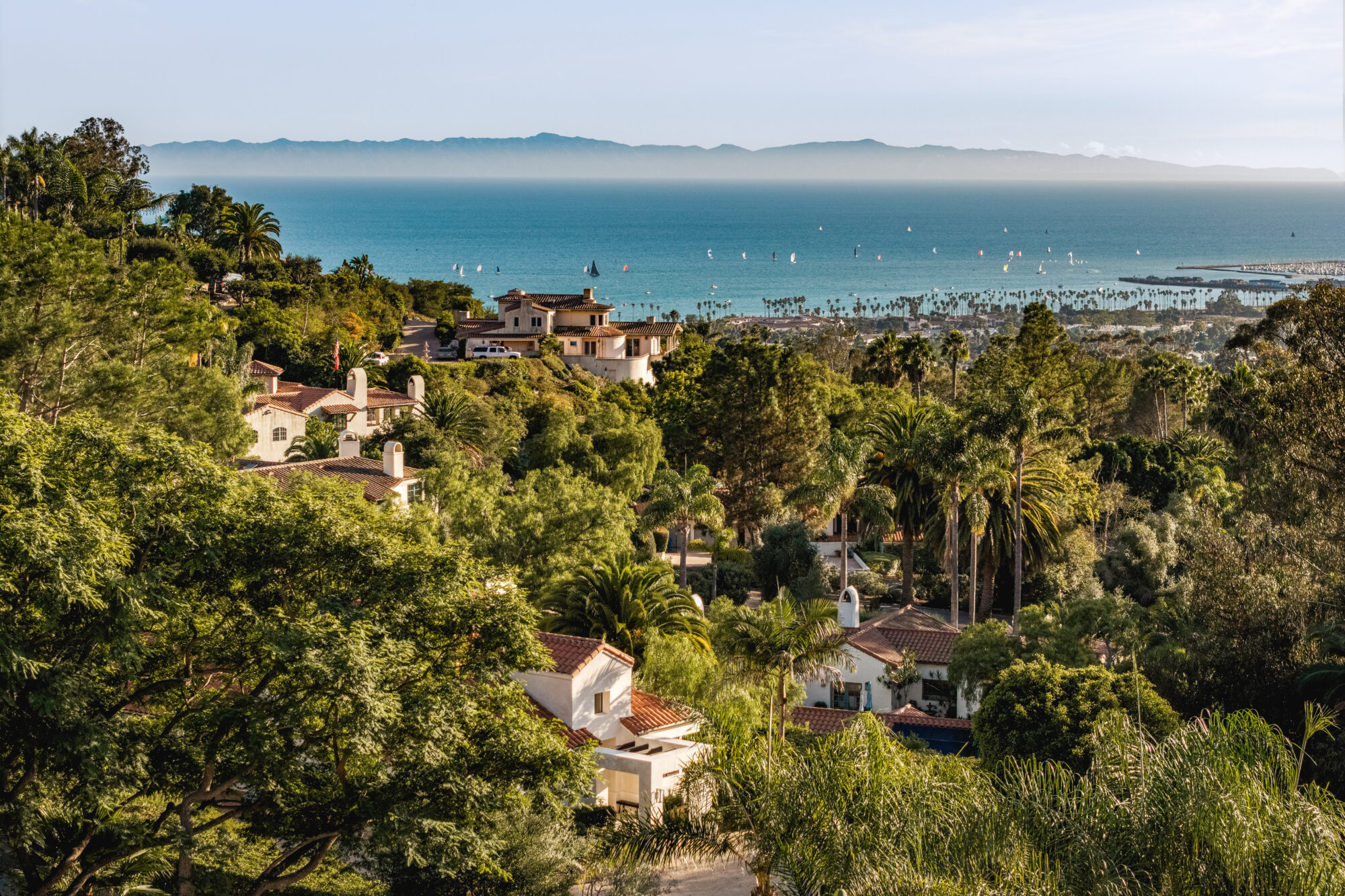
In Montecito, the most coveted addresses are defined less by ocean frontage than by hedgerows, mountain views, and a social life built on belonging.
By Chris Caggiano
On Friday mornings, growers and bakers set up along Coast Village Road for the weekly farmers market, a few blocks from where the tall hedges of Montecito’s most private streets begin. Above the Upper Village, hikers climb San Ysidro Canyon toward a waterfall, and by late afternoon the crowd has drifted down to Butterfly Beach to watch the sun set over the Pacific. Little of it resembles the backdrop of one of the most expensive communities in the country, and that is precisely the appeal.
The price points leave no doubt about where Montecito sits. Luxury here begins at $10 million and ultra-luxury at $20 million, according to Marsha Kotlyar, Estates Director with the Marsha Kotlyar Estate Group at Berkshire Hathaway HomeServices California Properties. What draws buyers at those levels, though, runs counter to the numbers: a casual, unhurried ease that newcomers from Los Angeles, the Bay Area, and the East Coast increasingly treat as the real amenity.
Luxury Without Pretense
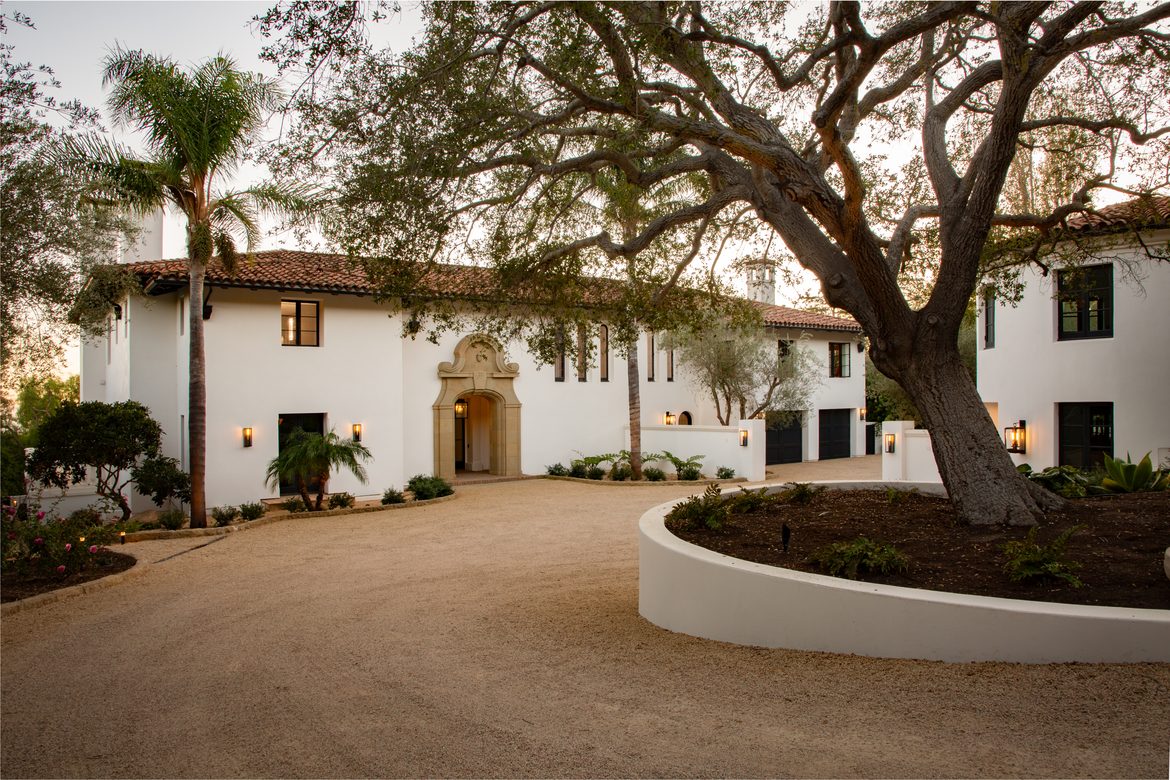
Montecito’s wealth expresses itself through care rather than spectacle. Kotlyar points out that aesthetic standards are exceptionally high: streets are beautifully kept, and residents lavish attention on their landscaping, their grounds, even the gates at the ends of their driveways. None of it, she says, is meant to be over the top. The social register is relaxed, closer to a beach town than a resort enclave, and she describes the place as “kind of like a playground for big kids.”
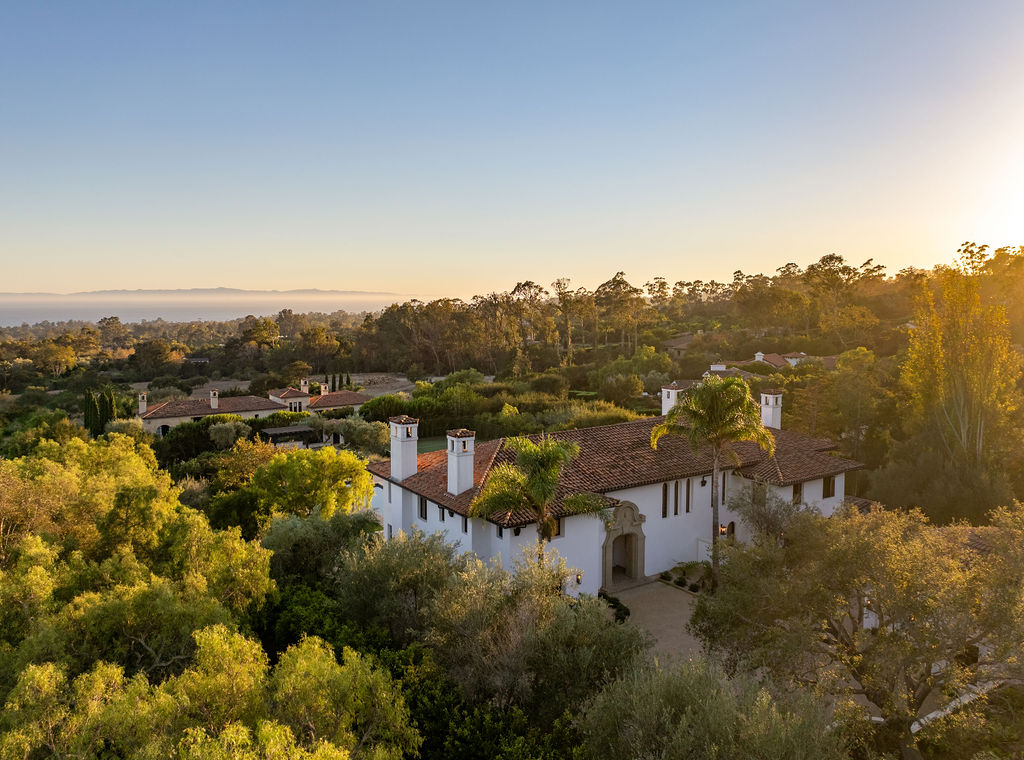
The Hedgerow neighborhood captures that sensibility in physical form. The area takes its name from the towering, mature plantings that line its streets and screen its properties, so privacy comes from greenery rather than walls. The effect is enclosure without fortification, a kind of discretion that reads as old money.
That old-money character is no accident. Kotlyar notes that Montecito draws a large contingent of East Coast transplants, and that its tone is the inverse of the more conspicuous Southern California communities to the south. “It’s kind of like the opposite of Orange County,” she says.
Why would buyers paying $20 million or more seek out a place that downplays what that money can buy? Kotlyar’s answer is that they have already had the alternative. People attracted to Montecito, she says, are craving a community without pretension, and many arrive from Los Angeles or other large cities where status and security are constant preoccupations. What they want in Montecito is the reverse: a small-town feel that residents work to protect.
Street by Street
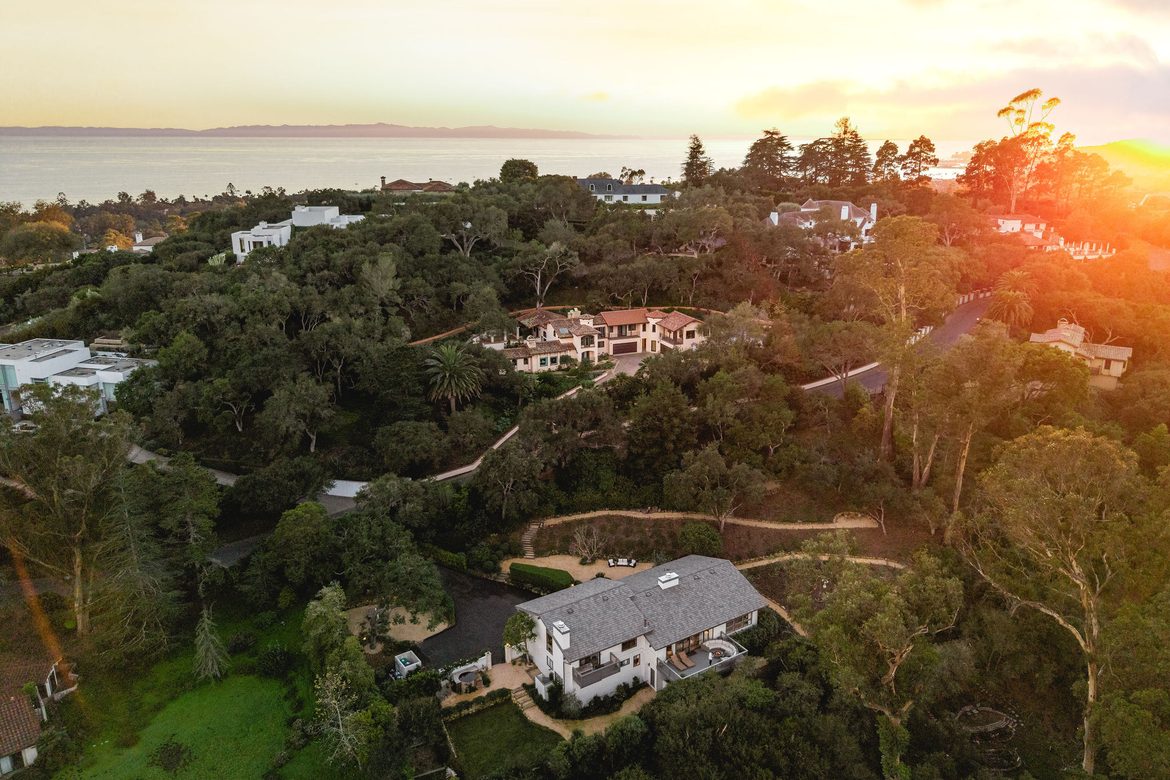
That preference for discretion also shapes what buyers will pay for. In Montecito, the highest values do not necessarily cling to the waterfront. Instead, Kotlyar says, price follows the caliber of the estate, its acreage and views, and above all its location within Montecito, which can vary from one street to the next. The central neighborhoods around the Upper Village command a premium, as do the Lower Village and the Hedgerow area.
Topography explains much of the difference. Buyers typically want both usable, level land and sweeping views, a combination that the foothill terrain makes hard to find. Parcels average about an acre and occasionally reach 10, while the Lower Village holds smaller lots of half an acre or less. The area most often cited as Montecito’s core, the so-called Golden Quadrangle, runs roughly from Hot Springs Road to Park Lane and takes in the Upper Village shops and the historic San Ysidro Ranch.
Montecito’s gated communities add another layer, and Kotlyar says security is the first draw for buyers arriving from larger cities. Each enclave has its own character. Birnam Wood, built in the 1970s, holds 142 single-level homes arranged around a private golf course, and every resident belongs to its club. Kotlyar describes an effortless routine there: breakfast, lunch, and dinner can be delivered to the door, and residents can walk onto the course without a tee time. Though the community carries no age restriction, its midcentury, single-story feel recalls Palm Springs and has long attracted buyers 55 and older.
Ennisbrook, developed in the 1980s on estates of one to three acres, offers a different trade-off. To build it, its developers had to open Montecito’s first nature preserve, 44 wooded acres along San Ysidro Creek. Montecito Shores, meanwhile, brings gated living to the beach.
Young families are less tied to any single enclave. For them, Kotlyar says, the deciding factor is the school district. Montecito is served by two small public elementary districts, Cold Spring and Montecito Union, both among the top-ranked in California, and homes within either boundary draw strong demand from parents who want a private-school caliber of education in the early grades without the tuition.
Old Houses and a Newer Taste
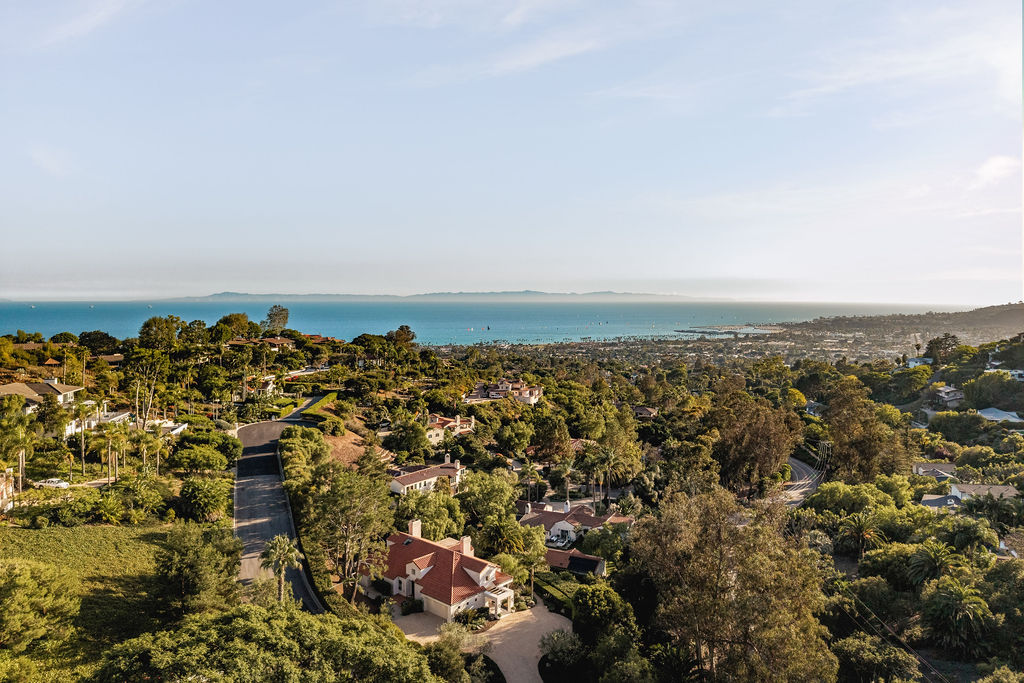
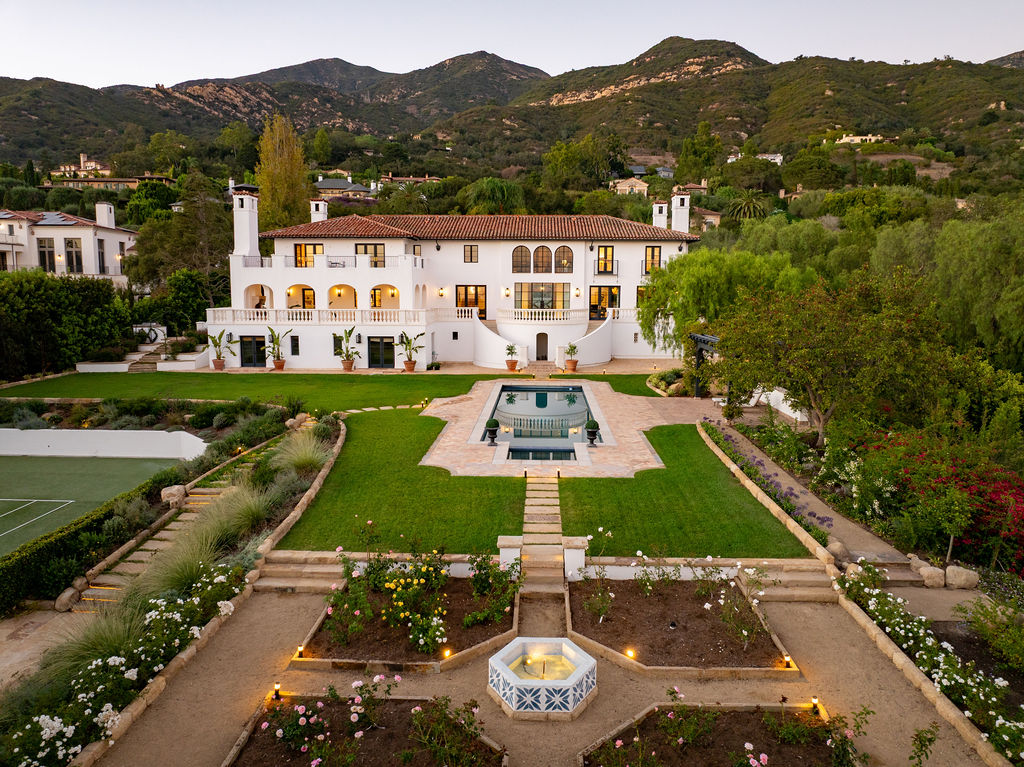
The houses on those lots sort buyers into two camps. Kotlyar says some people simply want the charm of an older home, while others want nothing to do with the maintenance that comes with it. Among the first group, the most prized decades are the 1920s through the 1940s, provided the house has been thoughtfully restored and its systems brought up to date.
The taste for those decades has deep roots. After the painter George Washington Smith moved from Paris to Montecito in 1916 and built himself an Andalusian-style farmhouse, neighbors asked for houses like it, and he turned to architecture. Joined in 1921 by Lutah Maria Riggs, who would go on to a distinguished career of her own, Smith designed many of the region’s defining Spanish Colonial Revival estates. Casa del Herrero, the estate they created in the 1920s and now a museum, is widely considered one of the finest examples of the style in the country.
After the 1960s, Kotlyar says, interest falls off, because the architecture itself changed. A large wave of Spanish-style homes built in the late 1990s and early 2000s sits in between: not historic, but at roughly 25 years old, ready for a refresh that can bring them in line with current tastes. Genuine demand for modern design is newer still, emerging only in the last eight or nine years. Whatever the style, owners of homes designated as historic face a formal review process before restoring or renovating.
Mountains to Ocean
Beyond the house itself, daily life in Montecito is organized around being outdoors and around two small villages rather than a downtown. Kotlyar contrasts it with neighboring Santa Barbara, which by comparison feels like a city, with more traffic and more going on. Montecito offers a slower pace, more land, and the ease of moving from a morning hike to an afternoon at the beach.
Residents put that ease to steady use. Kotlyar describes a pronounced emphasis on health and longevity, with an unusual density of gyms, beaches full of activity, and hiking trails so popular on weekends that locals save them for weekdays. The San Ysidro Trail follows its creek up toward San Ysidro Falls, while the Hot Springs Canyon Trail passes the ruins of the old Montecito Hot Springs Hotel on its way to natural sulfur pools. At day’s end, Butterfly Beach draws a regular crowd for the sunset.
The two villages divide the rest of the day. In the Upper Village, at the corner of San Ysidro and East Valley roads, Pierre Lafond Market & Deli has served as an informal town square since 1964, surrounded by boutiques such as Wendy Foster and Jenni Kayne and by Tecolote Book Shop. Down near the freeway, Coast Village Road serves as Montecito’s main street, home to Lucky’s, an old-school steakhouse of white tablecloths and serious martinis, and to newer farm-to-table arrivals such as Monte’s.
Nearby, the Montecito Country Mart gathers boutiques alongside Bettina’s wood-fired pizza. For special occasions, residents turn to the resorts: Caruso’s at the Rosewood Miramar Beach for a tasting menu by the water, or the Stonehouse at San Ysidro Ranch, tucked into the foothills.
Community: the New Amenity
If the outdoors fills Montecito’s days, its evenings belong to something buyers now prize just as highly: a place in the community. Kotlyar sees demand for belonging rising sharply. After several years of unusual mobility, and amid constant talk of artificial intelligence, people want to be around other people, she says, and they are willing to pay a great deal for it.
Private clubs show that willingness most plainly. Kotlyar says clubs have become more important, and the cost of entry keeps climbing. When the Montecito Club reopened after an extensive renovation, initiation fees at its top Connoisseur level reached $275,000. The Coral Casino Beach & Cabana Club on Butterfly Beach returned from its own renovation with monthly dues of $2,500, up from roughly $500 to $700 before it closed in 2020. The Valley Club of Montecito, opened in 1929, anchors the golf side of that social world.
The broader social calendar, though, runs on philanthropy. Kotlyar routinely advises newcomers that the best way to meet people is to join an organization and get involved, and she says that when residents are not dining with family and friends, they are most likely at a fundraiser. The causes are wide-ranging: children’s organizations such as Angels Foster Care, United Way, the Boys & Girls Clubs, and Girls Inc.; animal welfare; the public and private schools; and cultural institutions including the Santa Barbara Museum of Art, the Santa Barbara Museum of Natural History, and MOXI, The Wolf Museum of Exploration + Innovation.
The most valuable things Montecito sells rarely appear on a price sheet. The $20 million estate and the $275,000 club initiation are the visible costs, but what they secure is something more ordinary: a Friday-morning stroll past the farmers market on Coast Village Road, a weekday climb up San Ysidro Canyon while the trails are quiet, an evening among neighbors at Butterfly Beach as the sun drops into the Pacific. Buyers arriving from elsewhere already know what money can display. In Montecito, they are paying for the freedom to not display it.
About the Expert: Marsha Kotlyar is Estates Director with the Marsha Kotlya Estate Group at Berkshire Hathaway HomeServices California Properties, serving Montecito, Santa Barbara, Hope Ranch, and Carpinteria.
This article is intended for informational purposes only and does not constitute legal, financial, or investment advice. The views and opinions expressed herein reflect those of the individuals quoted and do not represent an endorsement of any company, product, or service mentioned. Readers should conduct their own due diligence and consult qualified professionals before making any investment decisions.
Hero Image Photo Credit: Jason Guthrie