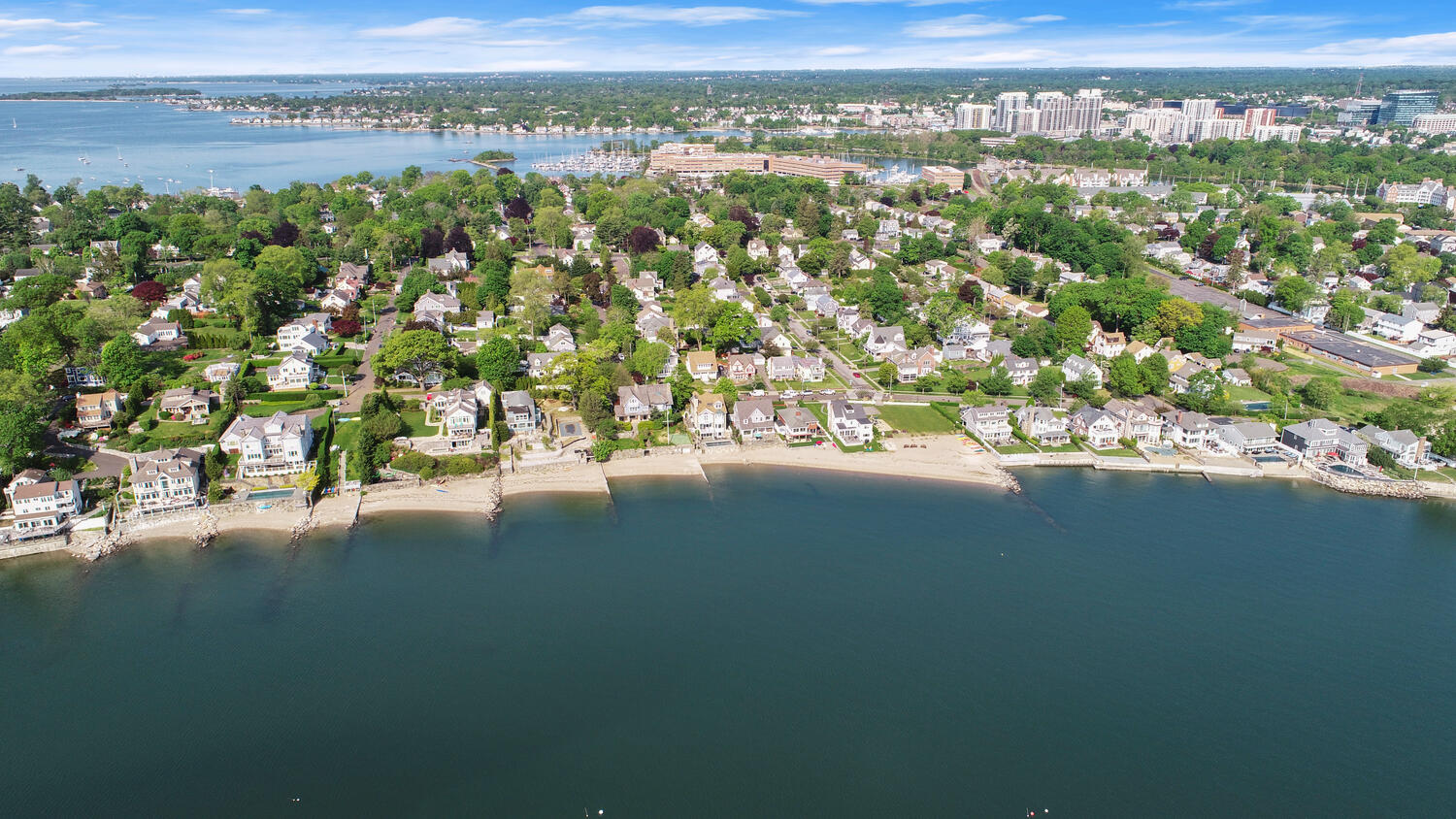
Waterfront peninsulas, wooded estates, and stone Normandy-style homes lie beyond Stamford’s office towers. Buyers from Greenwich and Westchester are finding them at prices well below their own towns.
By Chris Caggiano
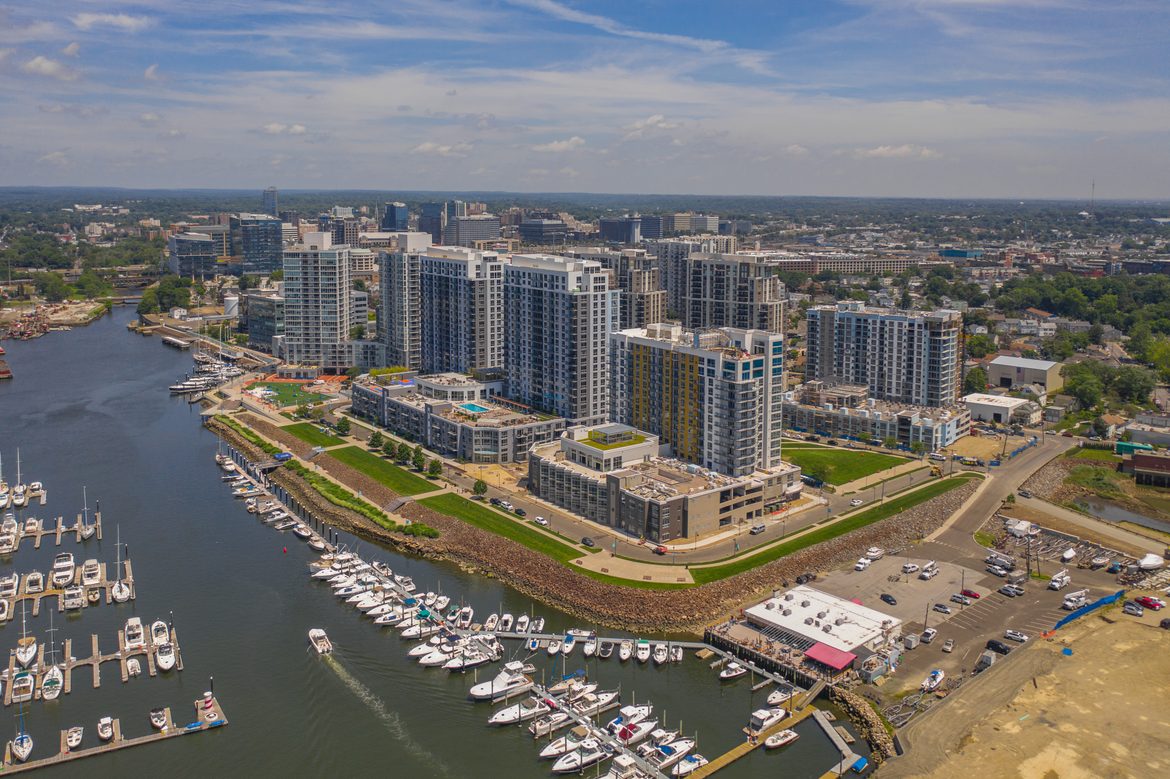
Stamford, Connecticut, is easy to misjudge from the highway. Drivers on I-95 see office towers, the high-rise apartment buildings of Harbor Point, and a busy rail station. They might be tempted to file the city away as Fairfield County’s commercial center. What they miss lies beyond the exits: waterfront peninsulas with private beach associations, estate properties on wooded acreage in North Stamford, and stone French Normandy-style homes that even buyers from neighboring Greenwich see as a pleasant surprise.
Suzette Kraus, an agent with Compass who is licensed in both Connecticut and New York, sells that unseen side of the city. Her buyers increasingly come from Greenwich and Westchester County, and many arrive excited by what they find. According to Kraus, Stamford isn’t just a satellite in New York City’s orbit. “It’s so much more.” Stamford offers coastal luxury that rivals its neighbors at a markedly lower cost, and the clearest example sits on Shippan Point.
A Peninsula Apart
Stamford’s ultra-luxury market lives on Shippan Point, a peninsula reaching into Long Island Sound that most passersby never see. It carries the city’s highest prices, with a median single-family price of about $2.1 million, and its character shifts as it extends toward the water.
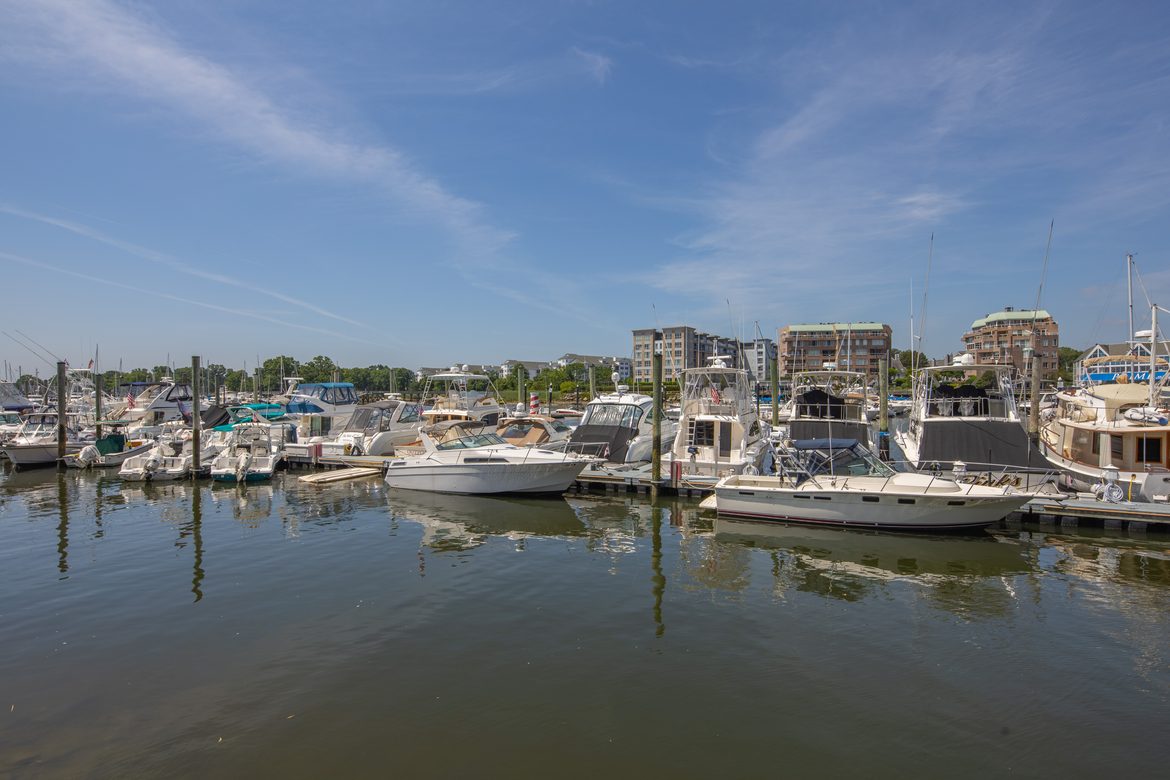
Near the tip, lots widen to as much as two acres and prices climb past $5 million. Closer to the mainland, smaller homes cluster around private beach associations popular with families, and even those sell for $1.5 million to $2 million. The associations give residents their own stretch of shoreline, which is why buyers often compare Shippan with Old Greenwich. Private docks are another matter, since few Shippan homes have them, so buyers who want to keep a boat at home tend to look instead toward the Cove area and Wallack’s Point to the east.
What Shippan lacks in private docks, it makes up for in club life. The Stamford Yacht Club, founded on the peninsula’s west side in 1890, maintains its own marina and hosts the Vineyard Race every Labor Day weekend, while the smaller Halloween Yacht Club sits at the edge of Cummings Park. From May through September, the Woodway Beach Club, the shoreline outpost of Woodway Country Club in Darien, offers members tennis, kayaking, paddleboarding, and dining with views of the Sound. Away from the clubs, Cummings Park adds its own beach along with pickleball and tennis courts, and Cafe Silvium, a family-run trattoria that Kraus calls the best restaurant in Stamford, anchors a small commercial strip near the top of the peninsula.
That self-contained feel is part of what buyers pay for. “You feel like you’re worlds away,” Kraus says. Yet downtown Stamford is about seven minutes from the point, so residents trade the village charm of Old Greenwich or Rowayton for a city’s worth of restaurants and nightlife. The dining and shopping of New Canaan, Darien, and Southport also within easy reach.
Measured Against the Shoreline
Shippan’s prices are substantial on their own, but next to the rest of the coast they tell a different story. Shippan delivers the waterfront lifestyle that defines Old Greenwich, Darien, Rowayton, and Westport at far less per square foot. Kraus puts Shippan at about $600 per square foot, against roughly $1,100 in neighboring Old Greenwich, and she places Darien, Rowayton, and Westport well above Shippan as well.
A recent client shows how that gap plays out in a search. A buyer from the Baltimore area wanted a second home large enough for her grown children to visit, with a private beach association and a reasonable commute to Manhattan. She began in Westport, expecting about $3 million to buy something on the water, and set Greenwich aside as the most expensive town in Lower Fairfield County. As the search moved down the coast into Stamford, she fell for Shippan’s feel as much as its numbers.
Value, however, did not mean an easy purchase. Even near $3 million, the buyer competed against multiple offers before Kraus found her the right home. Shippan’s prices sit below its neighbors’, in other words, but demand there is every bit as strong. That combination of comparable demand and lower prices explains who has started looking most closely: buyers from the town next door.
Greenwich, Next Door
Stamford’s combination of distinctive properties and lower prices is drawing buyers even from Greenwich, the region’s most expensive town, and many of them are finding homes they did not know existed. Kraus recently sold a $3 million home on Wallack’s Point to a Greenwich buyer: an antique boathouse transformed into a modern waterfront residence. The gated enclave sits between Shippan and the Cove area, and she says many people have never heard of it.
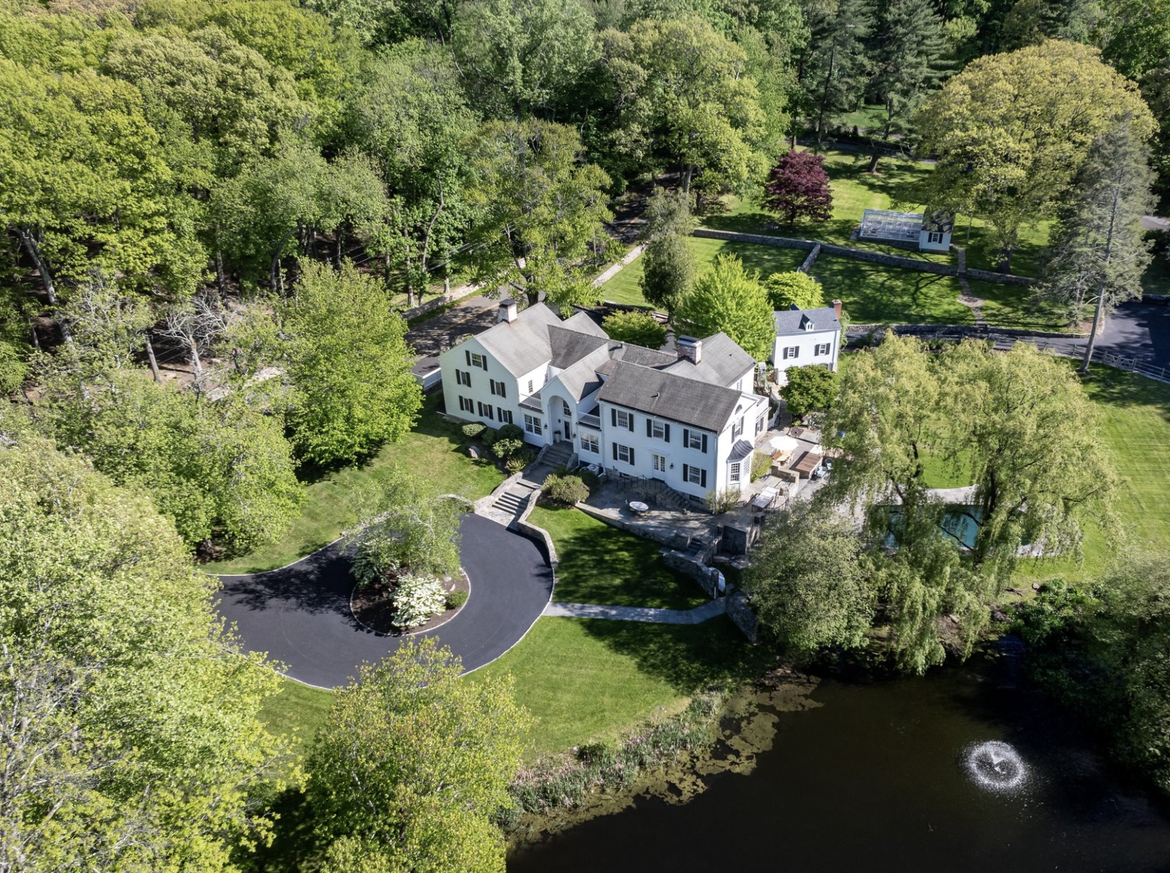
Greenwich buyers are finding the same kind of overlooked inventory inland, in North Stamford, where wooded lots offer more land and privacy than the waterfront can. Kraus is currently listing a $3.4 million compound there, a property type she calls unusual for the area. The estate began as a Saltbox Colonial around 1780, was expanded in the 1940s, and was renovated in 2020, and it now spans nearly 7,000 square feet on 2.7 acres. One Greenwich buyer who toured it had lost out on three homes in her own town, and she “absolutely could not believe how well priced it was,” Kraus says.
Some of the most striking finds are architectural. Kraus has recently represented two stone French Normandy-style homes she describes as “mini castles,” and the Greenwich buyers who saw them were almost shocked that such properties existed in Stamford. None of this inventory is new, however. It has simply gone unseen, for the same reason the city looks like an office park from I-95.
For Greenwich buyers, that discovery means crossing a town line. For Westchester buyers, it means crossing a state line, and the difference grows wider.
Across the State Line
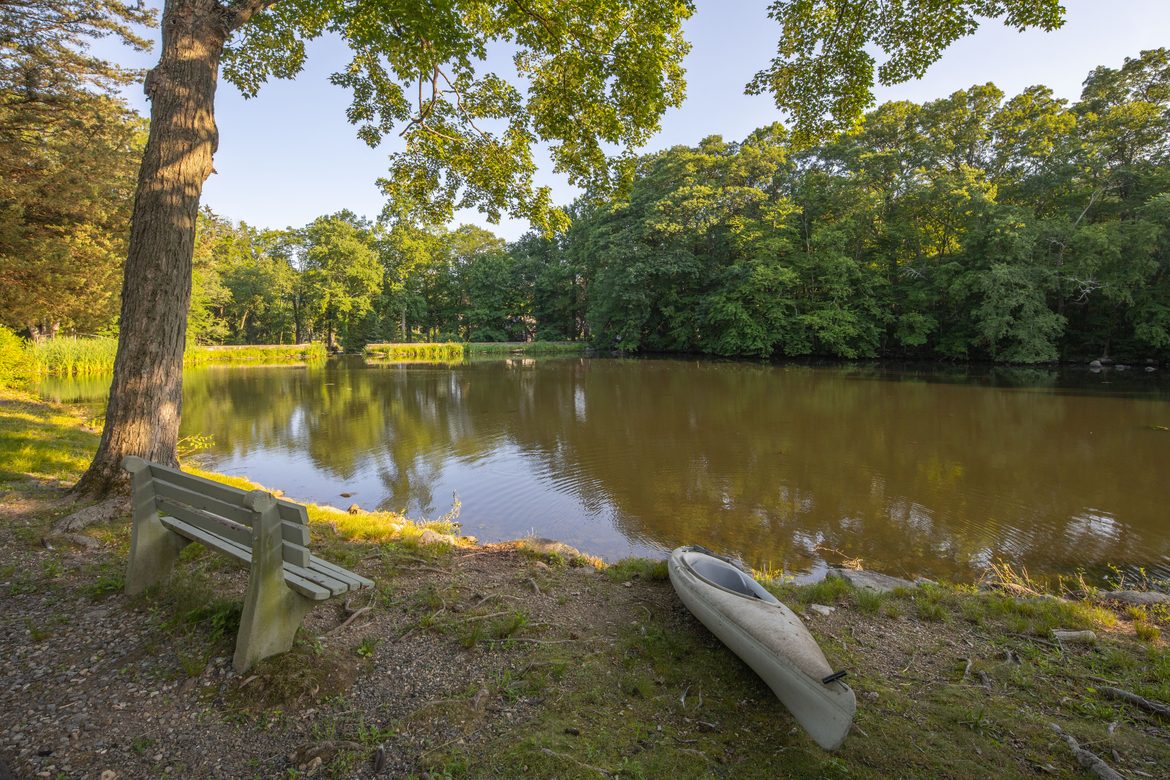
For Greenwich buyers, finding Stamford means crossing a town line. For Westchester buyers, it means crossing a state line, and for those households, empty nesters in particular, the move resets the cost of homeownership as much as the lifestyle. Kraus made that move herself. She raised her children in Chappaqua, which she and her family chose for its schools and for a commute that was shorter than most Fairfield County towns could offer. Once her children left for college, she relocated to Stamford, drawn by its trails and parks, as well as the Sound.
Taxes drive much of the decision for the buyers who follow a similar route. New York charges buyers a 1 percent mansion tax on purchases of $1 million or more, a threshold unchanged since 1989, when $1 million truly bought a mansion. Westchester buyers who finance a purchase also pay a mortgage recording tax, and on a $2 million home, Kraus estimates, the two together approach $40,000. Connecticut charges neither, and its property taxes run lower, so many of her Westchester clients sell their homes and buy in Stamford with cash.
The obvious question is what these buyers give up, and Kraus answers it plainly. “I don’t think there’s a trade-off,” she says. “There’s more to gain than anything to lose.” Her old Westchester haunts, including Village Social in Mount Kisco and Crabtree’s Kittle House in Chappaqua, remain 30 to 40 minutes away, while the waterfront she lacked inland is now part of daily life.
That experience now shapes her practice, because Westchester colleagues refer clients making the same move to an agent who has made it herself. Those buyers, like the ones arriving from Greenwich, learn what the view from I-95 leaves out.
About the Expert: Suzette Kraus is Principal of the SK Homes Team at Compass, based in Stamford, Connecticut. Licensed in both Connecticut and New York, she works with buyers and sellers in Stamford and the surrounding area.
This article is intended for informational purposes only and does not constitute legal, financial, or investment advice. The views and opinions expressed herein reflect those of the individuals quoted and do not represent an endorsement of any company, product, or service mentioned. Readers should conduct their own due diligence and consult qualified professionals before making any investment decisions.