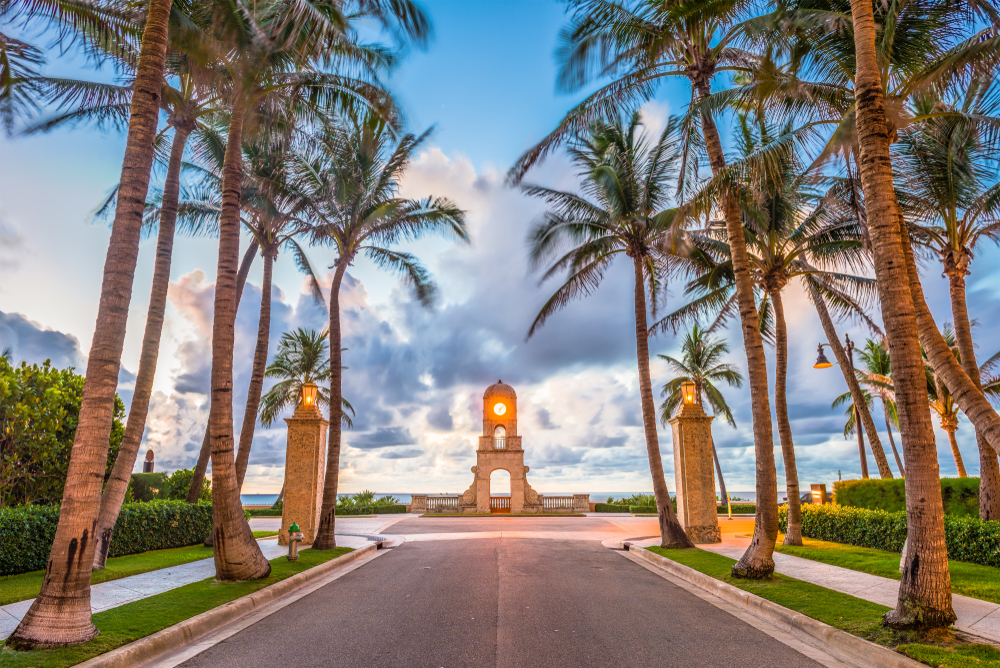
As Palm Beach’s economy shifts from retirement money to working money, geography is shaping where buyers choose to live – and what kind of life they’re choosing when they do
By Chris Caggiano
For decades, the story of Palm Beach was a story about arrival after decades of accomplishment – a place people came to enjoy their fortunes once their working years were behind them. That story no longer holds. Hedge funds, technology companies, and major corporations have relocated to the region in numbers large enough to change what the market is actually selling.
The shift shows up in who is buying: young professionals in finance purchasing $3 million houses alongside the industry titans still buying $50 million parcels of land. The luxury ecosystem, as Kourtney Pulitzer of Sotheby’s International Realty describes it, now spans both ends of that range at once, because the newer arrivals are here to build a career, not to close one out.
“People used to come here to die, and now they come here to live,” Pulitzer says. Florida’s tax advantages and pro-business posture have done as much to drive that relocation as the lifestyle itself, turning what was once a seasonal or retirement retreat into a place people actively work from.
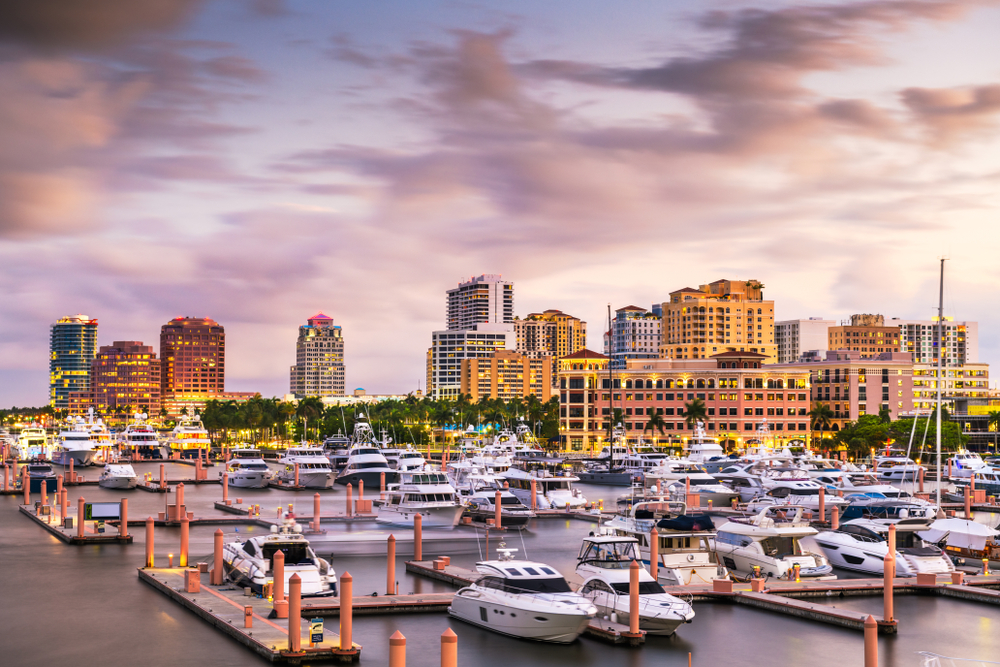
That distinction matters because it changes the shape of demand. A retirement market is finite by nature – it grows only as fast as people decide to stop working. A career market grows with the jobs themselves, and the jobs are concentrated downtown, in West Palm Beach, which has absorbed the bulk of the region’s reinvention over the past two years.
Geographic Constraints
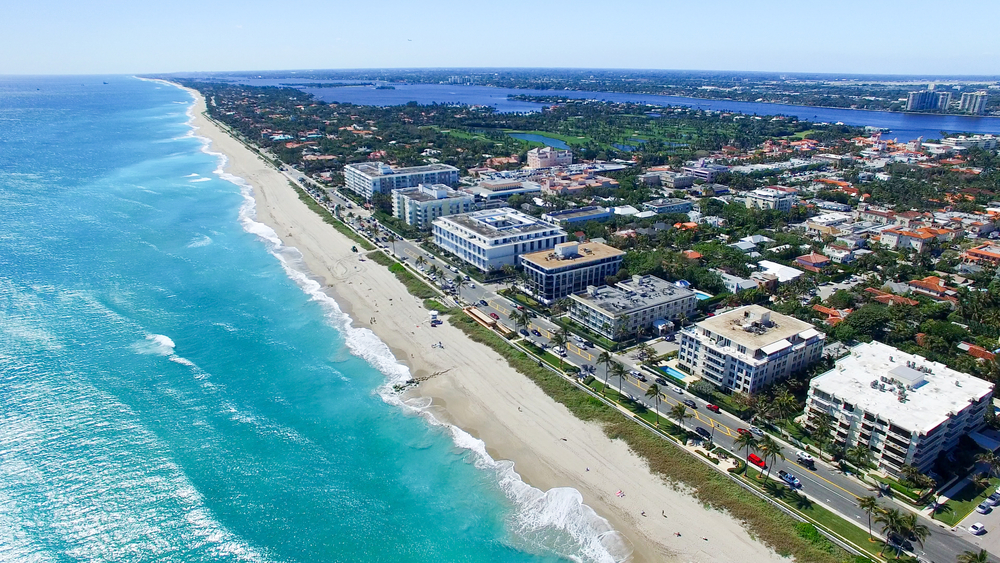
The region’s expansion runs directly into its geography. Palm Beach County occupies a narrow strip of land between the Atlantic Ocean and the Everglades, and within it, the areas buyers actually want – the island of Palm Beach itself, downtown West Palm Beach, and the country club communities of Palm Beach Gardens – cover very little ground. Pulitzer names scarcity directly as the force driving the market: not a marketing conceit, but a literal shortage of buildable land in the places demand is concentrated.
On the island itself, that scarcity is compounded by policy. Palm Beach maintains a six-story height moratorium that Pulitzer expects will hold for decades, which means land sales there – she cites one recent transaction north of $60 million for land alone – function more like sales of a fixed, non-renewable resource than like a conventional real estate market. Palm Beach Gardens carries its own height restrictions. West Palm Beach does not, and that difference is doing most of the work in explaining where the region’s new towers have gone up.
Developers have also begun looking past traditional residential parcels entirely, piecing together underused golf courses for redevelopment, a sign that even the workarounds to the island’s constraints are themselves running short.
Three Markets, Three Lifestyles
Pulitzer’s approach with a new buyer isn’t to ask about their budget first. She asks how they want to live. That question, more than price point, is what sorts buyers across the region’s three markets.
In Palm Beach, buyers are paying for privacy and permanence – finished, move-in-ready homes, most with their own private yard and pool, now start north of $15 million, some considerably higher. Recent listings on the island have climbed to nearly $200 million. The tradeoff for that exclusivity is limited inventory and a landscape essentially locked by zoning.
In West Palm Beach, the calculus is different. Buyers give up that private backyard for amenity-rich towers instead: concierge service, valet parking, help with groceries or the dog, and floor plans that have shifted away from the two-bedroom apartments once expected and toward homes of three, four, and five bedrooms or more. What’s more, the view becomes an apt substitute for outdoor space, an extension of the home rather than a loss.
That growth in scale isn’t only about square footage for its own sake – it’s about who else might show up. Pulitzer’s late father-in-law had a phrase for it: “You build the church for Easter Sunday.” The idea, she says, is to have room for the full family to descend at once without anyone feeling on top of each other, even if most of the year that space sits quiet. Buyers making the leap from smaller New York apartments seem to have absorbed the same logic – if they’re spending the money, they want room to spare, not room to juggle.
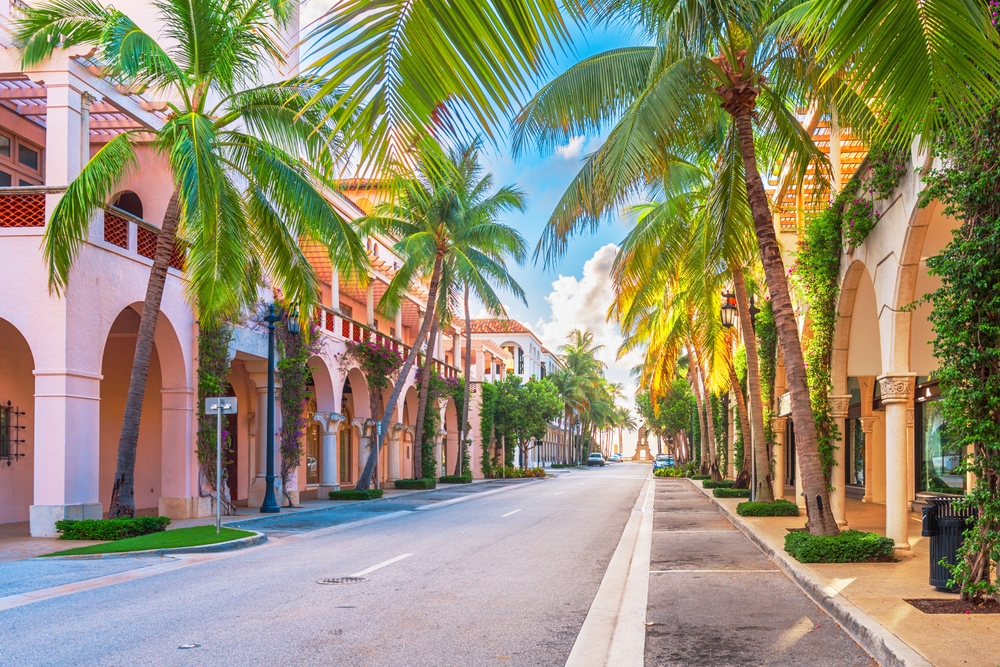
That same downtown shift has imported culture along with architecture. Restaurants and designers who once operated only on the island are now opening outposts across the bridge, extending a slice of the high-end dining and retail once concentrated on Worth Avenue into West Palm Beach itself. True walkability – long absent from the region – has arrived downtown in a way it never fully did on the island.
Palm Beach Gardens, a 15-minute drive from Palm Beach and West Palm, has become the choice for families who want more land without giving up proximity to work or the social scene. Golf is a major draw – Pulitzer notes that much of the PGA Tour lives in the area – alongside strong schools and growing office space that’s pulling professionals who might otherwise have chosen West Palm Beach.
What Doesn’t Change
Across all three markets, one preference holds regardless of price point or neighborhood: buyers want a connection to the outdoors. It just takes a different form depending on where they land – a view standing in for a backyard in West Palm Beach, or, on the island, a premium on waterfront land itself, regardless of what eventually gets built on it.
Pulitzer says she has yet to meet a client who isn’t focused on outdoor space in some form, even those who rarely use it. “Even if they don’t go outside, they want to look at it,” she says. This is all consistent with a region where the appeal has always rested on being outdoors nearly year-round, whether on a boat, a golf course, or a beach.
None of these three markets is a lesser version of the others – each is simply a different answer to the same question Pulitzer asks every buyer: how do you want to live? She treats it less like an intake question than an exercise, asking clients to close their eyes and describe a day in South Florida as they imagine it. The answers rarely repeat. Some buyers want golf. Others want nothing between them and the ocean. Some want new construction with nothing left to fix; others want an older home they can make their own, and a few are drawn as much to a Sunday brunch or an evening on Worth Avenue as to the property itself.
What they share is the premise underneath the question: that Palm Beach is a place to build that life now, not a reward to collect once the work is finished.
About the Expert: Kourtney Pulitzer is an agent with Sotheby’s International Realty, based in Palm Beach, Florida, working across Palm Beach, West Palm Beach, and Palm Beach Gardens. She is a member of REALM Global, an international network of real estate professionals working in the ultra-luxury segment.
This article is intended for informational purposes only and does not constitute legal, financial, or investment advice. The views and opinions expressed herein reflect those of the individuals quoted and do not represent an endorsement of any company, product, or service mentioned. Readers should conduct their own due diligence and consult qualified professionals before making any investment decisions.