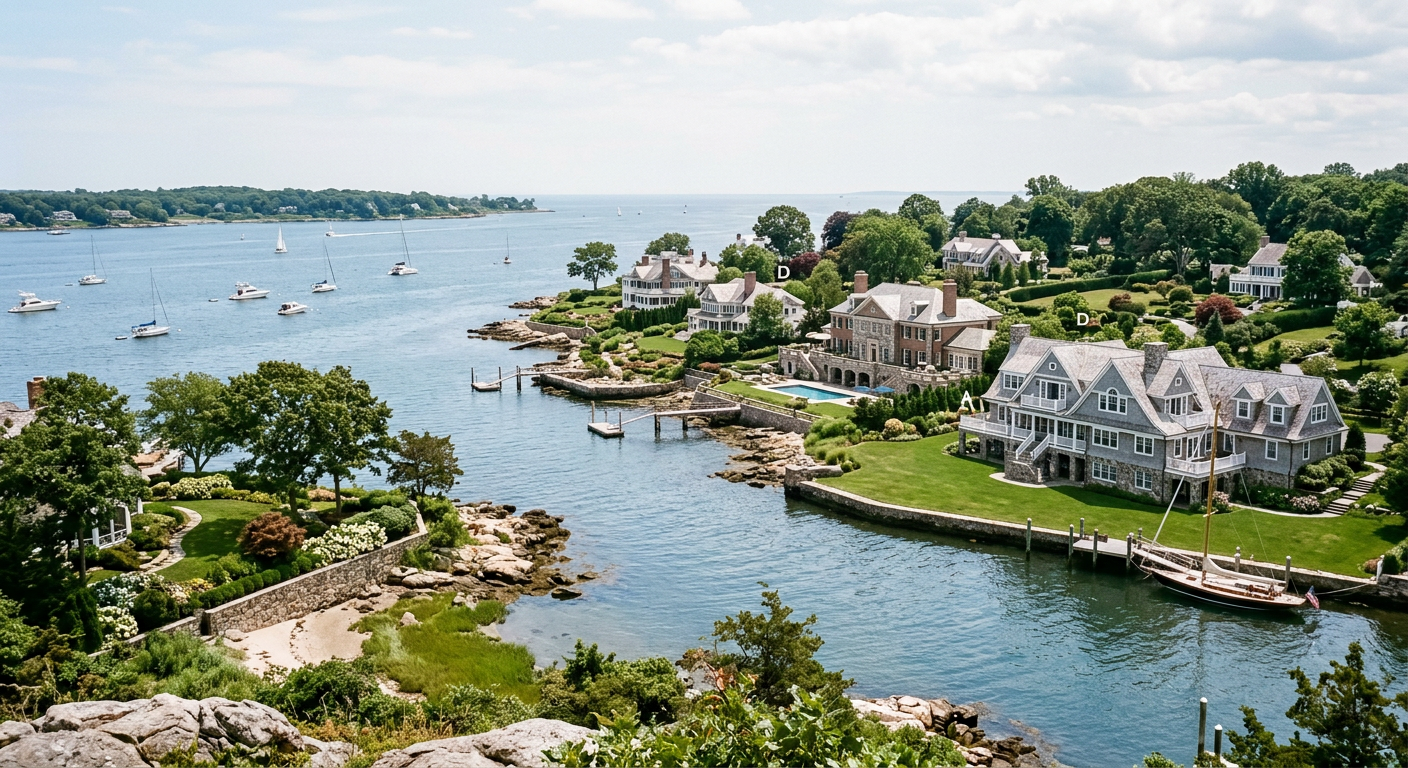
In Connecticut’s most coveted communities, wealth buys the ability to choose a very specific level of human interaction. The decision plays out not at the level of the town, but the neighborhood, the lake, even the dock.
By Chris Caggiano
Drive down Greens Farms Road in Westport, Connecticut at dusk, and the message seems unambiguous. The street is lined with luxurious homes, many visible from the street. But it’s the ones that aren’t visible that seem to set a certain tone. Stone walls run for hundreds of feet, giving way to iron gates. Driveways vanish into the trees, long enough that the house at the end is more rumor than sight. Every signal seems to give the same message: this is a world that wants to be left alone.
It’s the wrong read. Or at least, it’s only part of the story. Spend enough time in Fairfield County and the gates start to look less like the whole answer and more like one setting on a dial.
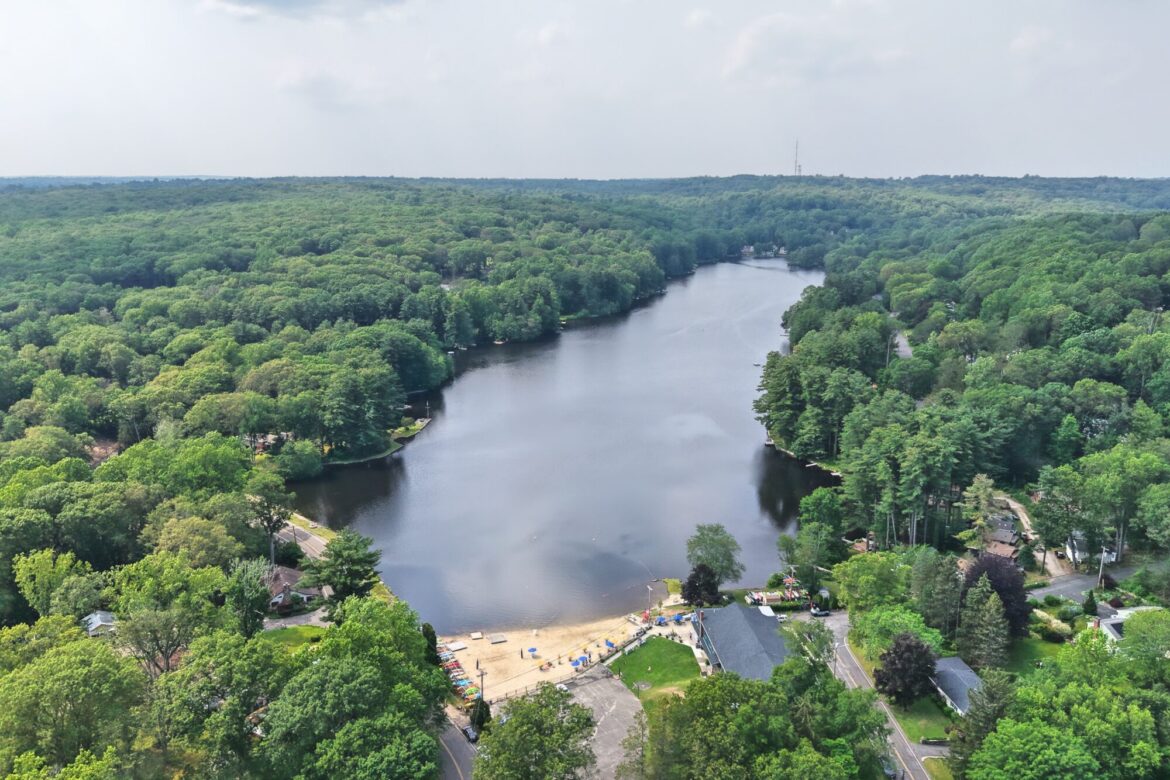
On Pinewood Lake in Trumbull, forty minutes north of that same stretch of Greens Farms, neighbors don’t keep to themselves – they host rotating happy hours that end in a shared dinner from a food truck and a DJ at someone’s dock. The lake’s clubhouse recently went through a million-dollar renovation, and it earns the investment: fishing derbies, ice cream socials, live bands in summer. In Stratford, a beachfront event called Blues on the Beach draws close to twenty bands a year, with the whole shoreline turning out in beach chairs and pop-up tents. These aren’t lapses in an otherwise private market. They’re evidence of something buyers are actively choosing.
“It just depends on the buyer,” says Kristin Egmont, an agent with Coldwell Banker who covers the Fairfield County market, of the pull between seclusion and community. Even people who describe themselves as private, she’s found, often end up embedded in a social fabric they didn’t think they wanted, because the choice was never really between privacy and company. It was about finding the right dose of each.
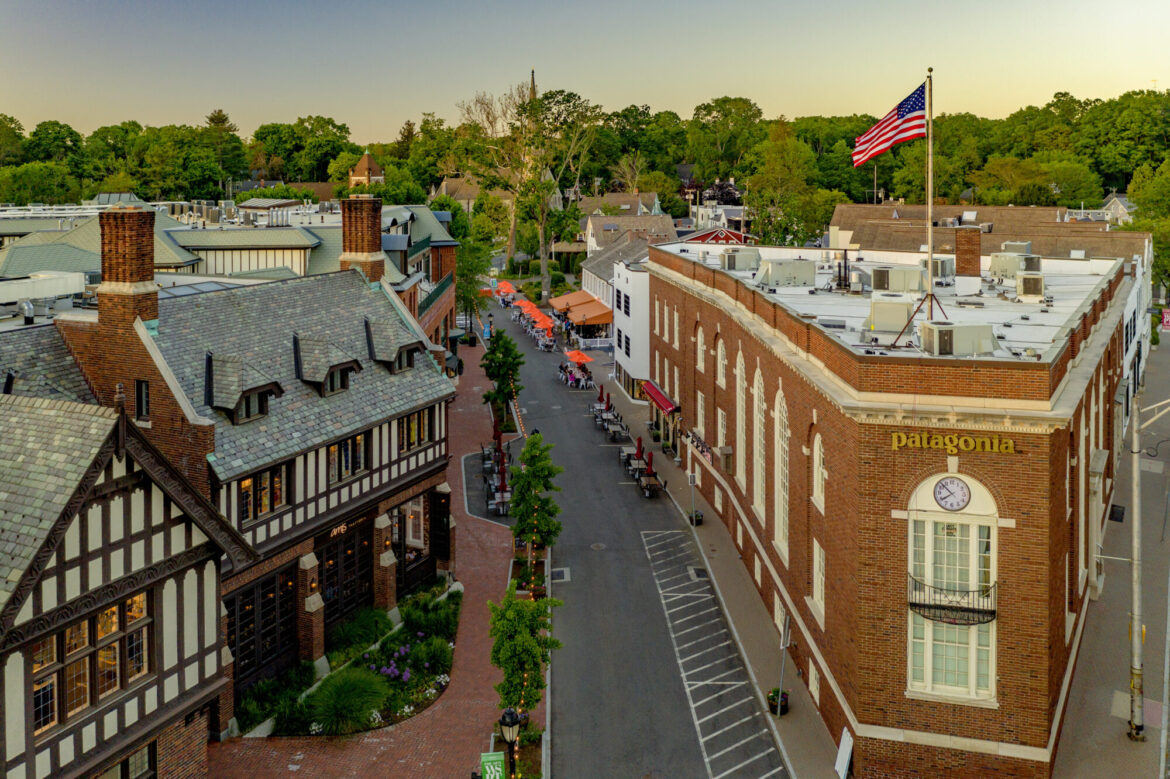
Not the Town, But the Block
That distinction is what makes Fairfield County harder to map than a single word like “affluent” or “quiet” suggests. The real unit of decision-making here isn’t the town. It’s something closer to the block, or even the shoreline of a specific lake.
Egmont’s own sales history illustrates the point. She’s worked throughout the county, and within each town, buyers sort themselves by variables far more specific than town lines: distance to the train into New York City, water versus sewer, a third of an acre versus a full one. Even at the county’s highest price points, distance to the Manhattan train is on par with lot size or school district as a first question – a reminder that the whole market is quietly underwritten by proximity to New York, even when the buyer’s leisure-time priority is a lake, a club, or a green.
Egmont says every conversation she has with a buyer begins with a series of questions: “How much do you know about Fairfield County? What towns are you familiar with? What’s important to you?” Not because the answers are obvious, but because they almost never are. She might steer a buyer set on beach access to Fairfield or Norwalk. One fixated on school rankings might want to focus on Westport or Weston. Someone who wants two acres and space between neighbors might end up in Easton or the Greenfield Hill section of Fairfield, while a buyer chasing density and walkability might land closer to Fairfield Beach or Southport.
The Price of Entry
Nowhere does that granularity show up more plainly than in price. A single-family home in Westport now runs, on average, about $2.9 million, but that figure obscures more than it reveals: entry-level homes near the center of town start closer to a million, while waterfront estates on Beachside Avenue and Greens Farms Road climb past $10 million. The largest sale in Westport’s history, a combined multi-parcel estate on Beachside Avenue, reached $45 million. Darien tells a similar story at a different scale, with the broader market centered around $2.1 million to $2.2 million, but its waterfront Tokeneke enclave occupies a distinct tier above that baseline.
Greenwich, at the top of the county’s price ladder, makes the point most starkly. The town’s median sale price crossed $3 million in early 2026, but “Greenwich” is really a collection of separate ultra-luxury submarkets rather than one number. Belle Haven, a gated peninsula on Long Island Sound, remains the town’s most exclusive address, its waterfront mansions built around a private club of the same name.
Backcountry Greenwich offers an contrasting version of exclusivity: multi-acre estates, five golf courses, and enough distance between neighbors that a polo match can happen without anyone noticing. Conyers Farm and Round Hill round out the town’s estate-caliber enclaves, both defined by gated privacy and equestrian-scale acreage.
The pattern holds across the county: the town name sets a floor, but the specific street, shoreline, or gated enclave determines whether a buyer is paying for convenience, water access, or true estate seclusion.
Club Culture
For the county’s wealthiest residents, a home address is only half the equation. Club membership functions as its own layer of precision, sorting buyers by exactly the kind of social contact they want, just as a lake or a beach town does.
The distinctions start with what a club is actually for. In Greenwich, the Round Hill Club and the Field Club trade less on golf handicaps than on lineage – membership signals how long a family has been woven into the town’s old-money circles. Belle Haven Club solves a narrower problem: it’s the social hub for a single waterfront enclave, open only to those who already live behind its gates.
Move further into the county and the logic shifts from pedigree to sport. Darien’s Wee Burn Country Club, dating to 1896 and shaped over the decades by architects including A.W. Tillinghast and Tom Fazio, draws a membership built around golf first and everything else second. Fairfield’s Patterson Club, spread across 170 acres in Greenfield Hill, makes a broader bet, pairing its golf course with tennis, paddle, and pool facilities, all aimed at families who want one membership to cover a full season rather than a single sport.
Each club is solving a different problem: some sell history, some sell a sport, some sell an entire calendar of family activity. A buyer’s choice among them says as much about how they want to spend a Saturday as any listing does about where they want to sleep.
Water Features
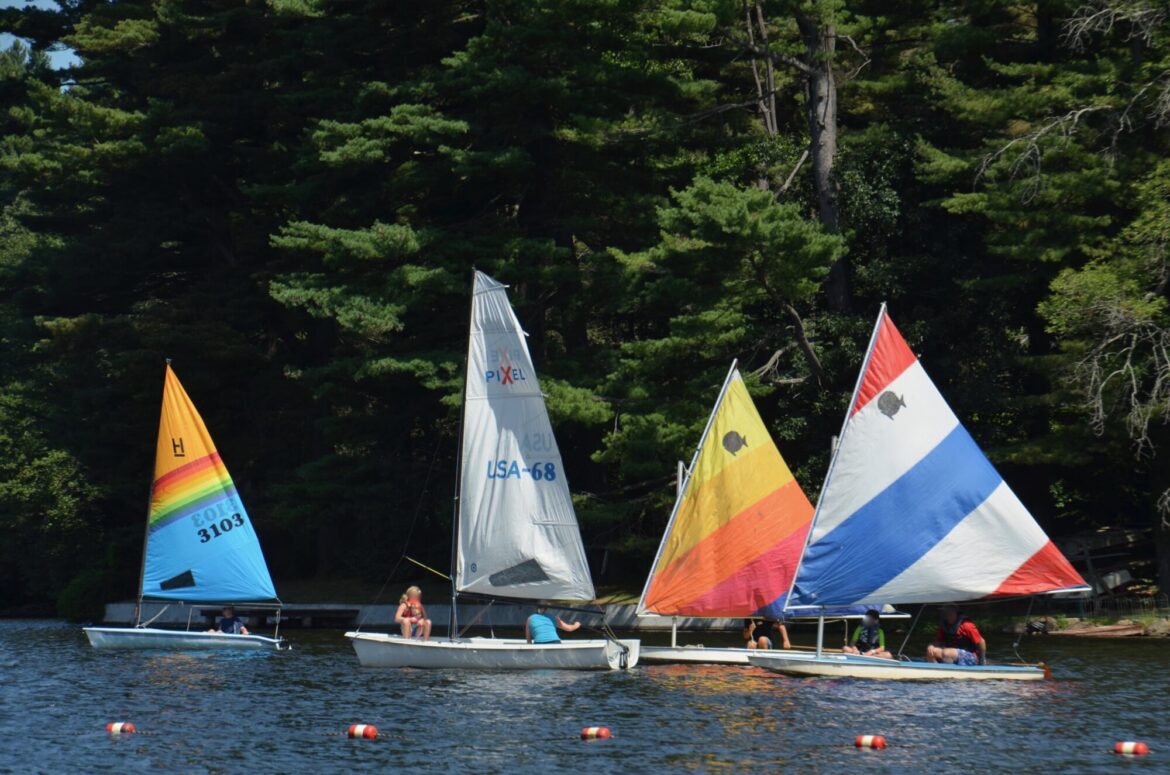
The same logic plays out on the county’s lakes, which function less like a single amenity and more like a set of distinct micro-markets. In Trumbull, both Pinewood Lake and Canoe Brook prohibit motorboats, but the social contract on each is different: Pinewood’s clubhouse anchors a tight, event-driven community, while Canoe Brook’s larger lots suit buyers who want space and prefer a quieter, less programmed version of lake life.
Drive further north and the calculus shifts. Candlewood Lake in Danbury and Lake Zoar in Newtown allow motorboats and draw a buyer chasing water-skiing and open-throttle recreation, not clubhouse socials. Two buyers with comparable budgets and a shared preference for “lake house” can end up in entirely different lifestyles depending on a rule as specific as whether a motor is allowed on the water.
A similar dynamic plays out on the shoreline. Fairfield County’s beach towns, from Stratford down through Fairfield and into Westport and Stamford, each carry their own social rhythm, built through recurring events – Blues on the Beach in Stratford, community gatherings run through local boards of realtors, informal networking that happens simply because neighbors show up to the same stretch of sand all summer. None of it reads as engineered, but rather as buyers actively selecting for exactly the kind of connection they’re looking for as they choose where to live.
What Fairfield County actually sells isn’t a single lifestyle enshrined in its priciest zip codes. Rather, it’s a menu long and varied enough that a buyer chasing total seclusion and a buyer chasing a beachfront cover band can both find what they’re after – sometimes within a few miles of each other, sometimes on the very same road.
About the Expert: Kristin Egmont is an agent with Coldwell Banker, based in Westport, Connecticut, covering the Fairfield County real estate market, including Westport, Fairfield, Trumbull, Stamford, and Norwalk.
This article is intended for informational purposes only and does not constitute legal, financial, or investment advice. The views and opinions expressed herein reflect those of the individuals quoted and do not represent an endorsement of any company, product, or service mentioned. Readers should conduct their own due diligence and consult qualified professionals before making any investment decisions.