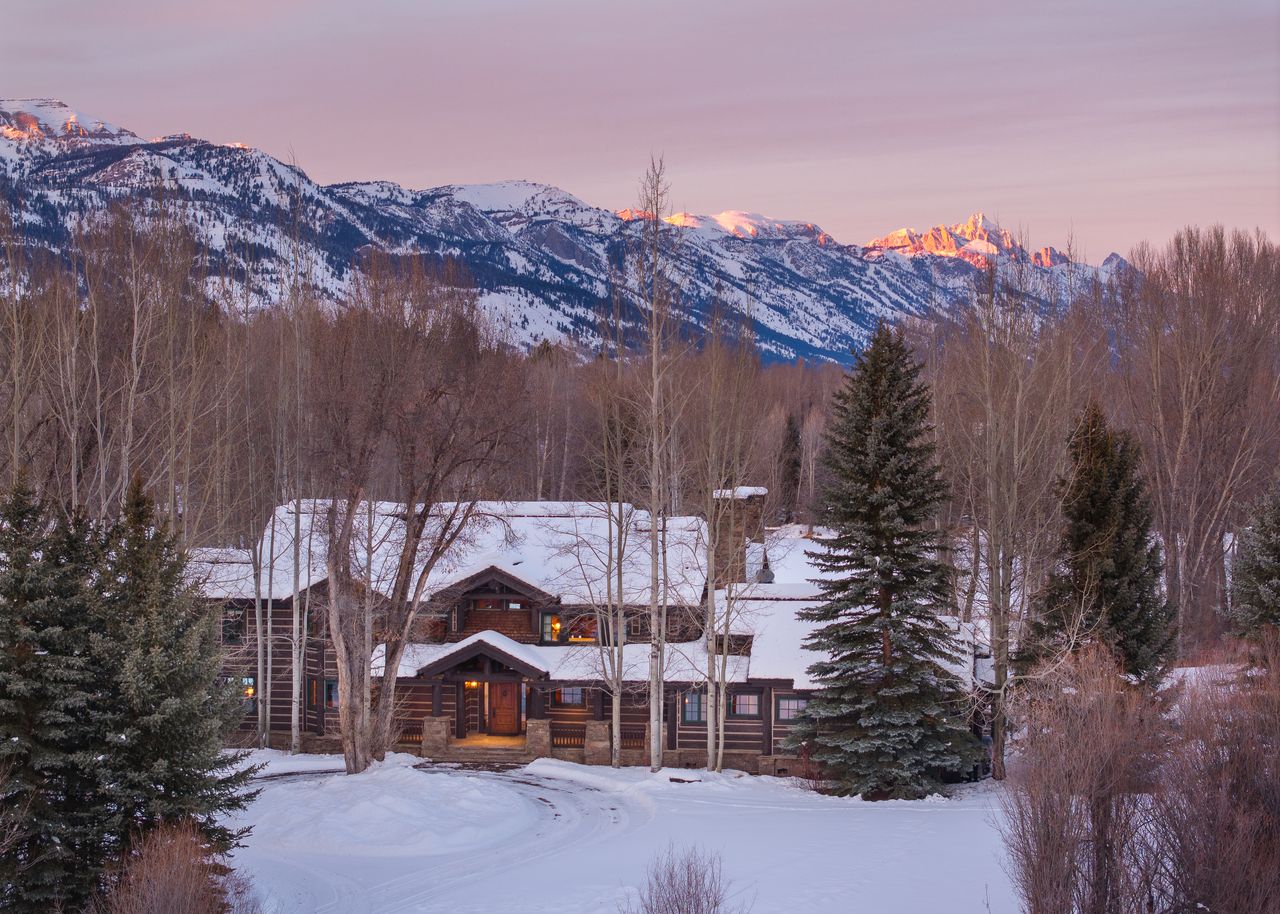
Beyond the Tetons lies a community shaped by conservation, outdoor adventure, philanthropy, and limited growth – a combination that has given this luxury market remarkable staying power.
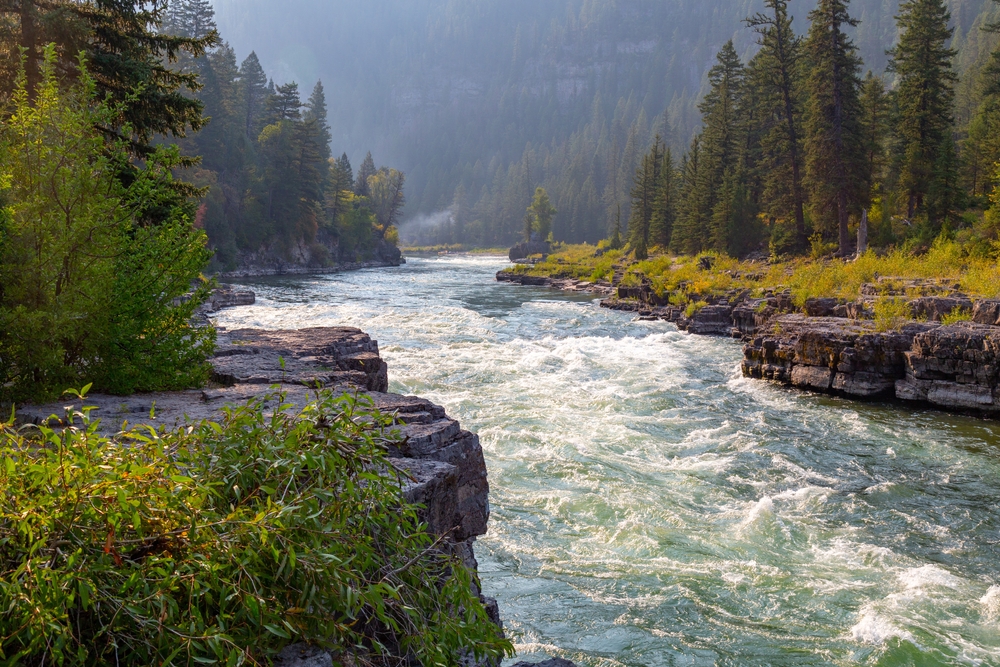
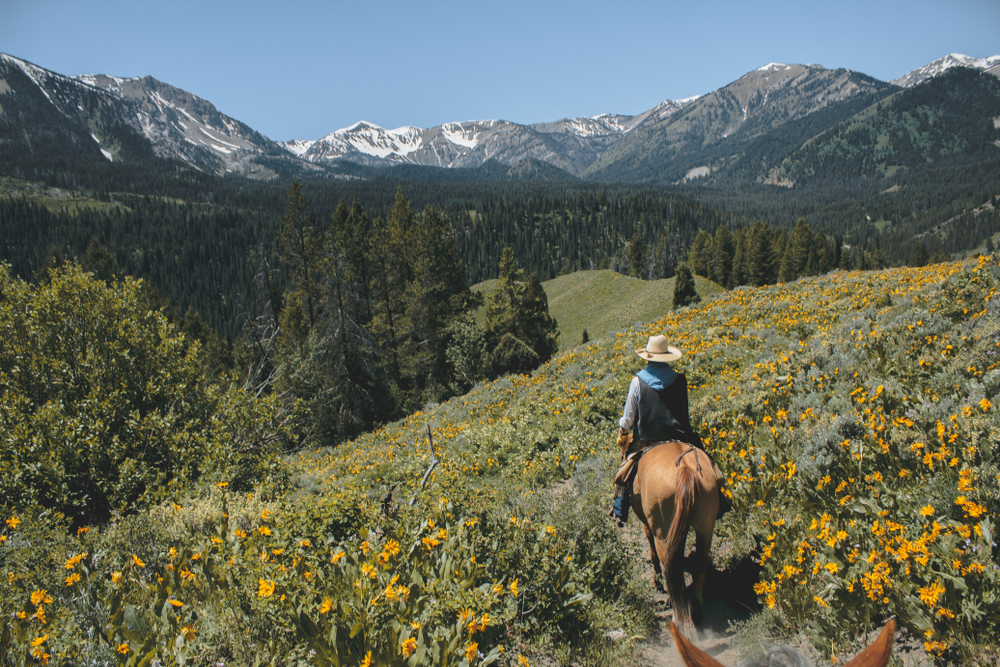
The draw of Jackson Hole has never been a mystery. The Tetons rise straight out of the valley floor with no foothills to soften the approach, a breathtaking backdrop unlike almost anywhere else in the country. Mornings here might mean fly fishing the Snake River before breakfast, an afternoon on horseback into the backcountry, or first tracks on a private access ski run before the lifts open to everyone else. Elk and bison move through private land as a matter of course. Grand Teton and Yellowstone sit at either end of a single drive. Days here are measured less by the clock than by the weather and the light, whether that means hiking alpine trails, casting another line into the Snake River, or lingering over dinner as the Tetons catch the last glow of sunset.
For the people who can afford to live here year-round or for a few weeks a year, the appeal is elemental: wilderness at the doorstep, paired with a level of privacy and scale that has become difficult to find anywhere else in the American West. Yet Jackson Hole is more than a scenic retreat. Residents divide their time between outdoor pursuits, a thriving arts community, local philanthropy, and conservation efforts that have become as much a part of the valley’s identity as the mountains themselves.
That appeal has always come at a premium. What has changed is how durable that premium has proven to be. Only 3 percent of the land in Teton County can ever be developed. The rest is effectively spoken for: protected within Grand Teton National Park and Bridger-Teton National Forest, covered by conservation easements, or held in private ownership that rarely turns over.
That scarcity, layered onto a tax environment with no state income tax, no estate tax, and no corporate tax, has created what Julie Faupel, founder and CEO of REALM Global and a longtime Jackson Hole luxury advisor through Compass, calls “this perfect storm, this perfect environment” for buyers looking to build a lasting legacy for their families.
How Scarcity Affects Price
There is a version of Jackson Hole that exists in the imagination – log cabins, ranch land, a kind of rugged understatement. That version still exists, but increasingly it shares the valley with something else: design-forward compounds, multi-structure estates, and price tags that would be unusual even in Aspen or the Hamptons. Yet despite the escalating prices, the defining luxury remains much the same as it was decades ago: direct access to wilderness that can never be replicated or manufactured elsewhere.
The shift is not aesthetic so much as structural. When only a sliver of land can ever be built on, every available parcel inherits the scarcity of all the land around it, and the buyers competing for what remains are no longer just local ranching families or longtime second-home owners, but a national and increasingly global pool of wealth in pursuit of the ranching life, reimagined for considerably softer hands.
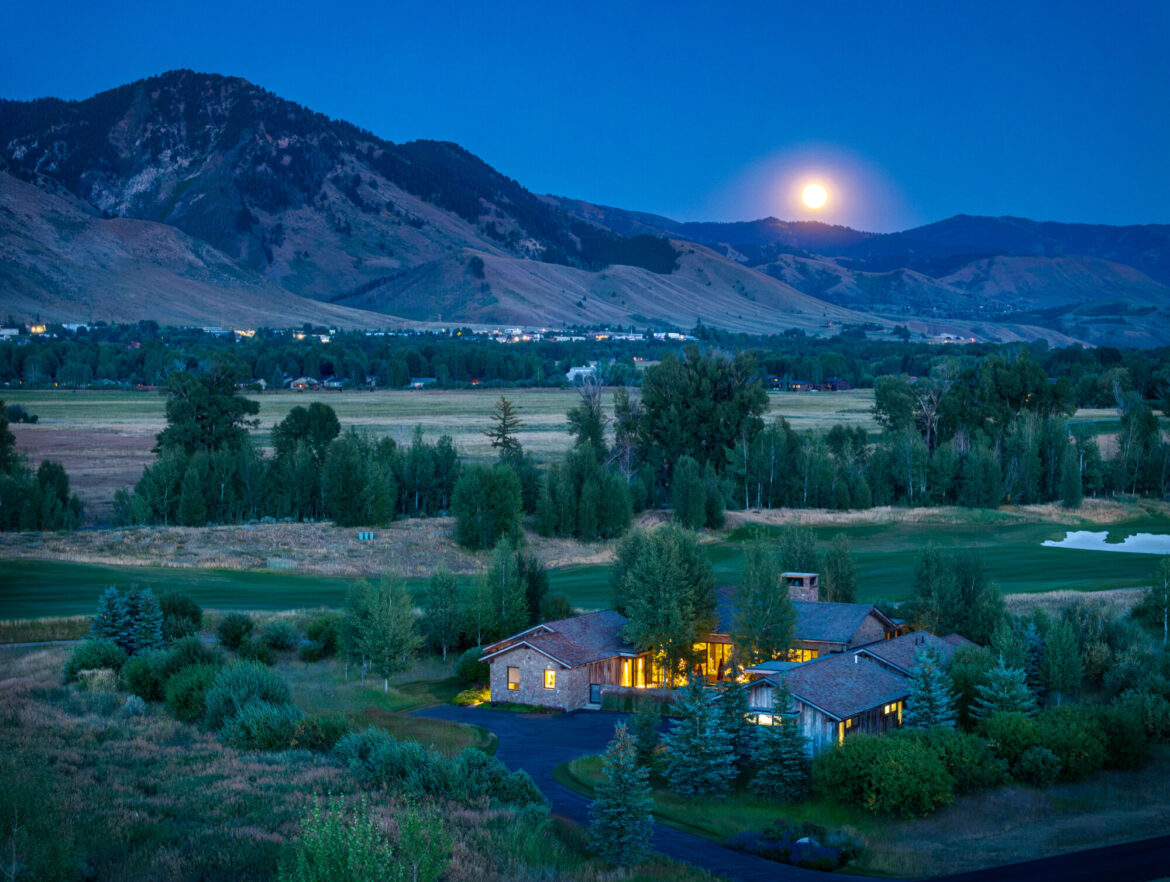
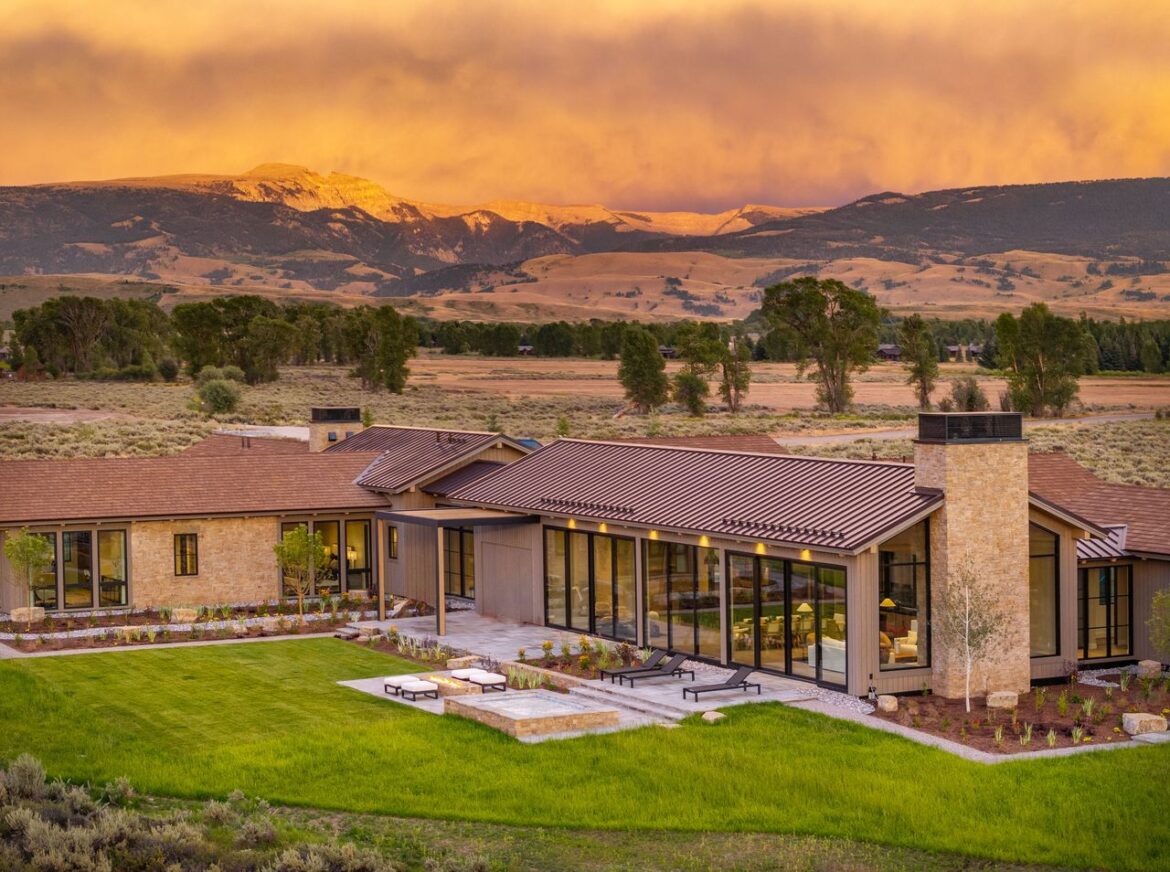
The barns still stand, but now they’re as likely to house a car collection as livestock; the ponds are stocked for private fly fishing rather than irrigation; the old homestead aesthetic gets rebuilt around a wine cellar, a screening room, and a mudroom sized for a family’s worth of ski gear. Floor-to-ceiling windows frame the Tetons like living artwork, heated patios extend the outdoor season, and trails often begin just beyond the property line. In Jackson Hole, luxury is measured as much by proximity to open space as it is by square footage.
The numbers illustrate just how far that scarcity has pushed valuations. Faupel described recent sales in the $4,000-per-square-foot range and noted her company has sold single-family homes north of $50 million, figures that track with the broader market. The Viehman Group’s Jackson Hole Report put the average single-family sale price at $7.4 million in early 2025, with luxury closings above $10 million up 131 percent year over year. Realtor.com has pegged the ceiling for the top 1 percent of Teton County listings at $41.6 million, putting Jackson Hole among the most expensive ZIP codes in the country.
New construction opportunities are limited in Jackson Hole. Faupel noted that the most desirable lots were largely built out in the 1980s and 1990s, leaving little undeveloped land worth building on, a dynamic that has pushed activity toward teardowns instead. For many buyers, rebuilding is less about replacing an older home than taking full advantage of a rare parcel – reorienting living spaces toward mountain views, maximizing privacy, and designing homes that blur the boundary between indoors and the surrounding landscape. She described one recent transaction in which a client paid roughly $20 million for an 80-acre property with an existing house on it, with plans to demolish the house and build new.
That same scarcity can turn even unlisted land into a bidding war. In a separate deal, one of Faupel’s clients purchased an undeveloped parcel that wasn’t formally on the market for roughly $10 million, after an unsolicited competing offer pushed the price about $1 million above the seller’s original ask. Construction costs on the property, she said, would run conservatively in the $2,000-to-$3,000-per-square-foot range. Increasingly, buyers aren’t competing over architecture so much as the opportunity to secure one of the valley’s few remaining buildable settings.
The New Buyer
What has changed more than the price floor, according to Faupel, is who is buying. The new client is younger, more international, and far more mobile than the generation before, and each of those shifts is reshaping the market in its own way. Together, they reflect a broader evolution in luxury homeownership: buyers are seeking not simply a second home, but a place that can serve as a long-term base for family, recreation, and community involvement.
When it comes to mobility, the change runs deeper than demographics. “There is this flexibility mentality,” she said. “These people don’t really care where they are. They are totally mobile.” That mobility extends to how families structure their lives around a property. Faupel described clients who travel with a private educator for part of the year, alongside a chef and a wellness practitioner, effectively relocating a small support staff between properties. “They kind of travel with their own little communities all set up,” she said, “and then they’re looking for places that they can be.”
Jackson Hole fits that model unusually well. Families can spend extended stretches in the valley without exhausting its opportunities, whether that means skiing and snowshoeing in winter, fly fishing and hiking in summer, or simply enjoying the quiet rhythms of a community where wilderness is never far from the front door. The town itself complements those experiences with galleries, acclaimed restaurants, music festivals, and a vibrant arts scene, giving residents reasons to engage beyond their own property. For buyers who can live and work from almost anywhere, the appeal lies less in checking off attractions than in settling into a place that feels both adventurous and deeply rooted.
Long-term planning has shifted accordingly. Many buyers are placing property into thousand-year dynasty trusts, estate planning vehicles designed to keep assets under family ownership for generations while helping minimize transfer taxes and protect wealth over the long term. Wyoming is one of a handful of states with trust laws that permit exceptionally long-lasting dynasty trusts and offer strong asset-protection and privacy provisions, making it a popular jurisdiction for multigenerational estate planning. The trend reflects, Faupel said, families thinking not in years, but in generations.
The newer buyer cohort also brings a different set of priorities beyond real estate itself. Faupel pointed to Teton County’s reputation as the most philanthropic county in the nation, home to roughly 250 nonprofits in a town of about 20,000 people. Many newcomers become involved with organizations focused on wildlife conservation, public lands, education, healthcare, affordable housing, and the arts, extending the stewardship they value in the landscape to the community itself. “Those people also want to give back and maintain that stewardship mentality,” she said. “I think the social responsibility piece really resonates with the younger buyer.”
Increasingly, ownership in Jackson Hole is about more than preserving wealth. It is about preserving a place and becoming part of the community that has worked for generations to protect it.
Built to Stay Small
Jackson Hole’s appeal is inseparable from its constraints, and those constraints are largely the result of deliberate choices. For decades, the community has prioritized conservation, limited development, and preserving the valley’s character over accommodating rapid growth. The same decisions that have protected open space, wildlife habitat, and unobstructed mountain views have also limited how quickly – or how easily – the region can expand.
Those choices are perhaps most visible in the area’s infrastructure. Jackson Hole Airport sits inside Grand Teton National Park, where its setting offers arriving passengers sweeping views of the Tetons almost immediately after touchdown. That extraordinary location also caps the runway’s length and limits the size of aircraft – commercial or private – that can land there. Overflow private traffic is routed to another airport roughly an hour away. Road access is similarly constrained. Teton Pass, the primary route connecting Jackson to Idaho for many commuting workers, was closed by a landslide in 2025, forcing a detour of about two and a half hours and underscoring how geography still shapes daily life in the valley.
Seasonal demand patterns add another layer of complexity. The area welcomes roughly 4 million visitors in summer and about 1 million in winter, a ratio that surprises people unfamiliar with Jackson Hole’s reputation as a ski destination. Summer draws hikers into Grand Teton National Park, anglers to the Snake River, wildlife enthusiasts hoping to spot moose, elk, and bears, and families continuing north into Yellowstone. Winter shifts the rhythm toward skiing, snowboarding, sleigh rides through the National Elk Refuge, and quieter evenings in town. The seasonal influx is immense, but it doesn’t translate into permanent growth. “We have the infrastructure to support a lot of people,” Faupel said. “It’s just not a lot of people can live here.”
Supporting millions of visitors while intentionally limiting long-term growth is one of Jackson Hole’s defining balancing acts. For many residents – and increasingly for the buyers entering the luxury market – that restraint isn’t a drawback. It’s one of the valley’s greatest assets.
The Wager
The scarcity that defines Jackson Hole isn’t simply a product of geography. It’s the result of decades of decisions by residents and local leaders to preserve the valley’s character, even when that has meant limiting growth. Through conservation easements, zoning limits, and a comprehensive plan that prioritizes open space, wildlife habitat, and working ranchland, the community has repeatedly chosen preservation over expansion.
The result is a valley with very little opportunity to grow, and very little desire to become something other than what it already is. The runway that can’t be extended, the single mountain pass that occasionally closes for months, the rules that keep ranchland from becoming subdivisions: these aren’t problems Jackson Hole is trying to solve. They are the terms the valley has accepted, and the reason a parcel of dirt with nothing on it can sell for $10 million without a second thought.
That is the wager every buyer in Jackson Hole is making, whether they articulate it that way or not: that a place committed to staying itself will continue to reward the people willing to invest in it. They’re betting not simply on rising property values, but on a community that has repeatedly chosen conservation over convenience, stewardship over expansion, and a way of life that has become increasingly rare in the modern American West.
About the Expert: Julie Faupel is Founder and CEO of REALM Global, a membership organization for luxury real estate advisors. Based in Jackson Hole, Wyoming, Faupel has worked in the local luxury real estate market for over two decades, advising clients on high-end residential transactions throughout Teton County.
This article is based on information provided by the expert source cited above. It is intended for general informational purposes only and does not constitute legal, financial, or real estate advice. Readers should conduct their own research and consult qualified professionals before making any real estate or financial decisions.