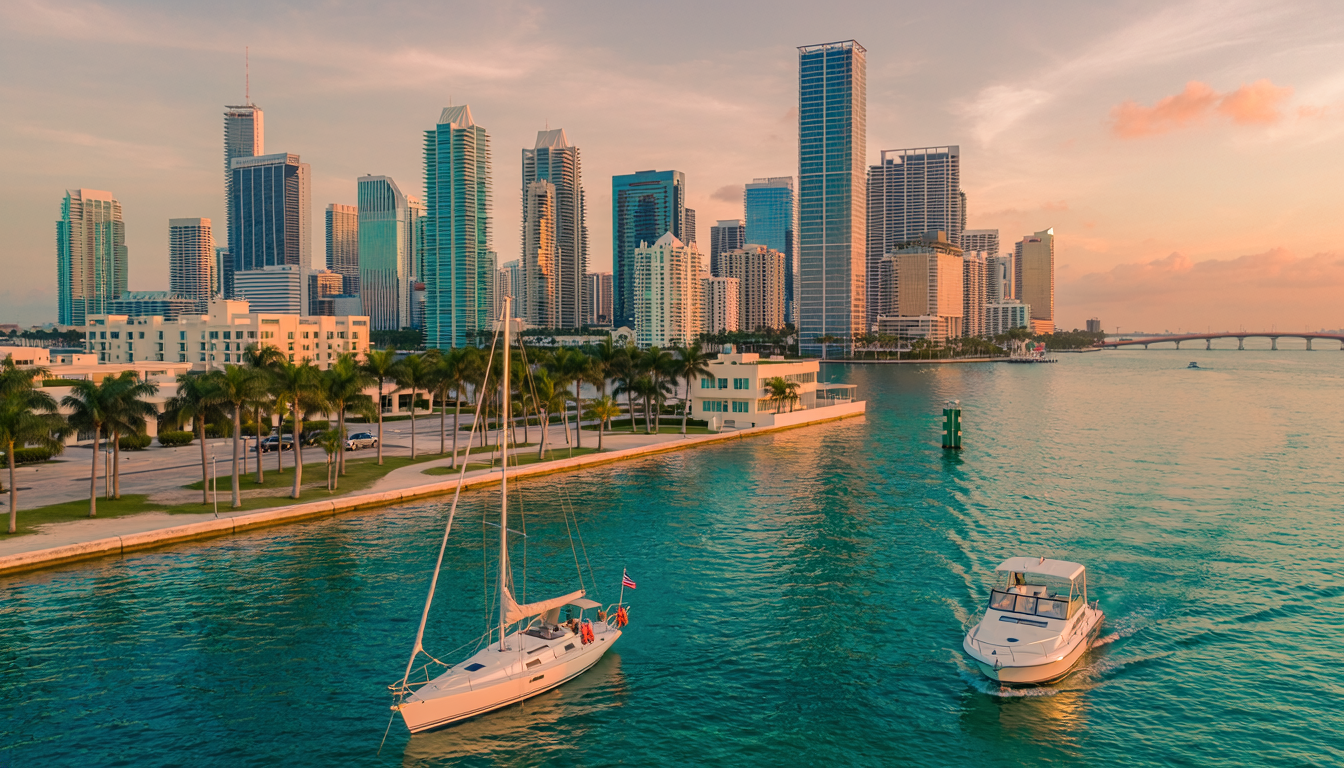
To outsiders, Miami is a city built for excess. To the people buying its most expensive homes, it’s a city organized around water, wellness, and workouts at dawn.
By Chris Caggiano
Picture the version of Miami that exists in most people’s heads before they’ve ever set foot there: nightclubs still going strong at 3 a.m. on a Tuesday, a line of exotic cars idling outside a Brickell valet stand, someone’s yacht anchored off Nikki Beach with a DJ set blasting across the water. It’s swimsuits in January, champagne in the afternoon, a city that appears to run entirely on heat and momentum.”
Reid Heidenry, a longtime real estate agent with Sotheby’s International Realty in Miami Beach, hears that image reflected back at him almost everywhere he goes, even in cities with plenty of glamour of their own. At a buzzy restaurant in Paris this past summer, the waiters asked where he was from. When he said Miami, the reaction was immediate. ”Oh my God, it’s so crazy,” he recalls them saying. More often the response comes as a question about how anyone could actually live there, usually from people whose impression rests on a single wild weekend. Heidenry doesn’t argue with the premise. ”If you want to have one of the craziest nights of your life, come over here,” he says. ”We can compete with anyone in that regard.”
But Heidenry pushes back on the idea that this public image explains the market for the city’s most expensive homes. Miami is on pace for a record year in 2026, outpacing New York City and the Bay Area as wealth continues to migrate to low-tax states. In the first half of the year, 24 condos and single-family homes in Miami-Dade County closed above $30 million, nearly double the previous year’s pace and within reach of 2025’s full-year record of 33 such sales. Buyers relocating their lives and their tax bills aren’t chasing a wild weekend. ”Miami has a lot of layers,” Heidenry says, and the layer that’s visible from the outside is the one least likely to explain why they’re here.
More Than One Address
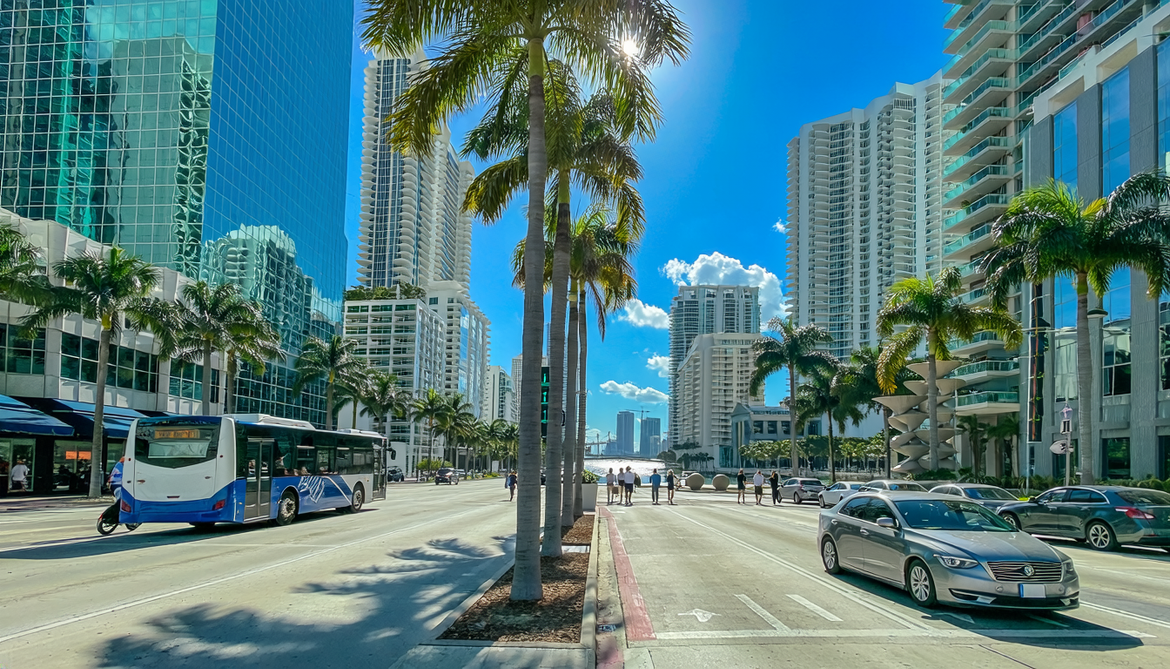
Those layers are relatively new. When Heidenry arrived in 2002 to attend the University of Miami, most of what drew people to the city was concentrated in South Beach, Coral Gables, and Coconut Grove. He settled in South Beach after graduating and has watched the map fill in since. Twenty-four years later, Wynwood, the Design District, Edgewater, Brickell, and Midtown have all come into their own, along with Bal Harbour and North Miami Beach to the north.
Each has developed a distinct way of life. Brickell, the city’s financial district, is a dense cluster of condo towers where residents can walk to the office, the gym, and dinner. A few miles north, the Design District has become the city’s center for high-end retail and design showrooms, while neighboring Wynwood, a former warehouse district, is known for its murals, galleries, and restaurants. Edgewater’s newer towers along Biscayne Bay trade Brickell’s density for open water views. To the south, Coral Gables and Coconut Grove move at a slower pace, the Gables with its tree-lined streets and Mediterranean Revival homes, the Grove with a sailing culture built around its bayfront marinas. And across the bay, Bal Harbour’s quieter stretch of oceanfront draws buyers who want the beach without the South Beach scene.
That layering matters because it means a buyer isn’t choosing between the wild Miami and a watered-down alternative. They’re choosing the version of Miami that matches the way they want to live. Heidenry describes the loudest version of the city and its quietest overlapping at the same hour. At 5 a.m., he says, some people are just getting home, some are still out, and others are already biking, swimming, or running, part of ”a whole community of health and wellness and fitness people doing run club.” Miami, in his telling, is defined less by hedonism than by range. By his count, the only things the city can’t offer are skiing and altitude.
The Bay Is the Backyard
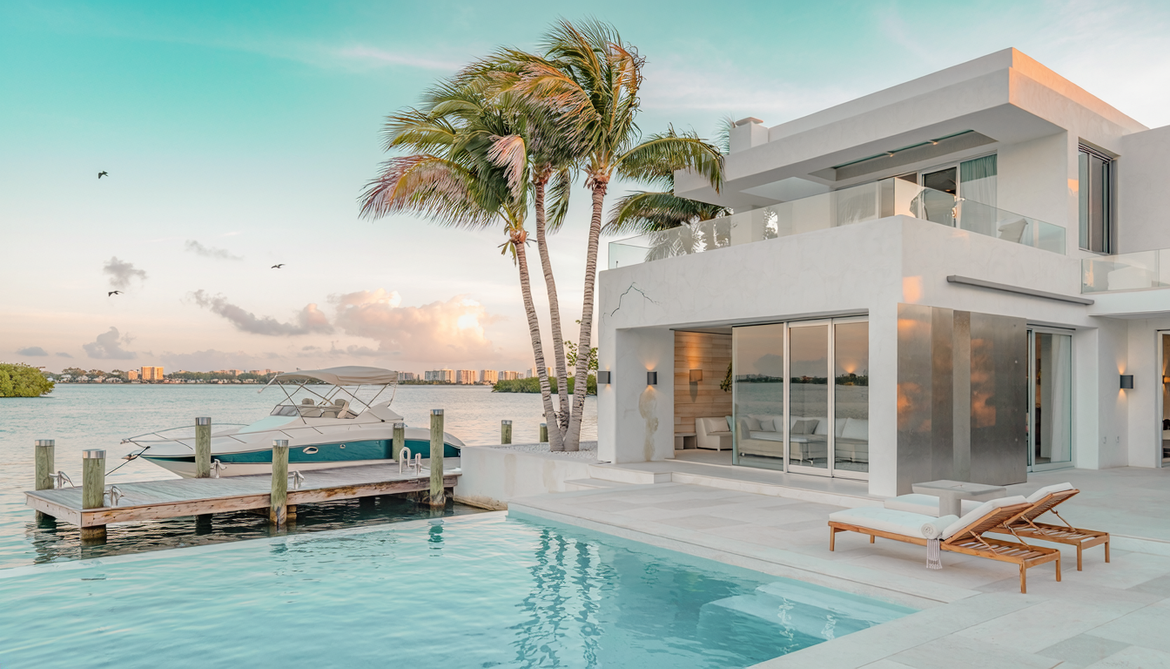
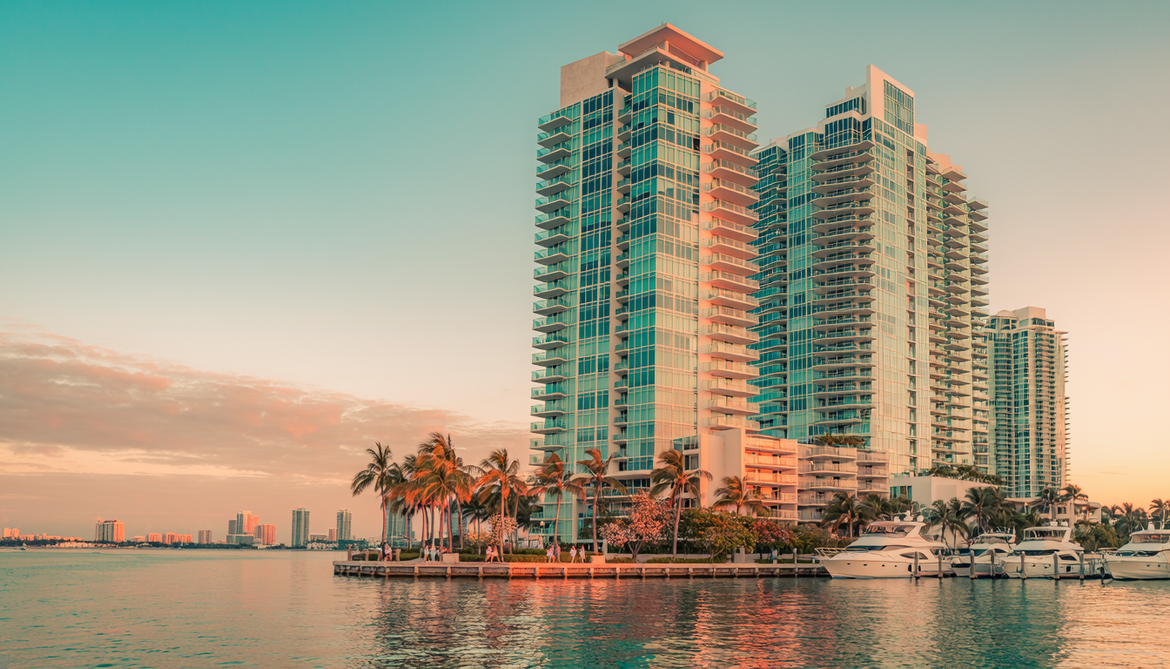
Nothing captures that range of options better than how waterfront buyers actually spend their weekends, and it’s the part of Miami’s identity outsiders miss entirely. Heidenry recalls a friend who relocated from Los Angeles, a city with its own reputation for waterfront living, who was floored by how differently boating worked in Miami. ”You don’t understand,” the friend told him. ”We have marinas in the ocean, but it’s just not like this.” In Miami, houses back directly onto the bay, and boats tie up behind the house itself.
Living that way comes at a steep price, and the waterfront is where Miami’s market is running hottest. Heidenry calls the current moment ”a tale of three markets.” Condos have softened under a wave of new supply, and inland lots are holding steady, but ”the waterfront homes are going nuts, and they keep going up.” By his definition, ultra-luxury on the water starts around $15 million for a smaller house and arrives in earnest once prices reach the $20 millions. His own recent deals show how far past that the market now reaches: a recent sale on a $72 million house, and a $23.5 million closing for a lot – just the lot – where the buyer plans to build a home worth around $60 million.
Even at those prices, there’s one thing money can’t buy in Miami Beach: deeper water. Because the bay is shallow, the largest yachts can’t navigate it, no matter how much waterfront a house has, so their owners keep them at deepwater marinas instead. Heidenry considers a boat of around 80 feet the ideal size, large enough to count as a luxury yacht but small enough to cruise the bay freely. That freedom is the point. ”The fun of Miami is cruising around, pulling up to the restaurants,” he says, whether that means a friend’s dock, Key Biscayne, or an afternoon DJ set at Palm Tree Club.
The Counter-Narrative of Wellness
If boating is the layer outsiders don’t always picture, wellness is the one that most directly contradicts the stereotype. Heidenry traces its rise partly to the pandemic, when a house, with its private pool and outdoor gym, became a meaningful upgrade over a condo with closed amenities and shared elevators. Longevity has since become its own status marker among the wealthy relocating to Miami, many arriving from California’s tech industry with health optimization already built into how they live.
Wellness in Miami runs along two tracks, one private and one intensely social. Some wealthy residents want to work out without being bothered, a real concern in a city where neighbors include Mark Zuckerberg and Jeff Bezos, and they’ve built the full setup at home: gyms, cold plunges, infrared saunas. Others treat the gym as a social scene. At Anatomy in Miami Beach, Heidenry says, ”You go at 6 o’clock in the morning, you’ll see a bunch of people on the Forbes list.” Go at 7 a.m., and it’s a different group from the same list. Padel is where the two tracks meet, offering exclusivity and company at the same time.
Nowhere is that culture more visible than on the padel court. A cousin of tennis, padel is played in doubles on an enclosed court about a third the size of a tennis court, with glass walls that are part of the game. Heidenry says it’s probably the most popular recreational pursuit among Miami’s wealthiest residents, because it manages to be competitive and social at once. ”It’s elevated from pickleball,” he says. Much of the play happens at private clubs like Sunset Padel and Reserve Padel, where getting in can be harder than winning a match. Sunset Padel’s waiting list has passed 500 people.
The Other Miami
The nightlife stereotype survives because it’s the easiest part of Miami to describe secondhand: it travels well at a dinner table in another city. A waiting list for a padel club, or a boat idling behind a private dock rather than at a downtown marina, doesn’t make for the same story. But for the buyers actually closing $10 million-plus deals in Miami-Dade at a pace of nearly one a day, many of them relocating from higher-tax states with wellness and privacy already high on their list, that quieter version of the city is closer to what they’re paying for.
Heidenry doesn’t see any contradiction in a city that can produce both. It’s simply what he means by layers: whichever version of Miami a person is looking for, from the wildest night to the most disciplined morning, the city has already built a place for it. And has priced it accordingly.
About the Expert: Reid Heidenry is a real estate agent based in Miami Beach, Florida
This article is intended for informational purposes only and does not constitute legal, financial, or investment advice. The views and opinions expressed herein reflect those of the individuals quoted and do not represent an endorsement of any company, product, or service mentioned. Readers should conduct their own due diligence and consult qualified professionals before making any investment decisions.