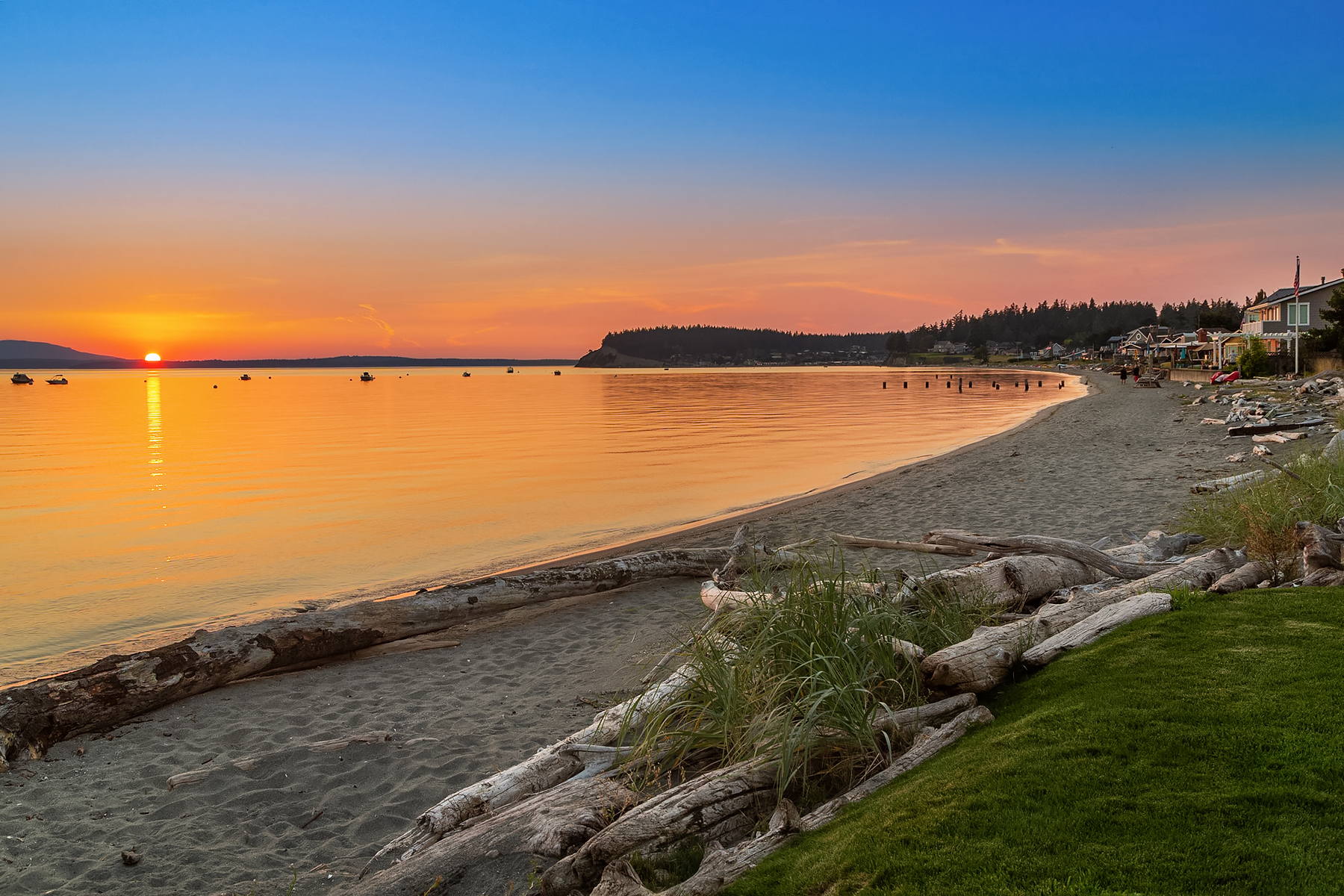
Shoreline that Seattle-area families held for half a century is reaching the market, and buyers face a choice the region rarely offered.
For generations, the finest waterfront around Seattle almost never reached the open market. Families bought along Lake Washington and Puget Sound decades ago, built the houses they wanted, and planned to hand them down. When a waterfront home did come up for sale, it rarely lasted the week. “It used to be anything on the waterfront that came up, it would be gone in a day or two because it was so rare,” says Buz McKinley, a broker with Windermere Real Estate, who has sold waterfront and water-view property in the region for more than two decades.
That pattern has broken. Over the last two or three years, changing family circumstances and a shifting tax climate have pushed long-held estates toward sale, and McKinley says the market now holds more of them than ever before. “Now we have hundreds of homes on the water that are available,” he says. For buyers who have waited years for a chance at this shoreline, the question is no longer whether a property will come up, but which one fits the life they want.
A Scarce Shoreline
The scarcity that made these properties so prized begins with geography. Water defines the Seattle region, from Lake Washington and the smaller lakes around the metro area to Puget Sound, part of what is now called the Salish Sea. Yet only so much land touches that water, and almost none of it remains undeveloped. Lake Washington lies only about five miles east of the Sound, and the narrow band of land between them commands a premium because it reaches both bodies of water and the city.
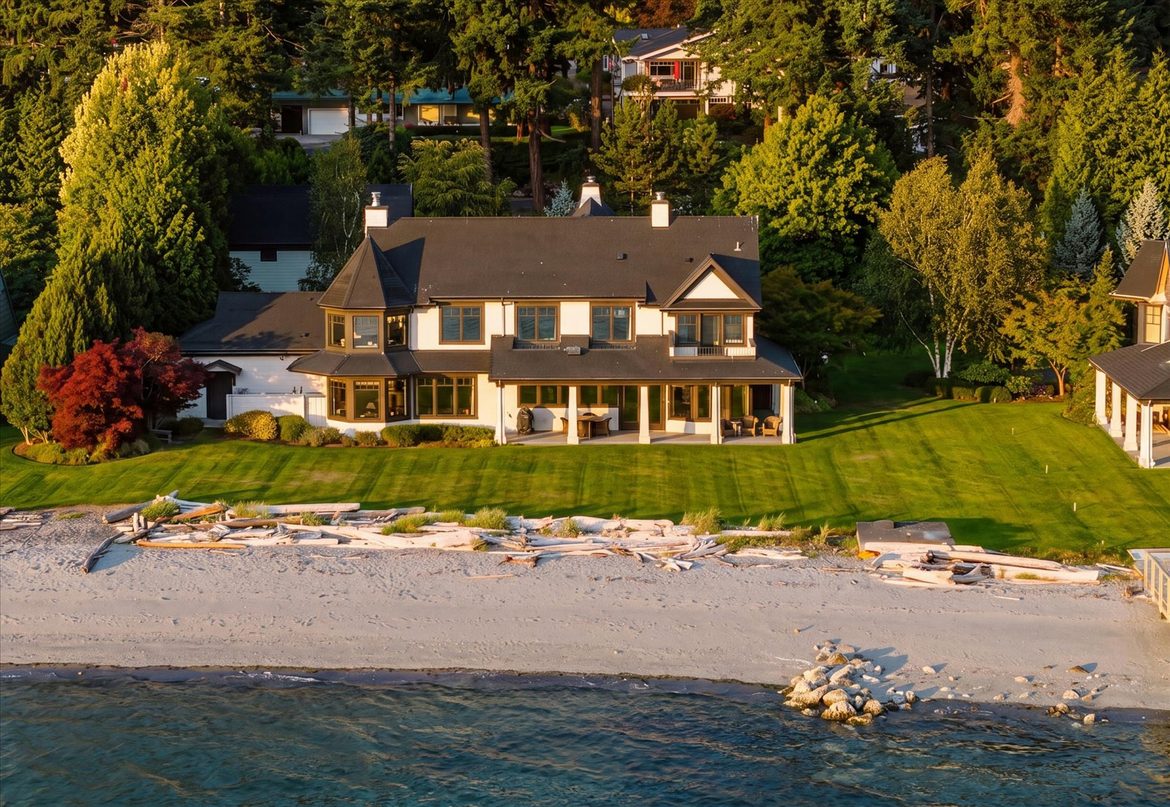
Prices reflect that squeeze. McKinley places luxury in the region at roughly $2 million to $5 million, enough for a substantial home with a private dock or a house across the street from the water with a commanding view. Ultra-luxury begins around $5 million and climbs as high as $90 million for the most significant waterfront estates.
Because so little shoreline exists, buyers at the top of the market often purchase the land first and the house second. Many weigh whether an existing home can become the one they want or whether to start over. “In a lot of cases it’s tear down,” McKinley says. What rises in its place tends to follow regional taste at a far larger scale. Craftsman architecture, which began in the Northwest as a modest bungalow style, now shapes waterfront homes of 10,000 square feet.
Estates in Transition
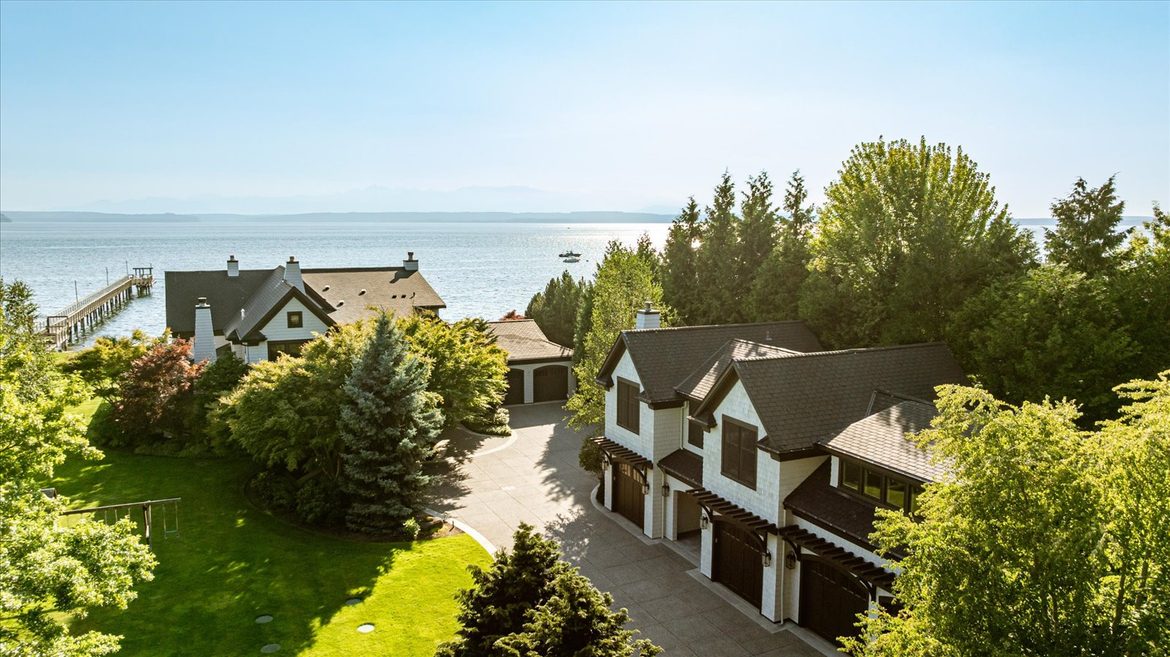
Geography explains why so little waterfront exists, but ownership explains why so little of it ever traded. Over the past 60 to 70 years, families bought the best shoreline around Seattle intending to keep it, and many invested heavily in the houses along the way. One Whidbey Island property McKinley represents shows how far that ambition can reach: a 13,000-square-foot waterfront compound with a main house, a detached carriage house, and a guest house with eight suites, all built so the owners’ children and grandchildren could gather in one place.
Yet the next generation does not always keep what the last one built. An inheritance can pass along the value of an estate, McKinley explains, but not the means or the desire to maintain it. Upkeep on these properties runs high, and heirs often lead more mobile lives than their parents did. Family time itself has changed, too. Travel for children’s sports now claims the weekends families once spent at the shore, and parents of 10-year-olds already plan around college. A house built for long summers together fits less easily into that calendar.
At the same time, the state’s tax climate has given some wealthy owners reason to establish their primary residence elsewhere. In McKinley’s view, a wave of new state taxes aimed at high earners and large estates has made Washington less hospitable to wealth, and he says quite a few corporate leaders have left the state recently for Florida, Arizona, Utah, Idaho, and mountain towns like Park City. Together, these pressures have brought eight-figure, and in some cases nine-figure, waterfront properties to market in numbers the region has not seen before. Homes in the $2 million to $5 million range that once sold within days have become plentiful as well.
Reading the Shoreline
With more of the shoreline available, buyers confront a fact many don’t expect: no two waterfront properties offer the same life. “Every one of the beaches on Whidbey Island is different than the other,” McKinley says, and buyers often discover that variety only once they start looking. A sandy beach suits a family with young children who want to spend whole days on the shore. A serious boater needs a dock, which is rare, or a buoy to moor offshore. An angler who likes to fish at dawn has to consider the tides, which can rise and fall 12 feet in a day and govern when a boat can reach open water.
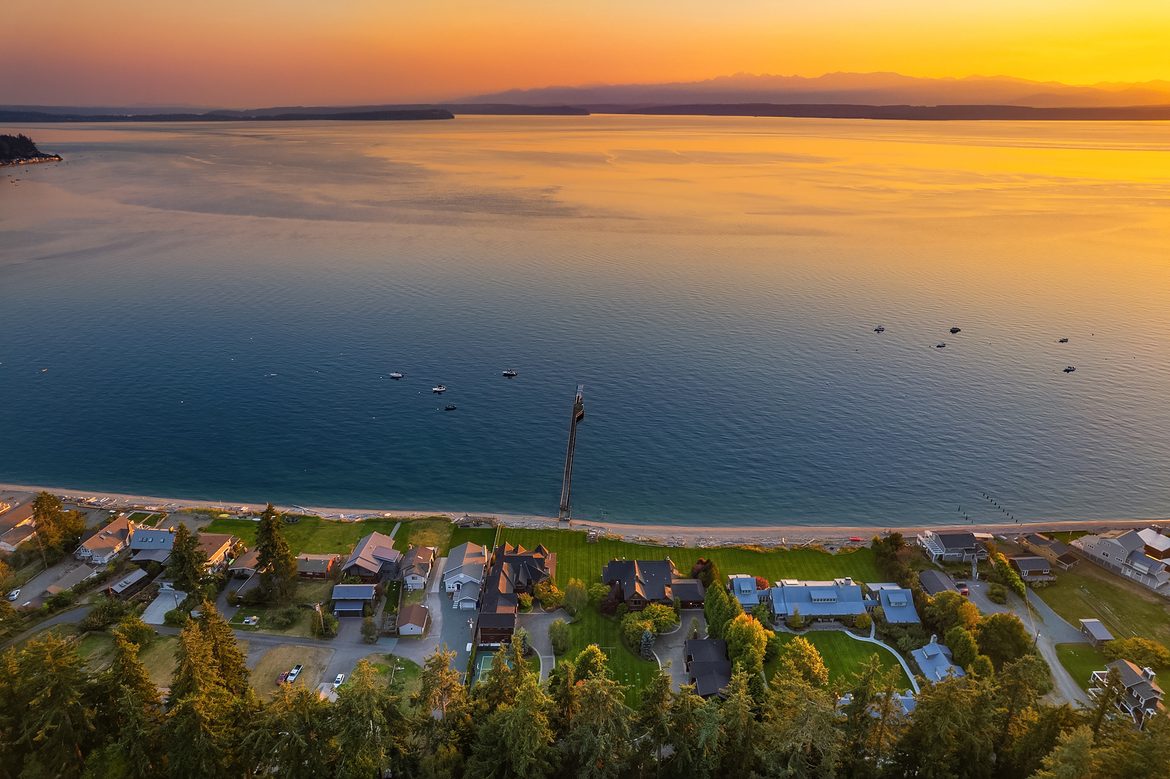
The broadest decision comes before any of that, between living on the water and living above it. Waterfront commands the highest prices and offers the most privacy, since owners seldom share their beaches with the public; the region’s many waterfront parks absorb that demand. Bluff and hillside homes trade direct access for sweeping views of the water, the Cascades and Olympics, and Mount Rainier to the south, at a lower price.
A third option bridges the two. Some view neighborhoods share a private beach, with a dock for residents’ boats, storage for kayaks and paddleboards, and sometimes a pool or tennis courts. Because these beaches see little use, McKinley says, families heading down for an evening bonfire often has the beach to themselves. “It’s the best of both worlds,” he says. Residents enjoy the amenities of waterfront ownership without paying the waterfront premium.
Life on Whidbey
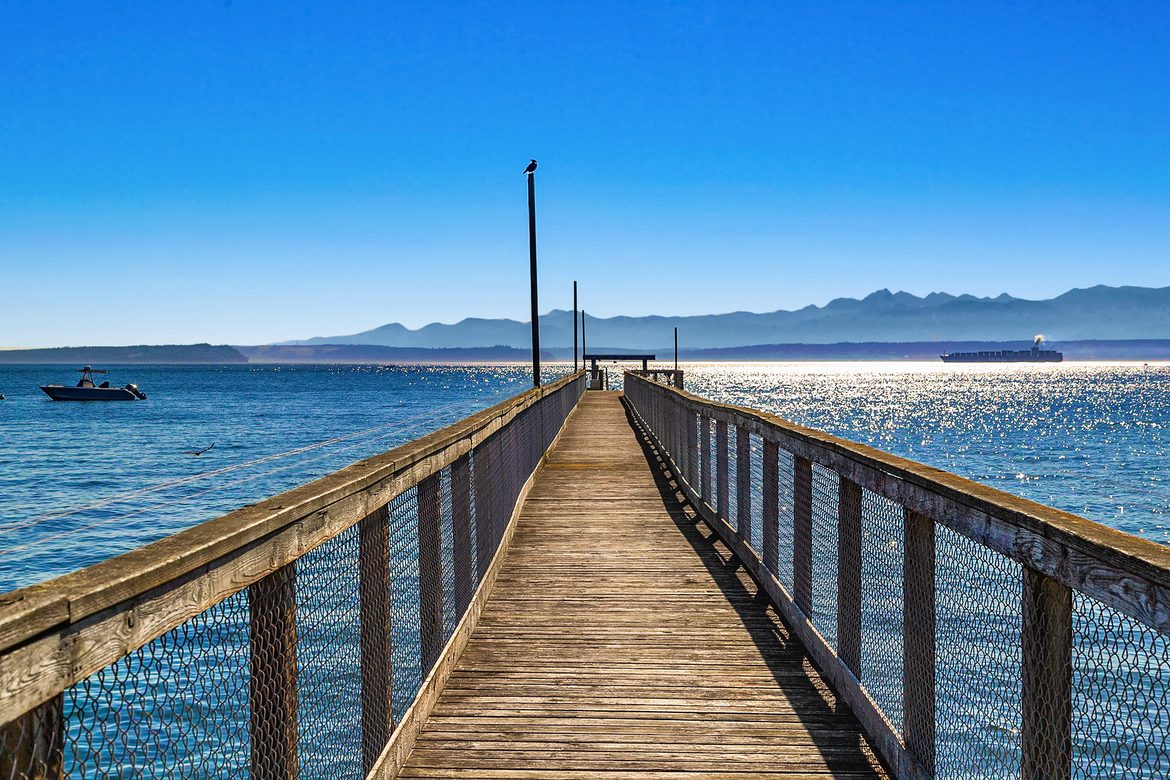
Whidbey Island, where McKinley lives and focuses much of his business, shows what those choices look like in daily life. The island sits about an hour and 15 minutes from downtown Seattle, yet it feels far more remote than the distance suggests. “Life is simpler here,” McKinley says. “We don’t have streetlights, we don’t have traffic backups yet.” Many buyers arrive from the Seattle metro area looking for that pace, and some make the island their primary home.
Life there revolves around the water. At low tide, the retreating Sound exposes beaches where residents walk for miles, dig for clams, and let their dogs run. Boaters catch crab and salmon, pursuits few other parts of the country can match. The ferry system puts the Olympic Peninsula within a day trip, and the mountains to the east offer hiking, mountain biking, and skiing.
For the wealthiest owners, though, Whidbey often serves as one home among several. On Mutiny Bay, where McKinley lives, some of the most spectacular estates see their owners only three or four weekends a year, or for a single two-week stay. Many of those owners likely keep their primary home on Lake Washington and perhaps a ranch in Montana besides. As McKinley sees it, today’s ultra-luxury buyer has no wish to be tied to one place. What that buyer wants in each location is privacy and a setting among the region’s best, which around Puget Sound still means a place on the water.
About the Expert: Buz McKinley is a broker with Windermere Real Estate, where he partners with his son. Based in Edmonds, Washington, he specializes in waterfront and water-view properties in King and Snohomish counties and on Whidbey Island.
This article is intended for informational purposes only and does not constitute legal, financial, or investment advice. The views and opinions expressed herein reflect those of the individuals quoted and do not represent an endorsement of any company, product, or service mentioned. Readers should conduct their own due diligence and consult qualified professionals before making any investment decisions.
Hero Image: Lauren Gregory