
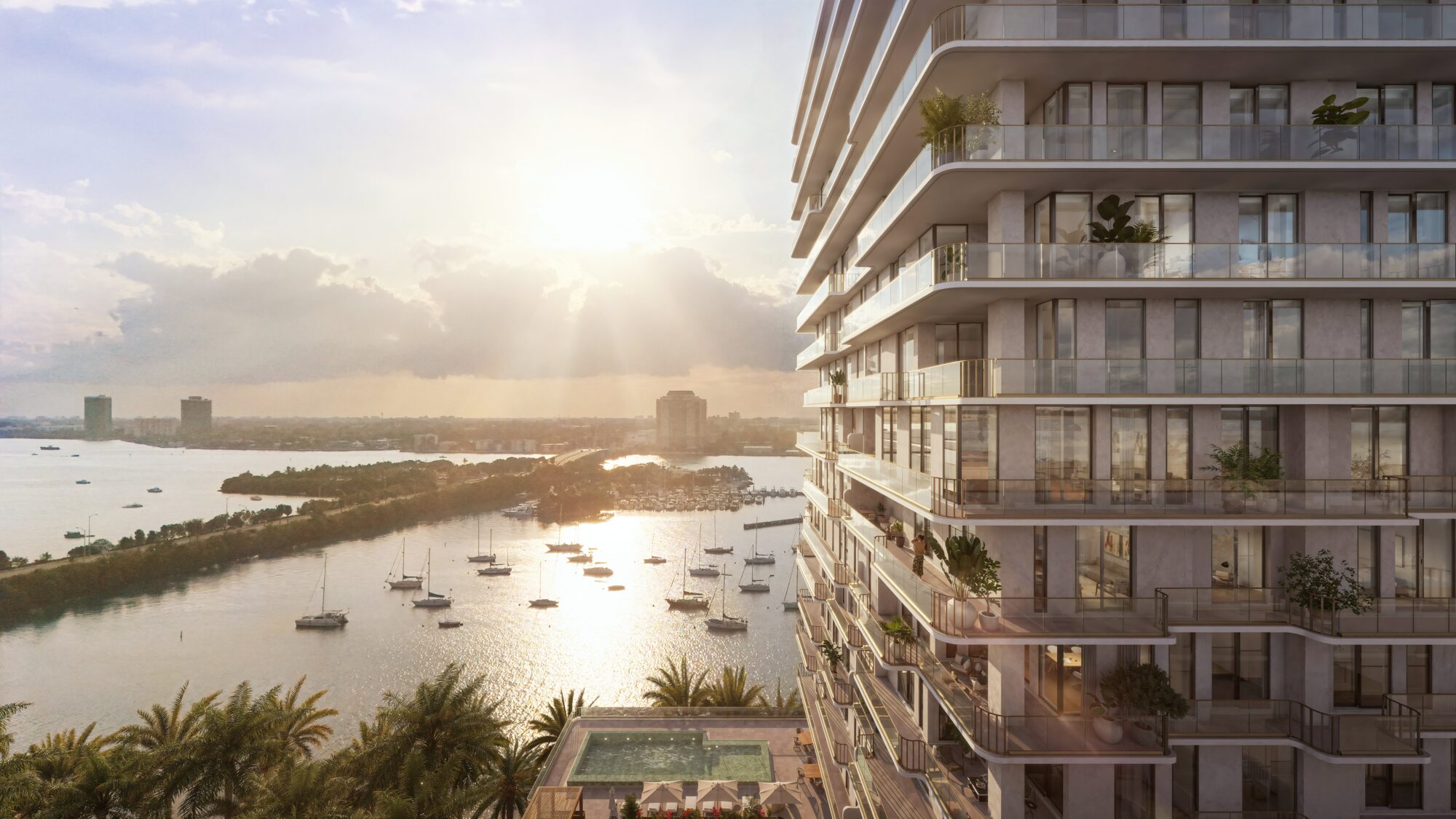
A 54-residence tower on Biscayne Bay gives every home a corner and tops out with six penthouses, all without a hotel brand’s name on the door.
By Chris Caggiano
Much of Miami’s new luxury construction now sells a name along with the residence. Towers carry the labels of hotel companies, carmakers, and fashion houses, and buyers pay for the services and recognition that come with them. That premium shows up twice: once in the purchase price, and again in monthly fees, since a branded building pays its licensor.
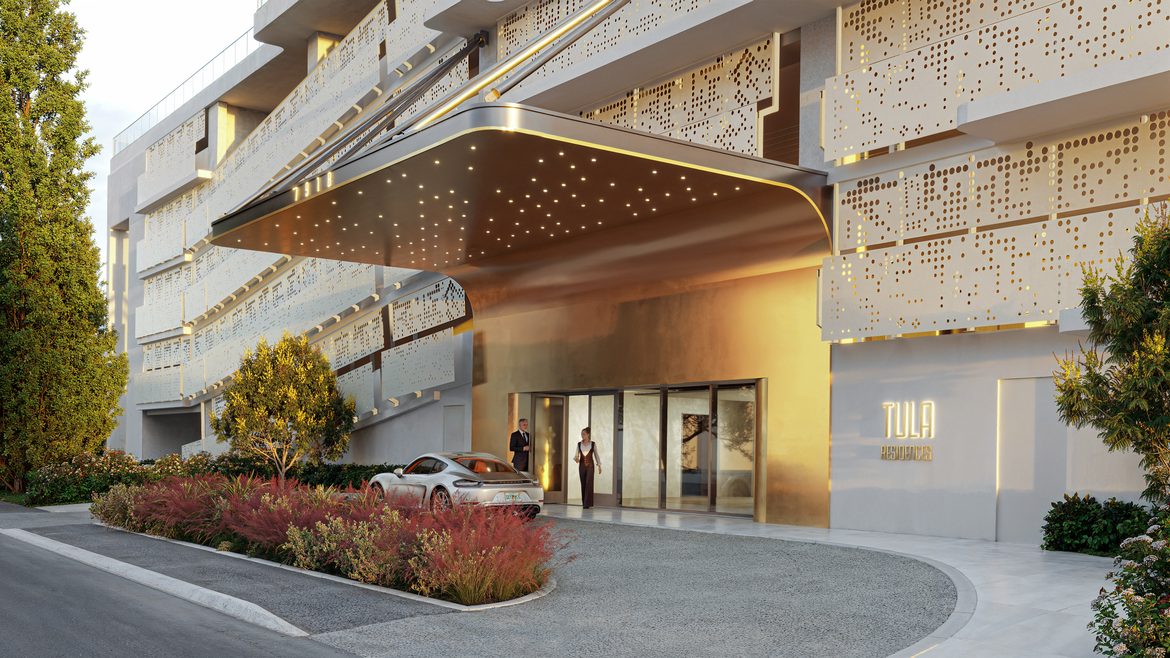
Tula, a 21-story tower rising at 7918 West Drive in North Bay Village, starts from a different calculation. Vivian Dimond, founder and CEO of Bayshore Grove Capital, which is developing the building, says a buyer weighing a branded residence should first ask how much more the label costs. She doesn’t dismiss what the label delivers. A friend who lives in a Four Seasons residence in Miami was in Hawaii during the wildfires, she recalls, and secured a room at the brand’s hotel there because of his residence here. “There are benefits there,” she says, “but it does not come free.”
That trade-off frames the real question about Tula: what does a non-branded tower offer in place of the name? Dimond’s answer runs through the building’s scale, its layout, its monthly costs, and its position in the middle of the bay.
Four Corners Per Floor
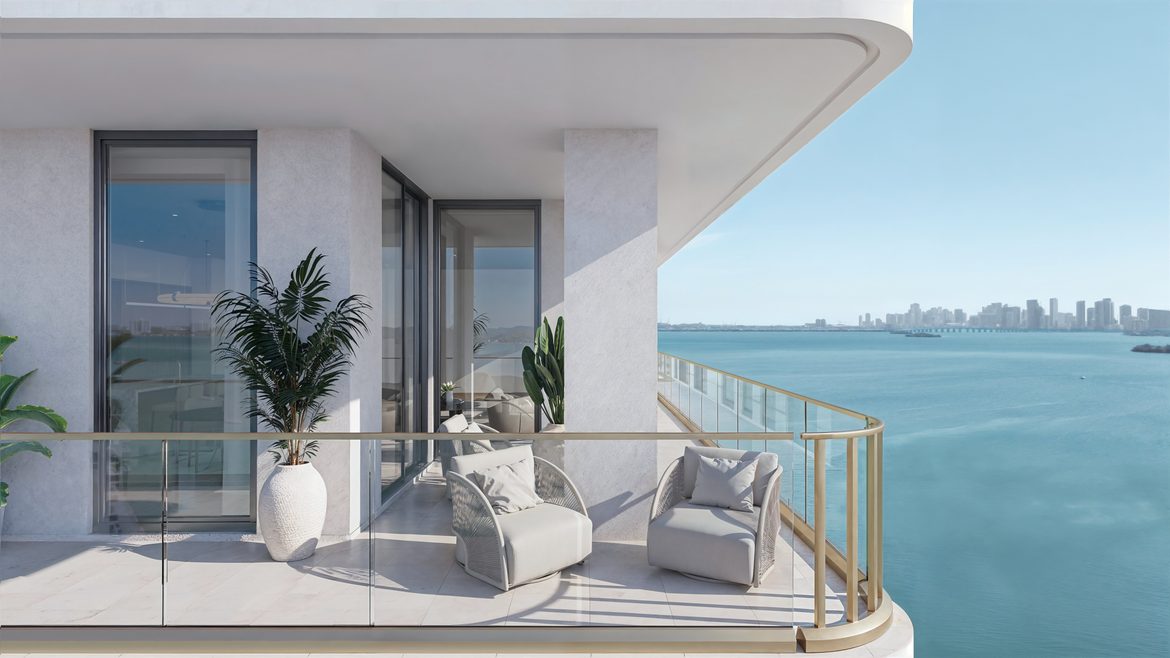
The first part of that answer is scale. Tula holds 54 residences, a fraction of the 300-unit towers that line much of Miami’s waterfront, and Dimond places it somewhere between a private house and a conventional condominium. Above the amenity levels, each floor from the seventh through the 19th holds just four residences, one at each corner, so every home opens in two directions. Nearly all of them face the water, and some corners look across Biscayne Bay to the downtown Miami skyline. The top three floors hold the six penthouses, two per floor.
That arrangement shapes who buys. Dimond says several prospective buyers with children of 18 or 19 are ultimately looking at larger buildings, where more young people fill the pool deck and the common rooms. Tula’s buyers, she says, want quiet. “It is not a very loud, busy place to be,” she says.
Inside the Residences
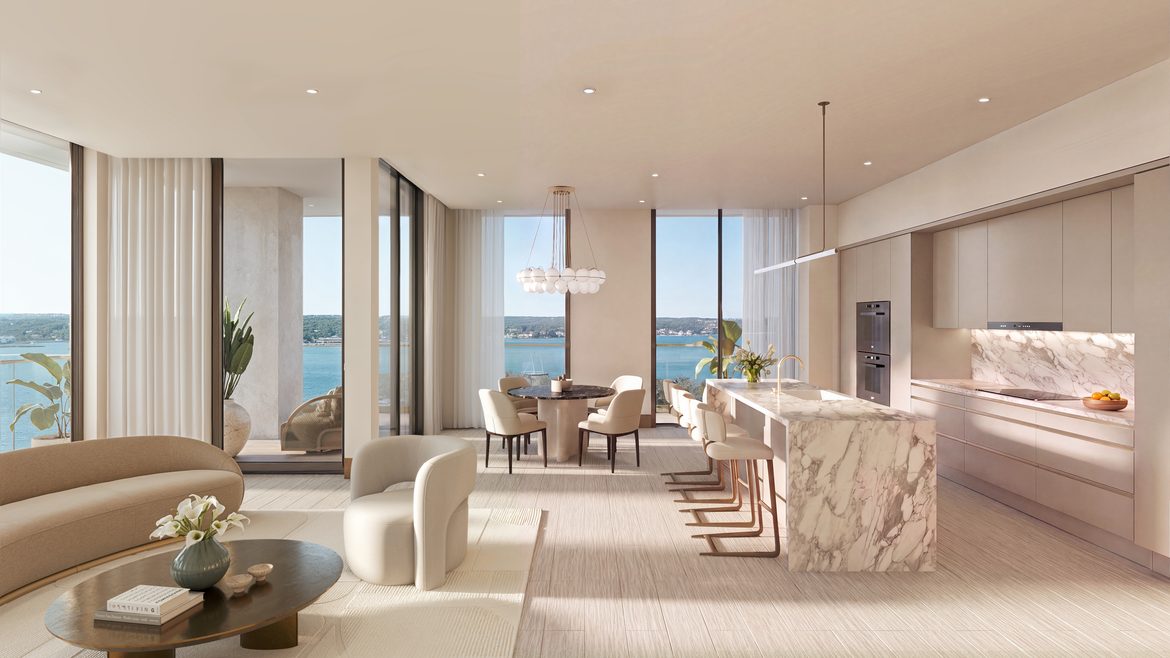
That preference for quiet carries into the homes themselves, which come as two-bedroom, two-bedroom-plus-den, and three-bedroom layouts; the building has no one-bedrooms. M77R, a Miami architecture practice, designed the tower with a hand-troweled stucco façade, and Shannon Farrell Design handled the interiors. Residences range from about 1,590 to 2,440 square feet beneath 10-foot ceilings, with oversize windows throughout.
Kitchens pair marble counters and backsplashes with custom millwork and integrated Miele appliances, every residence has a walk-in laundry room, and the bathrooms combine white stone slabs with fluted glass and champagne-toned metal framing.
The terraces extend the corner plan outdoors. On each residential floor, terraces wrap the full perimeter of the building, finished with decorative glass and iron railings. Dimond is candid that their depth varies: some stretches open wide enough for outdoor dining, while others are too narrow for a table. Position drives price as well. Residences start at about $2 million and average roughly $1,400 to $1,500 per square foot, depending on which side of the building a home occupies and how directly it faces downtown.

Six Penthouses, Reconsidered
The penthouses at the top of the building owe their current form to a redesign. Bayshore Grove Capital took over the project from an earlier developer, whose plan devoted each of the top floors to a single residence priced around $12 million. The building’s approvals capped it at 54 units, so Dimond’s team could reshuffle the residences but not add to them. They split each of the top three floors in half, producing six penthouses, and redesigned the rest of the building around what they concluded the market wanted, from the amenity program to the parking.
Each penthouse holds five bedrooms, a den, and five and a half baths, in layouts that range from about 3,700 square feet on the east side to 4,140 on the west. The two lines stack identically from floor to floor, with only slight differences between the halves. Kitchens add butler’s pantries, European marble islands, and wine refrigerators, and the primary baths are clad in Portuguese marble with oversize fluted glass. Prices for the penthouses begin at about $5.9 million.
What the Fees Cover
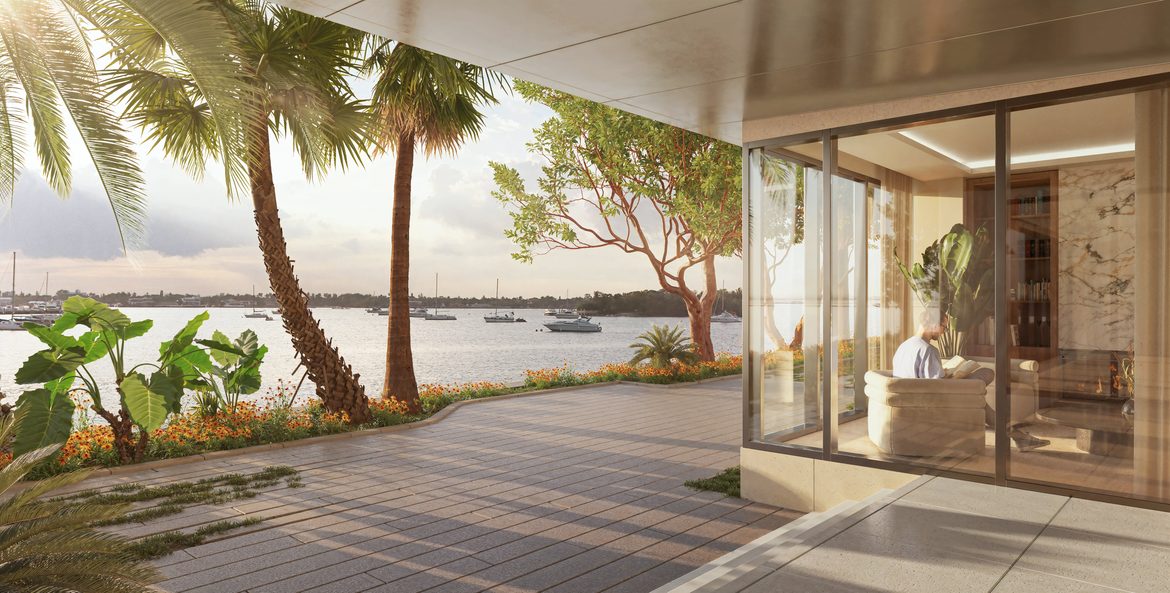
In a branded tower, buyers pay a premium for the brand’s services; at Tula, the shared spaces have to deliver that experience on their own. A lobby with a 24-hour concierge leads to a resort-style pool with private cabanas facing the bay and the skyline. A sixth-floor amenity level opens indoors and out, and the plan includes a great room with a marble fireplace, a skyline club room that residents can book for private events, a private dining room for 12 with a chef’s warming kitchen, a 2,100-square-foot fitness center, and a theater with surround sound. The building also has a pet spa and an above-ground garage with ample parking, which Dimond counts among Miami buyers’ most pressing concerns.
The absence of a brand also changes the monthly math. Without a percentage owed to a hotel or luxury company, Dimond says, the developer set maintenance fees at about $1.88 per square foot. The construction timeline differs as well. The tower has already topped out, so buyers aren’t placing deposits on a project still waiting two or three years for its construction loan and permits. Dimond expects residents to move in around the 2027 holiday season.
Between City and Beach
Whatever the village becomes, its central advantage remains its position. Sitting at the midpoint of the 79th Street Causeway, North Bay Village spares residents the usual Miami trade-off between beach and city. Miami Beach lies a few minutes east, while the mainland’s highways and the airport lie a few minutes west. A marina and several golf courses sit close by as well, so daily life can tilt toward the ocean, the city, or the bay as residents choose.
The mainland side holds much of the area’s evening life, and much of it is new. Neighborhoods along Biscayne Boulevard that Miami once drove past, from the mid-century MiMo district to Little River, have become some of the city’s most talked-about places to eat, and Dimond says more restaurants are opening along the corridor. Farther south, the Design District anchors the city’s art and fashion scene. For Tula’s residents, a good share of Miami’s current dining and cultural life sits along the same short drive west.
That range reflects what sets Miami apart within Florida. Where Naples prizes quiet, Miami thrives on the energy of its ties to Latin America. North Bay Village lets residents decide how much of that energy to take in.
About the Expert: Vivian Dimond is the founder and CEO of Bayshore Grove Capital, a real estate development and investment company in Miami, where she focuses on residential development.
This article is intended for informational purposes only and does not constitute legal, financial, or investment advice. The views and opinions expressed herein reflect those of the individuals quoted and do not represent an endorsement of any company, product, or service mentioned. Readers should conduct their own due diligence and consult qualified professionals before making any investment decisions.
All Photos: Bloom Images


