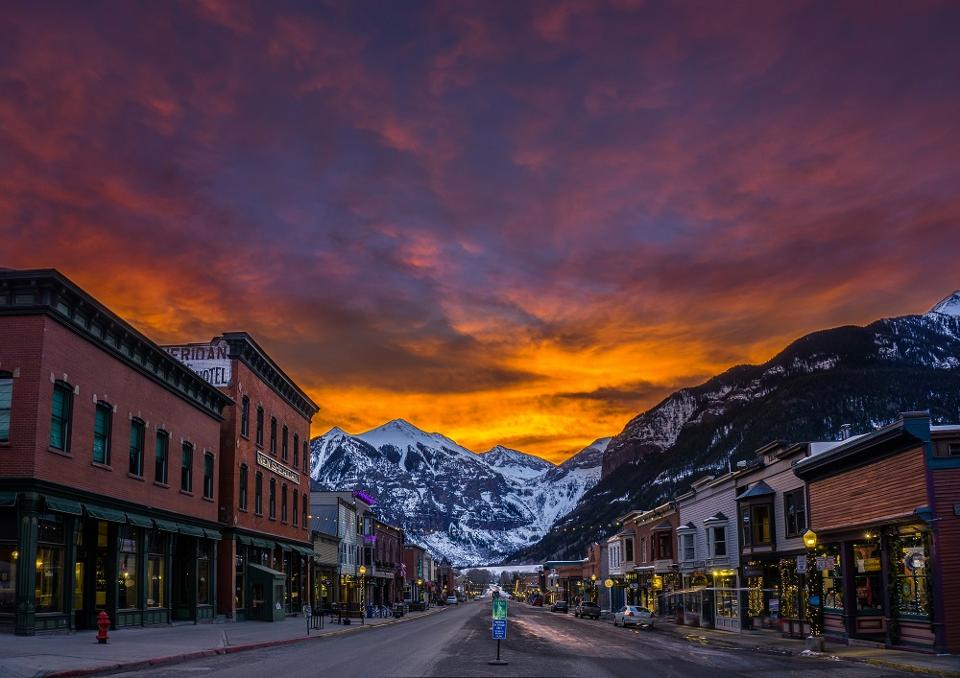
Telluride has quietly joined the top tier of mountain real estate, and the buyers driving it are choosing the town precisely because it doesn’t feel like the others.
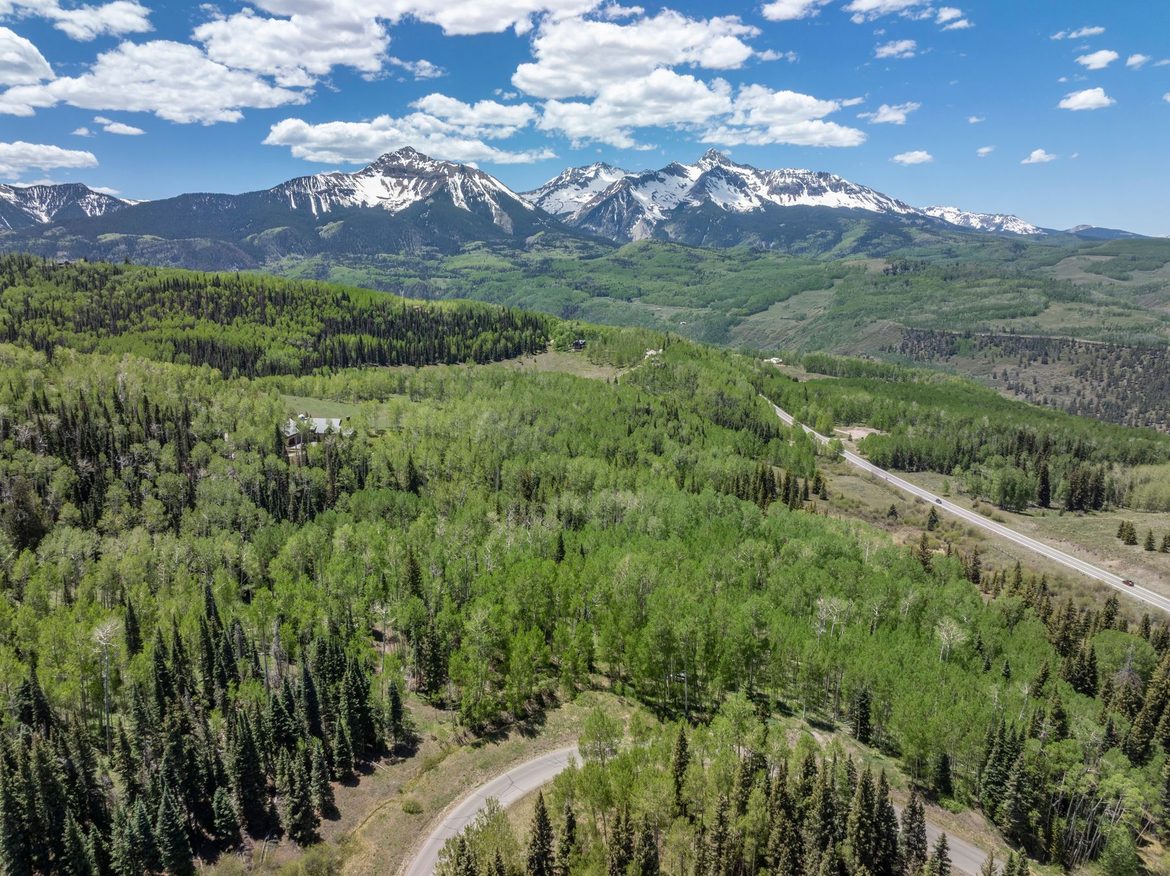
Along the road into West Meadows, a subdivision just beyond Telluride’s Mountain Village, there is nothing to see but open meadow and the San Juan peaks rising beyond it. Its private estates are out there, roughly one to every 35 acres, but they are hidden from the street by design. Only when a driveway crests a knoll does a home come into view, along with the panorama it was built to face. Undeveloped parcels alone have sold for close to $7 million, and some of the homes, according to local broker Dan Dockray, cost $20 million to $30 million just to build. From the road, there is no sign of them.
That invisibility is the point. In the bigger-name ski towns, being seen is part of the experience. Telluride’s newest buyers, many of whom could own a home anywhere, are choosing a place where the mountain gets the attention and they don’t, and they are paying more than ever to do it.
On Its Own Terms
That low profile is not incidental to Telluride’s rise in the luxury market; it is in large part the reason for it.
Dockray, a real estate advisor with LIV Sotheby’s International Realty, places luxury in Telluride at roughly $5 million to $15 million today and ultra-luxury at $20 million and above. The top of the market has climbed quickly. In 2021, a $22 million compound became, at the time, the highest-priced single-family sale ever recorded in the Town of Telluride, and the brokerage that handled it reported that the area had seen almost as many sales above $10 million in two years as in the 15 years before. The region’s largest sales have since crossed $40 million.
Part of the explanation is national. Wealth at the very top has grown enormously through stock market gains and successful companies, Dockray says, and new fortunes from artificial intelligence are beginning to reach the market. But that money could land in any mountain town. What has changed is Telluride’s standing. A place that once attracted relatively few of the ultra-wealthy now registers with them as a destination in its own right, not as an alternative to Aspen or Vail.
That distinction matters to the buyers themselves. The ones who choose Telluride, Dockray says, tend to want a quieter, more anonymous life than the more conspicuous resorts allow. He hears a version of the same remark from clients who love their friends and colleagues, but would rather not see them at every turn: “I don’t want to see all the people that I know in Austin every day while I’m in my vacation home.” In Telluride, they find a social life that is less showy, and the absence of display is precisely the appeal.
Space and Privacy Come First
The same preference for privacy shapes where these buyers look. Telluride offers, in effect, three settings: the historic town on the canyon floor, Mountain Village on the slopes above it, and subdivisions such as West Meadows just beyond it. Most ultra-wealthy buyers, Dockray says, gravitate toward the second and third, where they can be within about five minutes of everything but out of sight of everyone.
Downtown still has its buyers, but the choice between town and Mountain Village comes down largely to room. Mountain Village is a separate municipality linked to downtown by a free 13-minute gondola, and its lots, Dockray says, are generally far larger than those in the historic town. That leaves room for the garages, vehicles, and toys most of these buyers want, along with amenities that a historic in-town lot can’t accommodate.
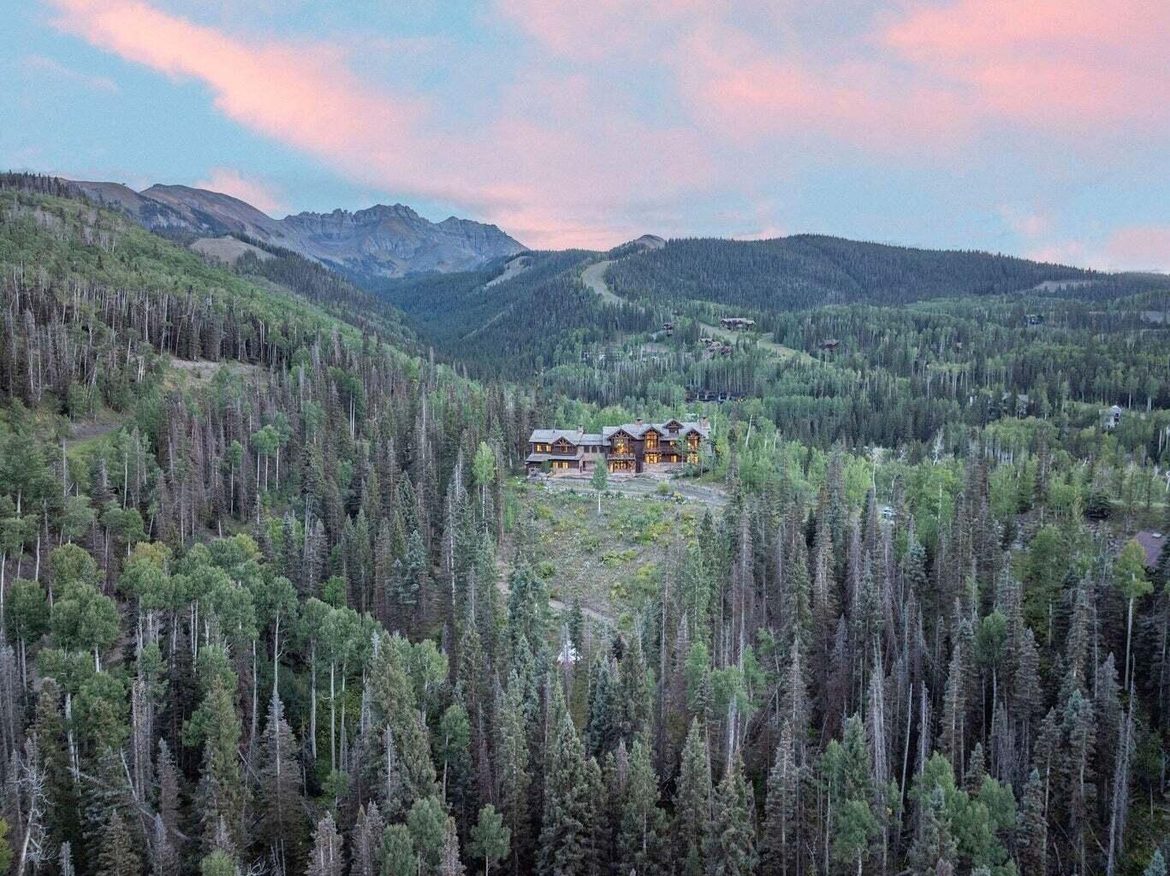
Mountain Village has other advantages as well. Many properties sit directly on the ski trails, while even the best homes in town are typically a couple of blocks from the gondola, and on average, Dockray adds, the views are better. Buyers who want still more space and privacy look directly across the road to West Meadows, where homes have the land and solitude of a rural property, but with the slopes and the gondola only five minutes away.
Everything at the Ready
Once buyers have the house, Telluride’s infrastructure is catching up to them, starting with how they arrive. Most visitors, including many who are very wealthy by any ordinary standard, fly into Montrose and take a shuttle, or catch a short flight from Denver. The ultra-wealthy fly private directly into Telluride’s own airport, with Montrose serving as the backup when weather closes Telluride’s mesa-top airport. The airport recently completed a 30,000-square-foot storage hangar.
Service on the ground is moving more slowly. Owners expect a home fully prepared on arrival, and local home-management companies are working toward a five-star standard, though Dockray says most are not there yet, held back largely by the workforce shortage common to ski towns where housing is scarce. The demand, he adds, is not in question; for these owners, cost is rarely the obstacle.
In the meantime, the hotels, which already operate at a high level, and a new crop of private clubs are setting the standard. The most ambitious of the clubs is the Alpine Club, a 26,000-square-foot, invitation-only club under construction at San Sophia Station, the gondola’s midpoint between town and Mountain Village, and slated to open for the 2026–27 ski season. Plans include a restaurant, a spa, a kids club, ski valet, and valet parking, giving owners who live outside town an on-mountain base with concierge service. Telluride, he predicts, will soon have at least one or two service companies operating at the highest level of any resort town.
Summer Now Outdraws Winter
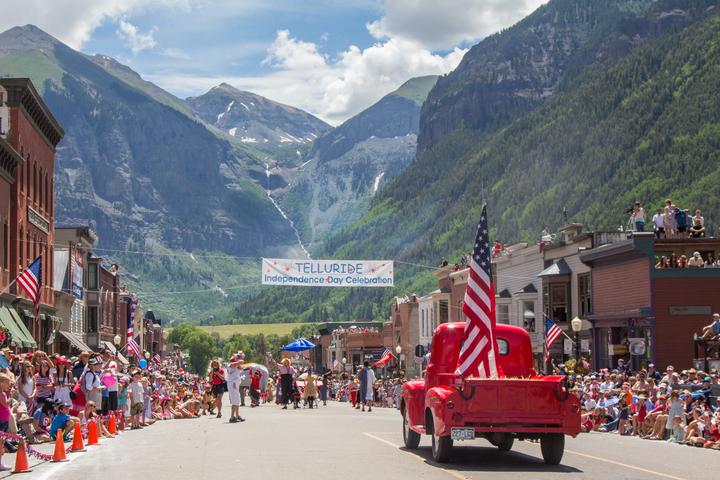
For a town built on skiing, the most telling change in how owners use their homes is seasonal: summer in Telluride, Dockray says, is now busier than winter. Much of the draw, in his view, is cool air for families escaping the heat of Texas, Phoenix, and Florida, but the activities have grown alongside the visitors.
Mountain biking in particular, he notes, has become a sport of the very wealthy, alongside golf, fly fishing, hiking, and climbing. The signature thrill is the via ferrata on Ajax Peak, a route of cables and iron rungs strung along narrow ledges on the cliffs beneath Ajax Peak, in places more than 300 feet above the ground.
Recreation alone, however, doesn’t separate Telluride from its peers. As Dockray points out, most mountain towns offer similar terrain; what ultra-high-net-worth owners also demand is excellent dining, arts, and music. Telluride answers with a festival on nearly every summer weekend. The Telluride Bluegrass Festival is the largest, drawing up to 12,000 people a day to lineups that reach well beyond bluegrass. Blues & Brews, a favorite among locals, has hosted artists from B.B. King to the Black Crowes, and the Autumn Classic ends the season with a show of collector cars and aircraft, for which the town shuts down Main Street.
The Telluride Film Festival is the anchor. Held over Labor Day weekend, it has become one of the world’s premier film festivals, known for world premieres and an A-list Hollywood presence. Patron passes, priced at several thousand dollars, go on sale each December and sell out quickly.
Curated Rather Than Branded
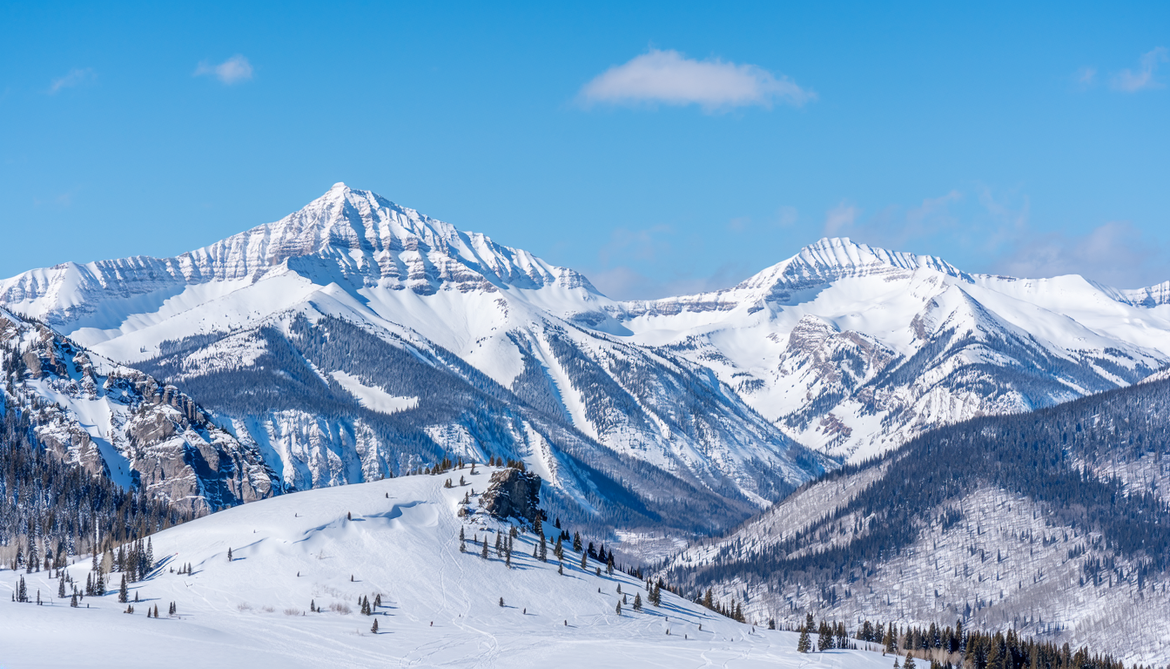
Dining and shopping make the clearest case that Telluride’s luxury is homegrown. Both have risen to the level these buyers expect without importing the names that define luxury elsewhere.
The dining scene has improved markedly over the past decade, and it now has outside validation. In September, The National, on Colorado Avenue, became the first Telluride restaurant recognized by the Michelin Guide, earning a Recommended listing in the guide’s first statewide Colorado edition. Housed in a historic brick building, it serves a seasonal menu with Mediterranean and North African influences. Dockray sees the listing as raising the profile of the five to ten local restaurants that compete closely with it, among them Kazahana, a few doors away, whose sushi he puts on the level of Nobu.
Shopping tells a sharper story. Many mountain towns now measure their status by the luxury houses that have opened there, but Telluride has none, Dockray says, and he doesn’t expect that to change. The town, in his telling, has long been individualist and anti-franchise. What thrives instead are independent shops with a strong point of view. Two Skirts, a women’s boutique, opened in 2001, and Scarpe, which Jenny DiFiore opened as a shoe store in 1995, now provides head-to-toe fashions for men, women, and children. Gold Mountain Gallery, founded by a couple who left New York for Telluride, has grown from a single space into three local galleries selling art and furnishings.
Why would buyers accustomed to the world’s great shopping streets settle for this? Because, Dockray explains, they don’t experience it as settling. The prices at the best local shops can rival those at Gucci, and the merchandise is chosen by owners with a discerning eye whom clients come to know personally. The draw is the edit and the relationship, not the label.
A Town Small Enough to Know
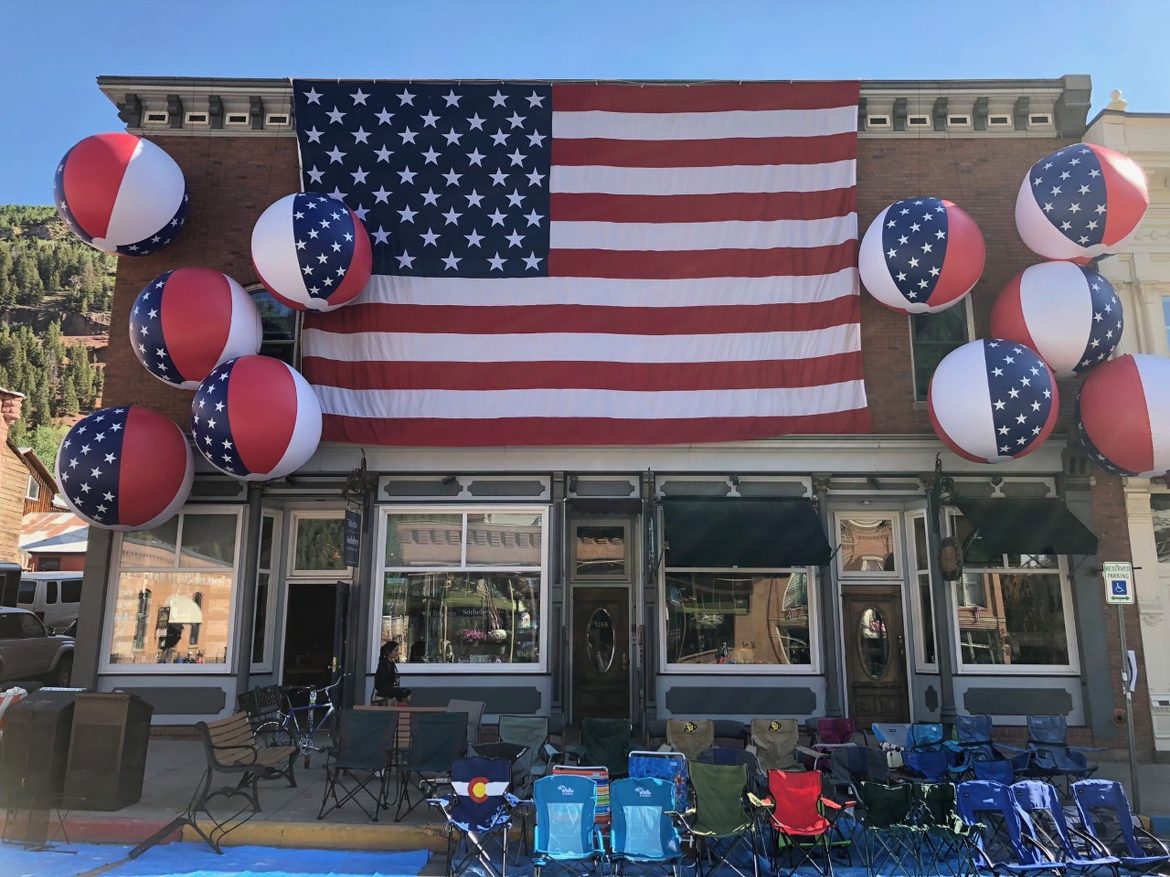
The relationships that sustain those shops extend to the town as a whole, and they account for what surprises new owners most. Buyers arrive for the setting and the privacy; what they talk about afterward, Dockray says, is the community.
With only about 2,500 year-round residents, newcomers quickly come to know the restaurant owner, the shopkeeper, and the person who pulls their coffee, and those acquaintances often turn into friends to ride or ski with. Larger resort towns tend to sort themselves socially by wealth. Telluride, by Dockray’s account, is too small and too close-knit for that. Dockray hosts a couple of parties each year where he deliberately mixes everyone together, and the results reflect the town itself: “We’ve got billionaires hanging out with ski bums.”
That ease is the final piece of what the ultra-wealthy find in Telluride. The town that declines to put a luxury logo on Colorado Avenue also declines to rank the people who walk down it, and for buyers who can have anything, that turns out to be the rarest thing on offer.
About the Expert: Dan Dockray is a real estate advisor with LIV Sotheby’s International Realty, serving Telluride, Mountain Village, and surrounding communities.
This article is intended for informational purposes only and does not constitute legal, financial, or investment advice. The views and opinions expressed herein reflect those of the individuals quoted and do not represent an endorsement of any company, product, or service mentioned. Readers should conduct their own due diligence and consult qualified professionals before making any investment decisions.
Hero Image Credit: Dan Dockray