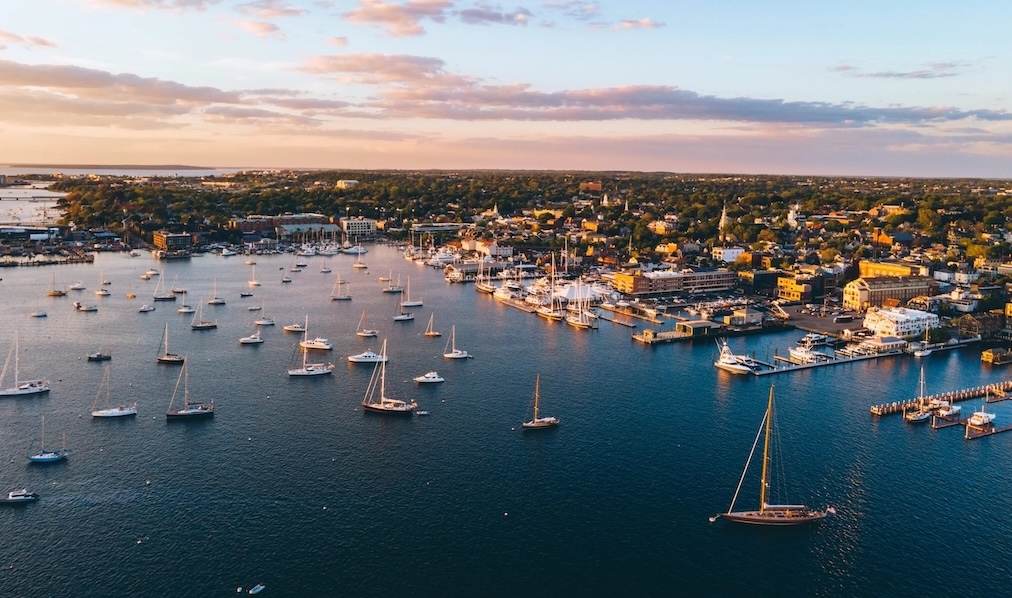
In a city with no more coastline to develop and a historical society watching every renovation, value in Newport comes down to one thing that money alone can’t buy
Newport sold its last empty lot decades before most of today’s buyers were born. Picture the old postcard version of the city – lawn parties spilling across the grass at the Elms, a badminton net strung up between hedgerows, someone humming a few bars of “High Society” as a Rolls idles in the drive. Except you’re probably picturing a supply of real estate that stopped growing around the time Bing Crosby was still topping the charts.
That’s the real starting point for luxury real estate in Newport: not a price tag, but a hard ceiling on how much of this world is left to buy. “There aren’t going to be any more grand estates built,” says Kim Marion, private office advisor with Engel & Völkers, who works the coastal corridor running from Newport through Jamestown, Narragansett, Barrington, and Little Compton. “There’s no more coastline being dug out.”
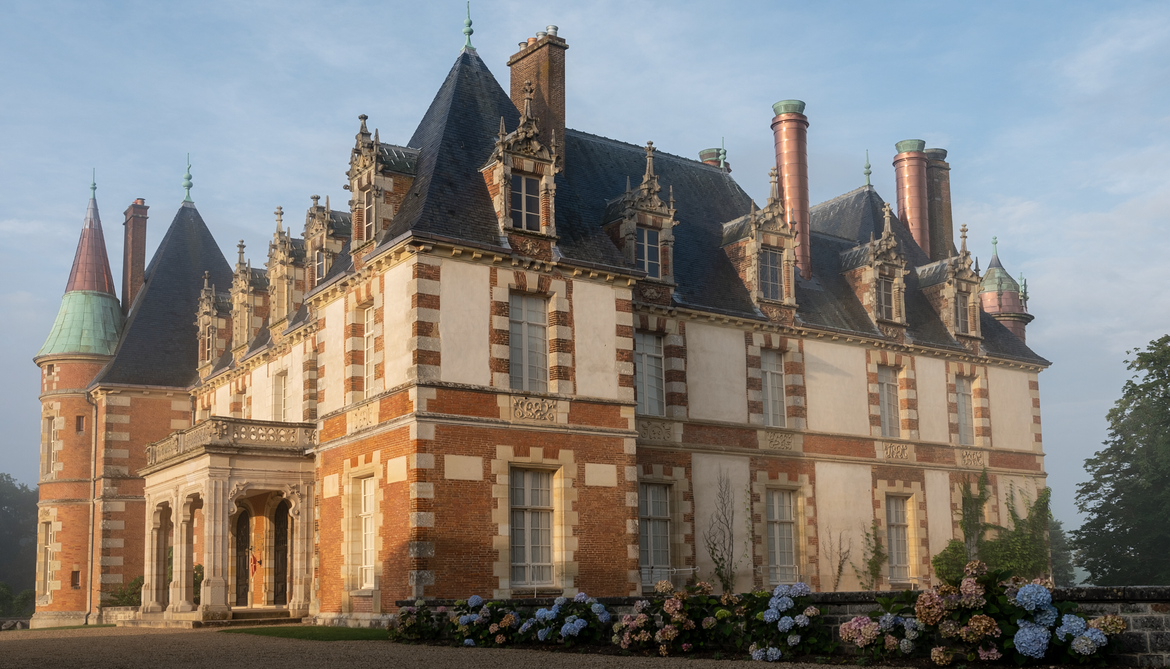
Supply Not Price
That fixed supply is what actually separates luxury from ultra-luxury in this market, more than any dollar figure does. Marion puts the ultra-luxury threshold around $15 million, though she’s quick to note the number bends. The most beautiful home she’s sold this year, an $11.9 million estate in Barrington, came in well under that line. What makes a property ultra-luxury, in other words, isn’t its price or its finishes. It’s whether it belongs to the small, non-renewable category of Newport-area real estate: coastline, acreage, and historic housing stock that the market has no way to replenish – and, as the city’s own rules make clear, never will.
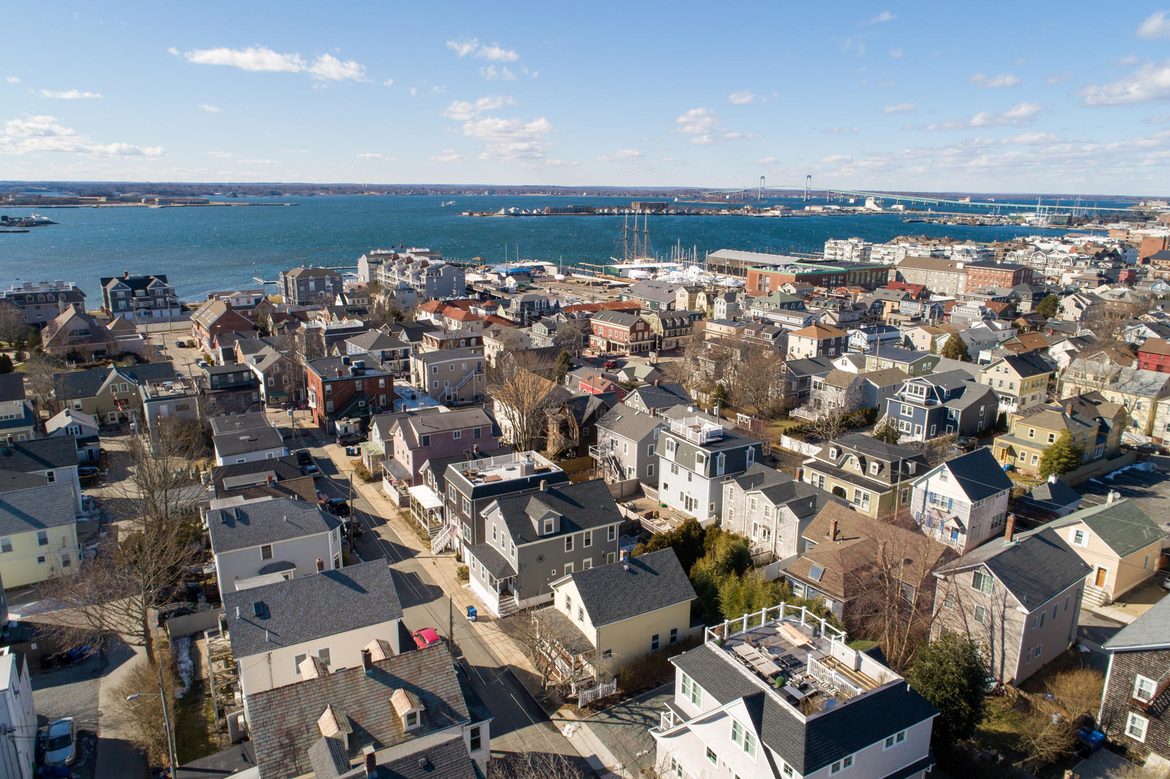
All of this traces back to the same root cause: Newport is structurally unable to build its way out of scarcity. The city’s historic district falls under the oversight of its historical society, which manages any renovation to existing homes, and its zoning leaves no path toward the kind of vertical growth found nearby. Newport has exactly one high-rise in its vicinity, a lone tower across the water in Portsmouth that Marion says still draws double takes from people passing by boat. Everything else, by design, stays as it was built.
Marion’s $11.9 million Barrington sale – the state’s second-highest transaction this year, behind a $16 million Newport deal – shows what happens when demand runs up against a supply that can’t expand. The property had gone unsold the year before at the same asking price, and Marion says most people dismissed the listing as overpriced.
But the buyer who eventually took it had already searched Newport, Jamestown, and Narragansett – the three towns where this caliber of property should have existed, if anywhere – and came away empty-handed. As Marion recalls the buyer telling her, this property was beyond anything he’d seen in any of those areas – which is exactly why he paid four or five million dollars over the last comparable neighborhood sale.
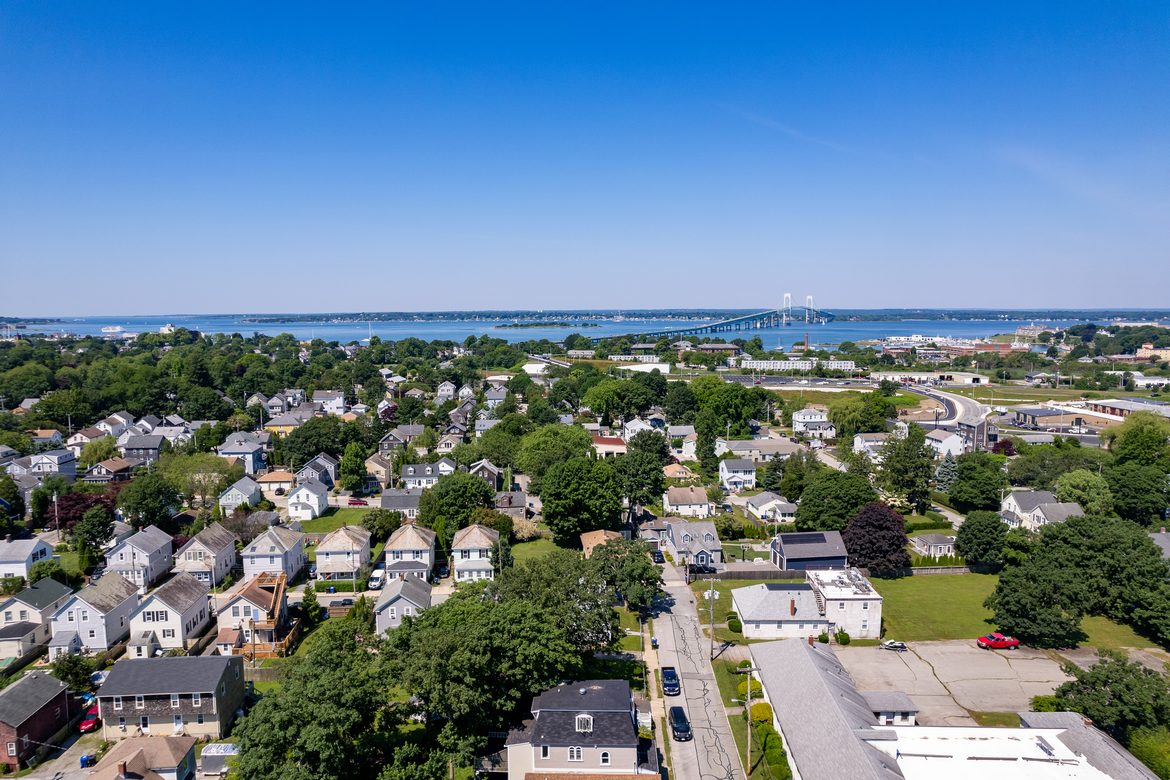
Competing for What’s Left
That scarcity is colliding with a buyer pool that keeps growing. Marion describes the top of the market as increasingly populated by CEOs and financial professionals, many arriving from Massachusetts, New Jersey, and New York, with a rising share coming from Florida’s Palm Beach corridor.
Rhode Island’s newly enacted millionaire’s tax hasn’t slowed that pipeline – Marion points to the state’s relative value compared with Palm Beach or California as more than enough to offset it. “If you want ultra luxury or a luxury property in Rhode Island, you’ll pay half or less than you’ll pay anywhere else, and you have all the benefits,” she says.
That value gap is drawing more buyers into a market that isn’t getting any bigger, and the numbers show it: inventory statewide has settled into balance at roughly two and a half months’ supply, but Newport’s luxury tier is moving the opposite direction, with sales up 34 percent year over year and average transaction prices climbing from $1.1 million in the first quarter to $1.34 million in the second.
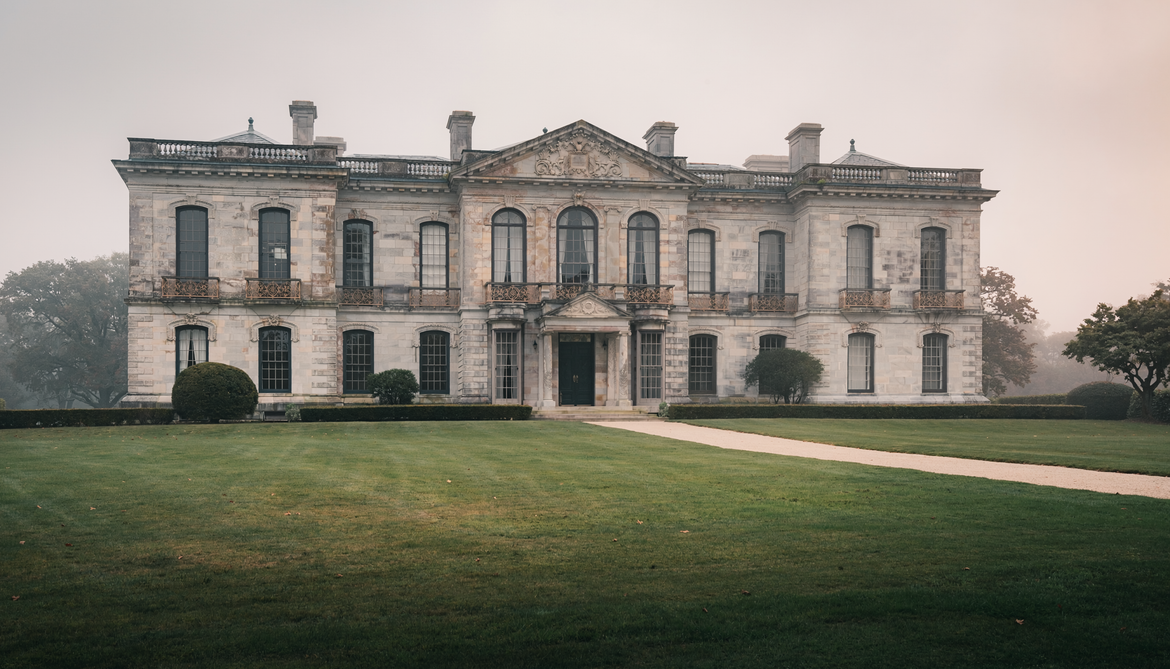
Matching Buyers to a Limited Map
With that few options available, Marion’s real job is less about matching a budget to a listing than matching a buyer to one of a handful of physical settings this coastline can actually offer. She starts by asking how someone pictures a morning – walking a boat out from a private dock, keeping horses, biking to the beach, or simply waking up to a water view – because the answer points to a specific, finite slice of the map.
Newport itself suits buyers who want to walk to dinner and still find quiet by evening, a fit met by neighborhoods like the Point, an old, tightly knit enclave of walkable waterfront streets, or Fifth Ward, just past the shops and restaurants of Thames Street. Jamestown serves a quieter buyer, with waterfront running $4 to $5 million and water-view properties closer to $2 million. Little Compton skews higher still: waterfront there now runs up to $7 million to $8 million and climbing, reflecting a run of recent sales that have pushed past the town’s previous records.
Narragansett’s waterfront, by contrast, remains largely seasonal, held by boat owners who arrive for the summer and leave the town to year-round residents the rest of the year. Each of these towns offers a different, limited inventory of lifestyle – and once Marion identifies which one a buyer actually wants, the search narrows fast, because there isn’t much of any one type to choose from.
Old Standbys, New Arrivals
Owning property in one of these towns opens the door to a genuinely rich social life – it just may not open every door equally. Newport’s calendar runs deep: sailing regattas out of the harbor, the summer concert series at Fort Adams, gallery openings, and a steady rotation of charity galas that welcome newcomers who show up and get involved. The city’s historical society and library both serve as gathering points for people who live full-time in Newport, or spend significant time there, rather than just those who own a house in it.
Organizations like the Newport Yacht Club and various beach and country clubs around the harbor offer a another route into the community, though several maintain waiting lists or membership committees that favor longtime residents over first-summer arrivals. Whereas Newport’s social calendar runs toward regattas and galas, Jamestown has built a lower-key but no less vibrant scene around its cluster of local art studios, drawing a crowd more interested in quiet creative life than a busy social season.
The dining scene tells a similar story of old standbys next-to-new arrivals. Newport’s Mamma Luisa Ristorante has been a Thames Street fixture for decades, the sort of place regulars are glad isn’t on every visitor’s list, while newer openings like Giusto and Bar ‘Cino have given the same stretch of town a younger, more current energy. Jamestown’s food scene is smaller by design but no less loyal: Slice of Heaven and Village Hearth Bakery & Cafe anchor the daytime crowd, while JB’s on the Water and newer arrivals like Our Table have become the places locals actually recommend to each other, rather than the ones that show up first in a search.
Drive past the Elms today and the lawn is still there, still cut for croquet, still exactly where it was when the postcard was taken. What’s changed is who’s standing on it. The names have turned over – old money giving way to new, summer visitors becoming year-round residents, one generation’s buyers replaced by the next – but everyone standing on that lawn is holding the same short list of what’s actually for sale in this city: not much, and never any more of it.
About the Expert: Kim Marion is a private office advisor with Engel & Völkers, based in Warren, Rhode Island, specializing in the luxury waterfront markets of Newport, Jamestown, Narragansett, Barrington, and Little Compton.
This article is intended for informational purposes only and does not constitute legal, financial, or investment advice. The views and opinions expressed herein reflect those of the individuals quoted and do not represent an endorsement of any company, product, or service mentioned. Readers should conduct their own due diligence and consult qualified professionals before making any investment decisions.