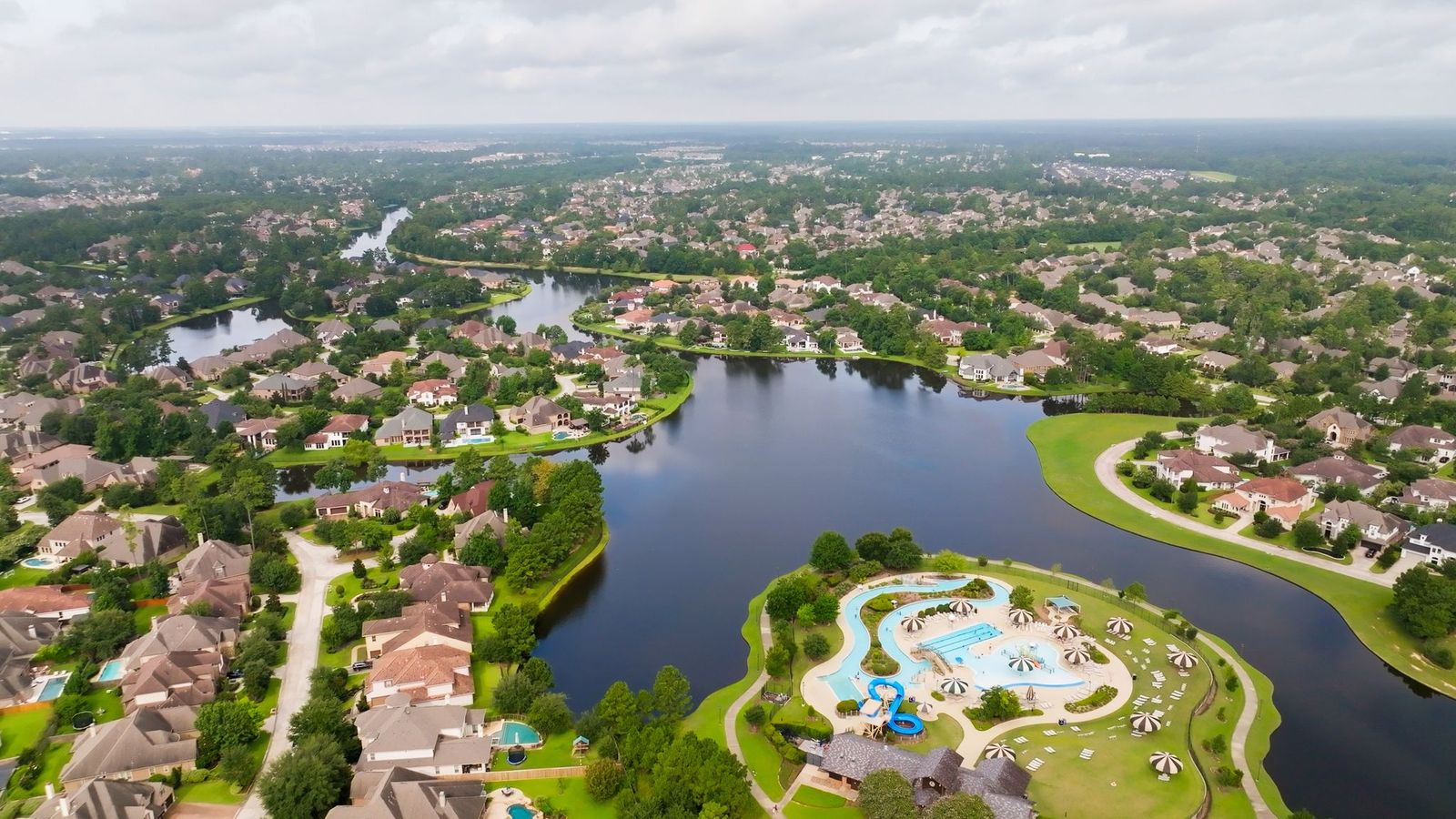
A planned community north of Houston built its reputation quietly. Now it’s letting the world see it.
Drive north from Houston on I-45 and the skyline gives way, almost without warning, to forest. A pine and oak canopy closes in over the highway, lakes appear behind clusters of trees, and the traffic that felt urgent twenty minutes ago starts to feel like it belongs somewhere else.
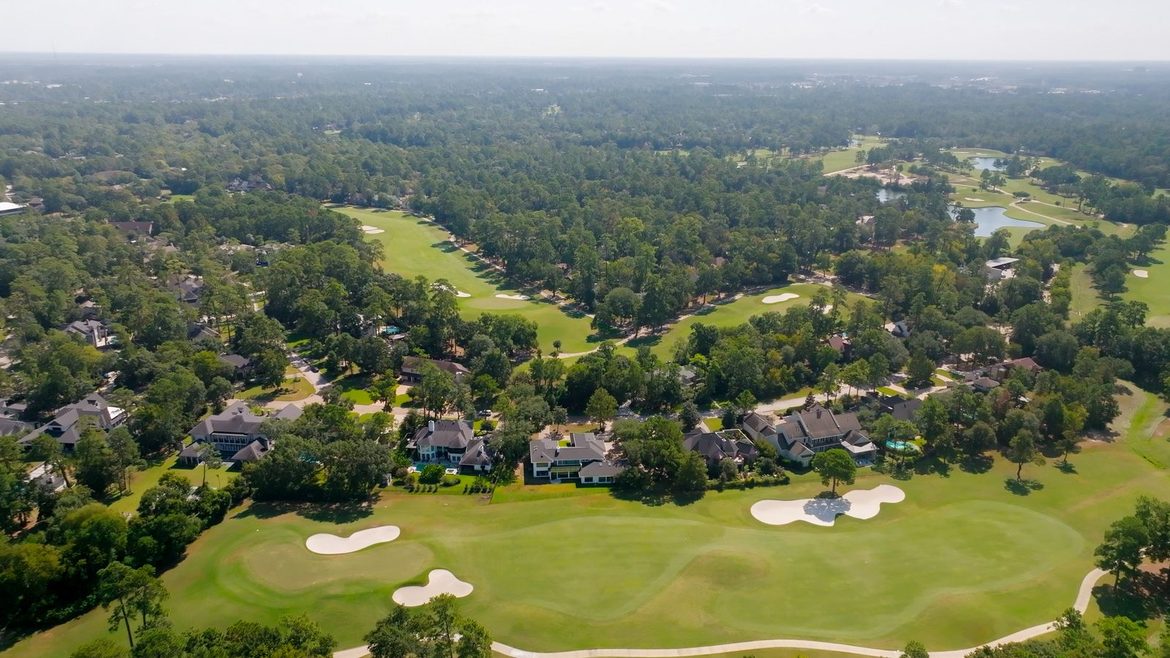
This is The Woodlands: 28,000 acres of preserved forest, built fifty years ago into one of the country’s first master-planned communities – quietly wealthy from the start, with none of the usual signals to show for it.
The forest wasn’t an accident, and neither was the restraint. George P. Mitchell, the Houston oil-and-gas entrepreneur credited as the first to use fracking commercially, began buying the land in 1964 and formally opened the community a decade later. He built The Woodlands the way he’d built his fortune – methodically, with the money doing the talking rather than the architecture.
Ownership changed hands twice in the decades that followed: a Morgan Stanley and Crescent Real Estate partnership bought in in 1997, and the Howard Hughes Corporation acquired its interest in 2011. Today The Woodlands counts roughly 118,000 residents and nearly 2,200 businesses. The high-end retail and hospitality names took longer to arrive than the wealth did – but they’ve been catching up fast.
A Confirmation, Not a Discovery
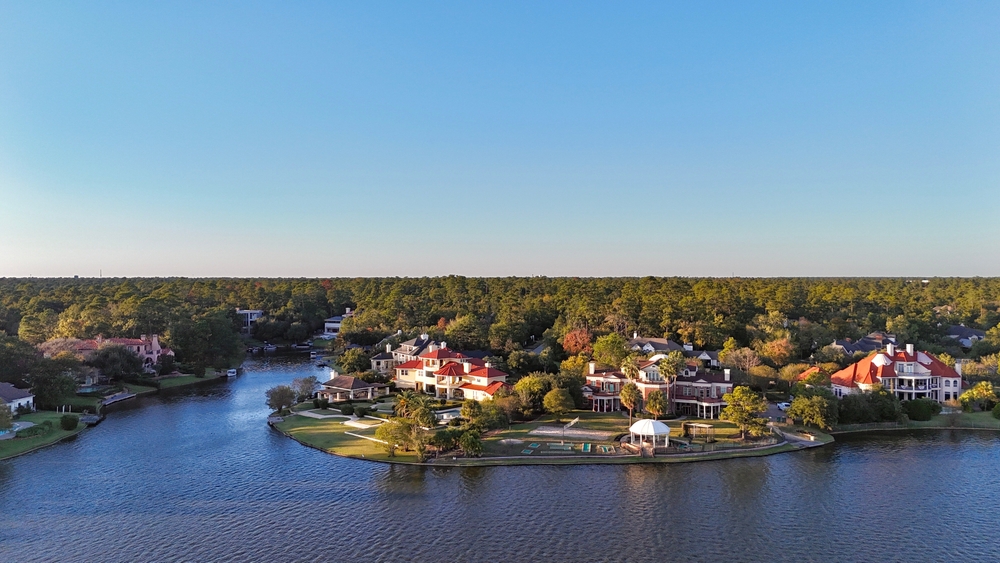
The arrival of a Ritz-Carlton residence on Lake Woodlands – the brand’s first stand-alone project in Texas, opening next June – hasn’t changed that underlying wealth so much as confirmed it publicly. “We are the child that’s been left out,” says Michelle Marek, a real estate agent with Compass, based in The Woodlands, Texas, where she specializes in luxury residential real estate.
Marek describes a community that has long had the resources of a major metro’s wealthiest suburbs without the retail and hospitality names to match. The 15-story Ritz-Carlton tower, designed by Robert A.M. Stern Architects on an eight-acre stretch of the lake, has drawn buyers paying anywhere from roughly $3 million to $18 million for a unit, striking even in a market where luxury has become the norm.
Marek’s own explanation for why the retail and hospitality names took so long has less to do with which company was running the community than with who was buying into it. The wealth that built The Woodlands was old-fashioned in the specific Texas sense – oil-and-gas money that never had much interest in wearing labels. It took a newer wave of arrivals, drawn in by a decade of relocations, to bring in buyers willing to spend visibly rather than quietly, and to turn that willingness into demand that the retail and hospitality brands could finally see.
The retail names started arriving once the demand was clear. Nordstrom opened at The Woodlands Mall in 2014. Louis Vuitton followed at Market Street five years later, and Gucci opened its own boutique there in 2023. The Ritz-Carlton is simply the next name in that same progression. As Marek puts it: “The Ritz is a sign that we made it.”
Moving the Nest
That shift in visibility tracks with who has been moving in – and the connection runs deeper than it first appears. Alongside the oil-and-gas relocations The Woodlands has always attracted, Marek has closed multiple sales built around a less predictable logic: parents buying a primary residence so the whole family can move together when a child starts at Texas A&M (about 75 miles to the northwest), rather than sending the child off alone. George Mitchell graduated from Texas A&M’s petroleum engineering program in 1940, and now the university is one of the community’s clearest draws for new residents.
A second, better-documented category of relocation is underway alongside it. Memorial Hermann’s Woodlands medical campus is in the middle of a $250 million expansion, growing from 397 to as many as 535 licensed beds, driven by a projection that more than half a million people will live within ten miles of the hospital within the next few years. Between the university pull and the medical expansion, the newest arrivals in The Woodlands increasingly aren’t oil-and-gas transfers at all.
Self-Contained
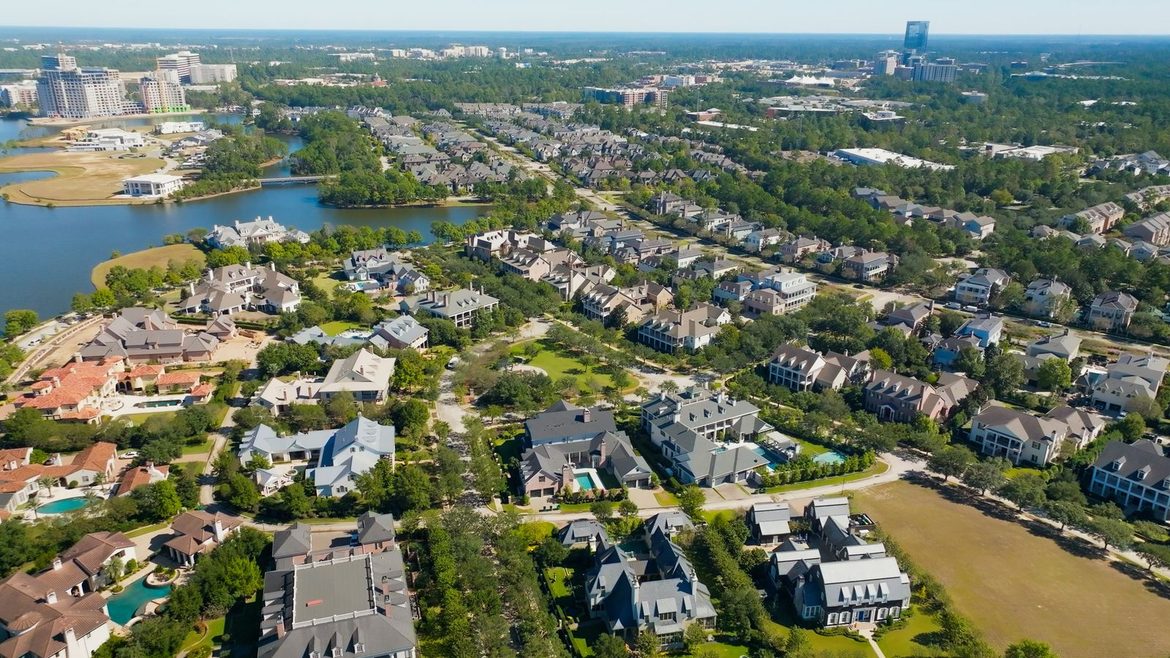
An influx of that scale needs somewhere to spend its time, and The Woodlands has spent the last several years building exactly that – though the instinct isn’t new. Mitchell’s original 1974 plan called for each of the community’s nine villages to have its own village center with stores and services of its own; what’s happening now at the township level is that same logic playing out at a larger scale.
The clearest recent evidence arrived this year at Hughes Landing’s Restaurant Row: Charolais, a steakhouse from chef Austin Simmons built around beef from his own genetics-driven cattle program, and Bar Bludorn, chef Aaron Bludorn’s first restaurant outside central Houston. Neither is a chain, and both are the kind of destination dining that used to require a drive south. Where residents once went to Houston for dining, shopping, or a night out, the traffic increasingly runs the other way. The Woodlands isn’t positioning itself as a bedroom community anymore; it’s building the infrastructure of a destination in its own right.
Nine Villages, Nine Kinds of Buyer
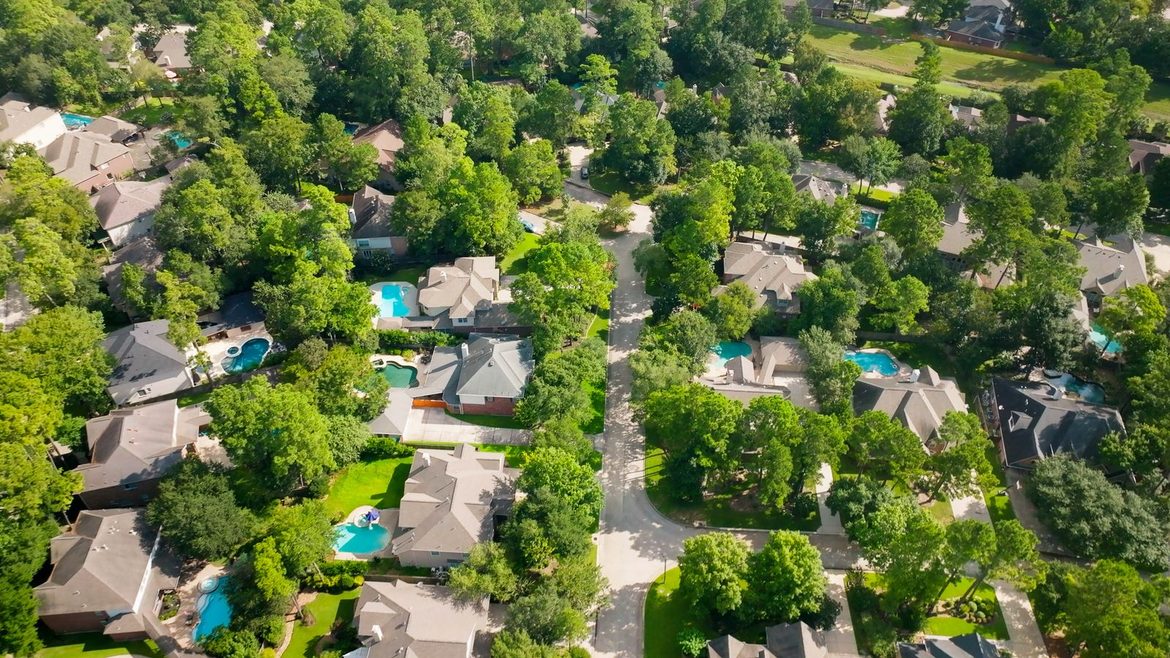
That growth hasn’t happened uniformly, which is where the community’s original structure still matters. The Woodlands is organized into nine distinct villages, each with its own character, and Mitchell’s original zoning plan means the differences between them are deliberate rather than accidental.
Carlton Woods, the community’s only guard-gated section, is built around 827 acres and two private championship golf courses – a Jack Nicklaus Signature design and a Tom Fazio course at its Creekside extension – anchored by a clubhouse for members of The Club at Carlton Woods, a separate membership from the real estate itself. Among its roughly 520 home sites, custom construction can run into the low eight figures, drawing a mix of doctors, attorneys, and athletes rather than any single buyer type.
Grogan’s Mill, the original village at the front of The Woodlands, has become the destination for a different kind of buyer: families drawn to its proximity to the restaurants, the pavilion, and the shopping corridor, tearing down and rebuilding on its acre-plus lots rather than starting new farther out. The choice among the villages comes down less to budget than to what a buyer wants daily life to look like.
But there’s a second calculation running underneath the first, one that doesn’t show up on a tour. Texas has no state income tax, a draw for the business owners and executives increasingly relocating here, but property taxes run comparatively high – a trade-off buyers from income-tax states aren’t always used to weighing. The Woodlands’ established infrastructure works in its favor: its municipal utility districts carry rates averaging between seven and seventeen cents per hundred dollars of valuation, compared with a dollar or more in newer developments still paying down their initial construction debt.
Combined with the township’s own low rate, a typical Woodlands homeowner’s total tax burden lands well under what’s common in the master-planned communities springing up just a few miles away. It’s an easy detail to miss in a market defined by golf courses and guard gates, but for the buyers doing the math, it’s often the number that closes the deal.
Fifty Years Ahead of Schedule
For fifty years, that was also the community’s limitation: Mitchell had built something with real substance, but it wasn’t designed to announce itself. The wealth was real, but there was nothing loud enough about the place to make outsiders notice.
The Ritz-Carlton tower on Lake Woodlands, the Louis Vuitton and Gucci boutiques at Market Street, the steakhouses and destination restaurants pulling Houston traffic north instead of the reverse – none of it is a departure from what Mitchell planned in 1974. It’s the market finally arriving at the address he’d already built.
The Woodlands didn’t change to earn the attention. The attention just took fifty years to catch up.
About the Expert Michelle Marek is a real estate agent affiliated with Realm, based in The Woodlands, Texas, where she specializes in luxury residential real estate. She is a member of REALM Global, an international network of real estate professionals working in the ultra-luxury segment.
This article is intended for informational purposes only and does not constitute legal, financial, or investment advice. The views and opinions expressed herein reflect those of the individuals quoted and do not represent an endorsement of any company, product, or service mentioned. Readers should conduct their own due diligence and consult qualified professionals before making any investment decisions.