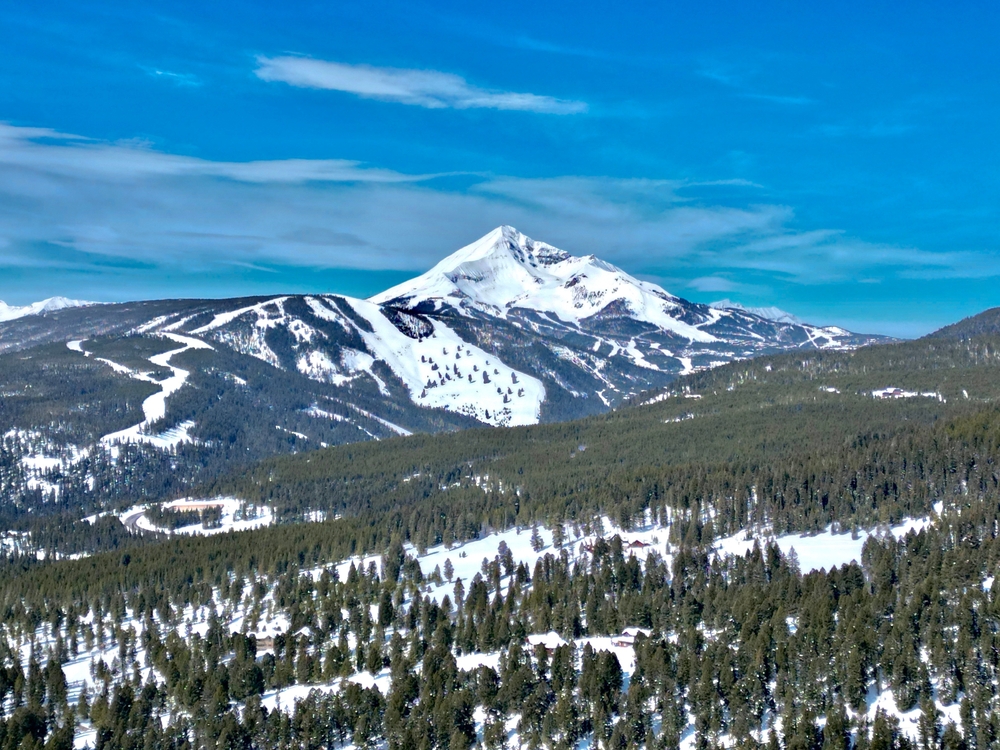
In one of Montana’s most desirable ski markets, private clubs, hotel brands, infrastructure, and architecture all moved upmarket at the same time – and none of it happened by accident
By Chris Caggiano
Big Sky’s emergence as a luxury market hasn’t been gradual. It has been the product of simultaneous investment on every front that defines one: the mountain itself, the private communities layered onto it, the hospitality brands moving in, and the architecture buyers now expect.
Each piece advanced in step with the others. According to Amelia Turbyfill, a real estate agent working across Montana and parts of Utah, the shift traces to around 2017, when Big Sky began upgrading lift infrastructure to a standard that now outpaces established resorts like Deer Valley – new heated bubble chairs and high-speed gondolas that have kept lift lines minimal even as the resort has grown. Turyfill says that investment didn’t precede the arrival of luxury real estate, and it didn’t follow it. Both tracks advanced together.
The Clubs Are the Market
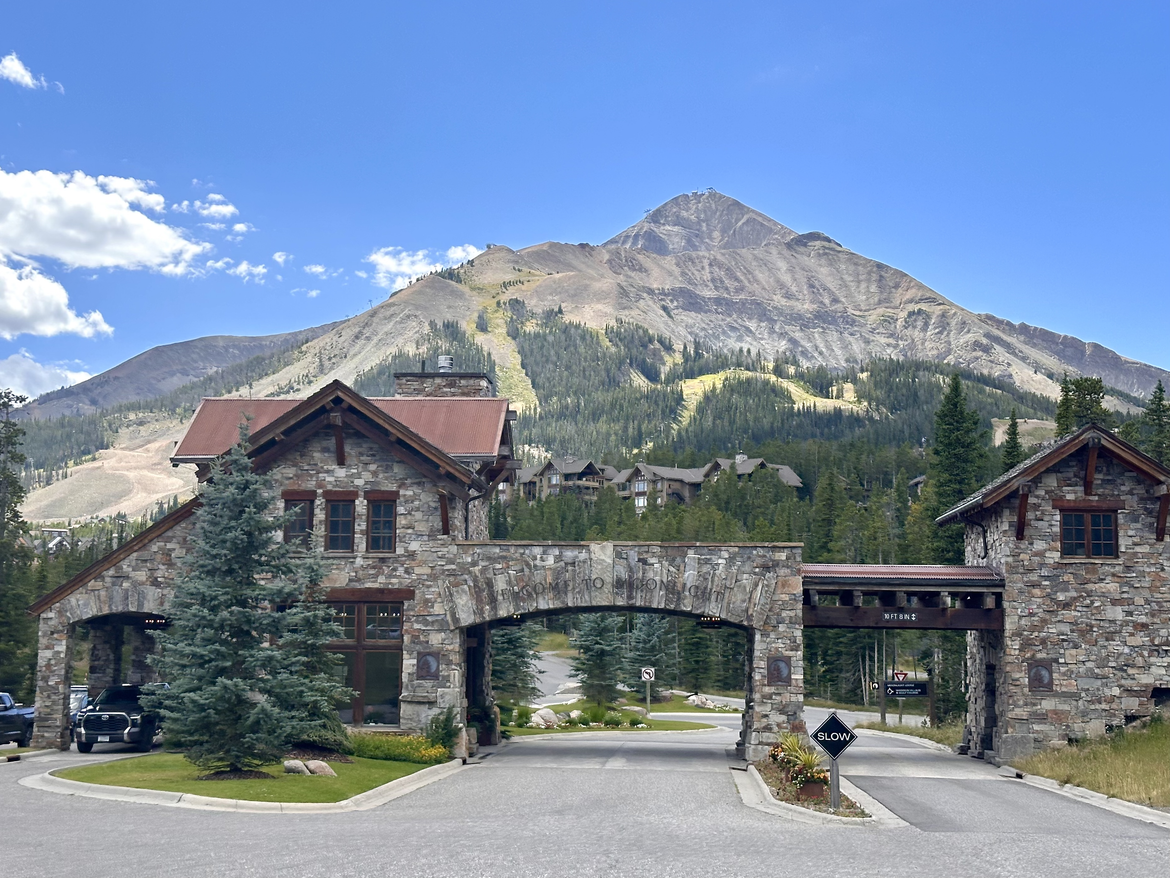
Where many resort towns have a single luxury tier, Big Sky’s ultra-high end is split across three private club communities, each with a distinct identity. Spanish Peaks Mountain Club and Moonlight Basin sit at similar price points – homes generally in the $5 million to $20 million range – but with different personalities: Moonlight Basin leans family-oriented and amenity-dense, built around ski-in access, golf, and curated outdoor experiences, while Spanish Peaks carries an older, more traditional reputation that its developers are actively working to modernize.
The Yellowstone Club occupies its own category entirely. Founded in 1999 on roughly 15,200 acres – with private skiing across 2,900 acres, more than 100 runs, and its own Tom Weiskopf–designed 18-hole golf course – Yellowstone markets itself as the world’s only private, members-only ski and golf community, with its own exclusive terrain and closed real estate market. Yellowstone buyers must clear an approval process before viewing property, and both sides of every transaction are required to use the club’s own agents. Membership is capped at roughly 864 households, with properties ranging from condos in the $2.5 million range to cabins near $25 million.
Ownership in any of the three clubs requires membership. Buyers who prefer not to buy into a club can still find ski-in, ski-out homes on the open mountain, or property in the Meadow and Town Center area, Big Sky’s walkable commercial core near the river.
Enter Hotel Brands
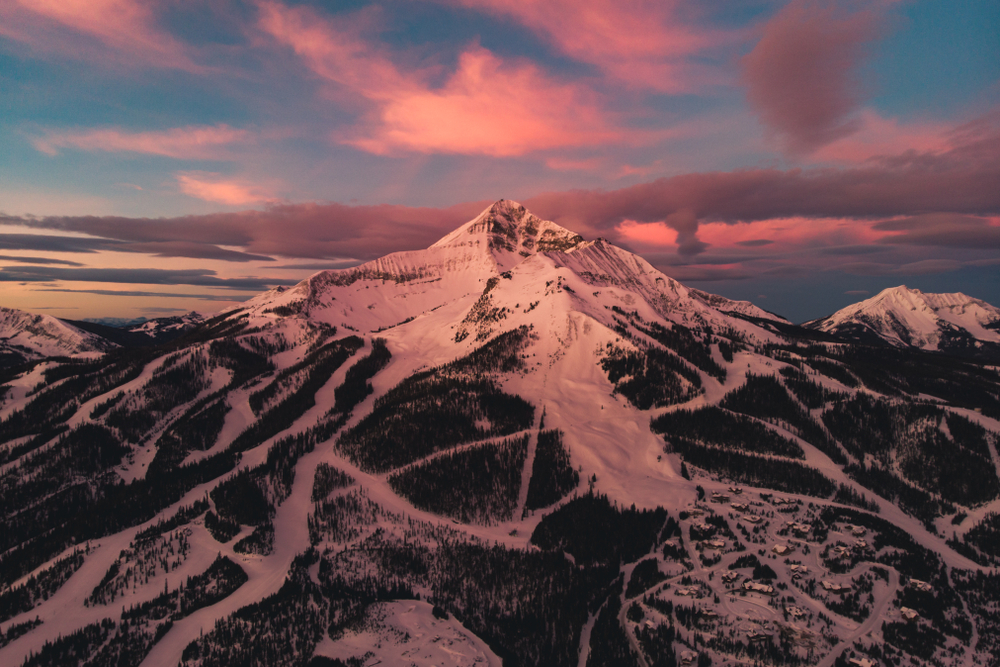
If the clubs define Big Sky’s geography, the arrival of name hospitality brands has defined its trajectory. Turbyfill points to the entrance of Montage’s private residences within Spanish Peaks, and more recently One&Only’s arrival in Moonlight Basin, as the clearest indicators that Big Sky has moved into a different class of market. She treats each new hotel brand less as an amenity than as a signal, evidence, to her, that a market has crossed a threshold.
That logic extends to dining. Big Sky’s shoulder seasons are severe enough that independent restaurants struggle to survive the slow months, so most of the market’s higher-end dining is arriving in partnership with the hotel brands rather than as standalone ventures, including a restaurant helmed by chef Akira Back within the One&Only property. The hotel’s broader business, in Turbyfill’s telling, absorbs the losses that would sink a freestanding restaurant during the off months.
That dynamic also explains why Big Sky hasn’t followed Vail or Jackson Hole toward year-round residency, despite comparable price growth. With roughly 4,000 year-round residents, Big Sky’s off-season sees many restaurants and businesses close entirely, and second-homeowners who want year-round urban comforts get them instead in Bozeman, an hour away – a market Turbyfill describes as both increasingly affluent and functionally symbiotic with Big Sky rather than competitive with it. Some buyers maintain what she calls a “crash pad” in Bozeman for its restaurant scene and everyday errands, and return to Big Sky for the experience the mountain itself provides.
From Log Cabin to Alpine Modern
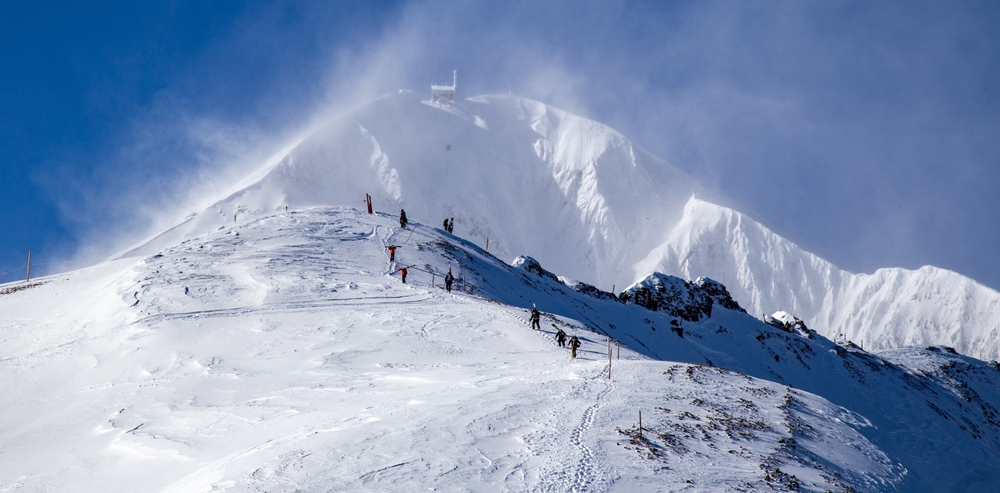
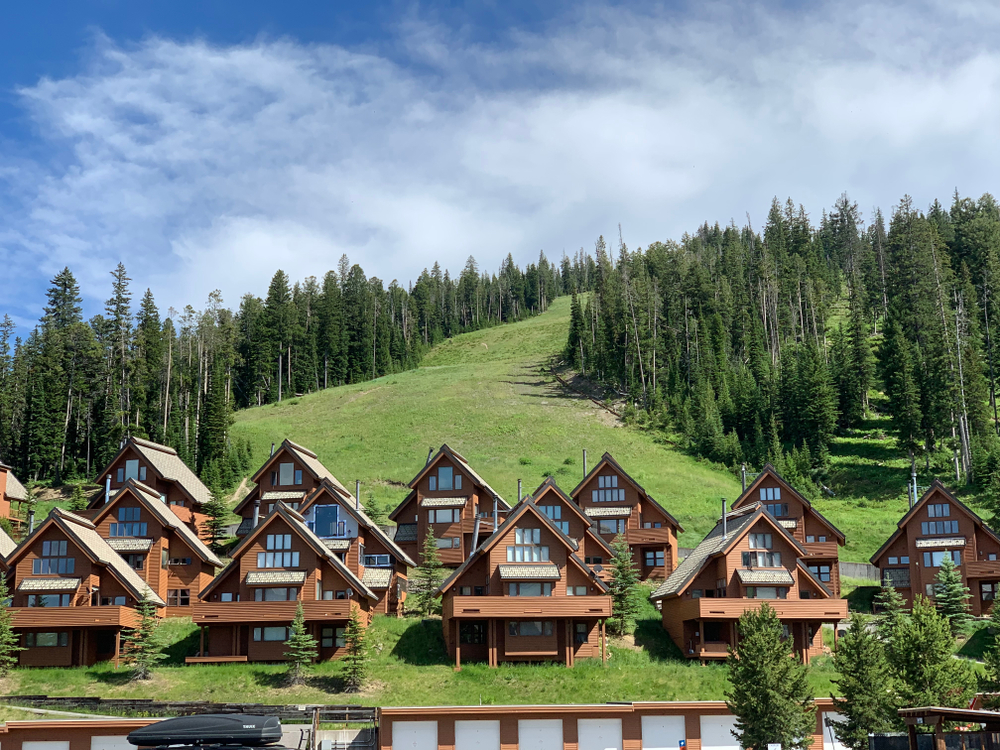
The local architecture has moved in step with everything else. Turbyfill describes a rough progression through distinct eras: the traditional log home that defined Big Sky’s original 1990s-era construction, an early-2000s shift toward “mountain modern” – gray tones with mountain materials – and, most recently, what she calls “alpine modern”: glass, metal, clean lines, and large-scale windows designed to blur the line between inside and outside. New residences within Moonlight Basin, designed by the Seattle firm Olson Kundig, exemplify the current high end of that aesthetic.
That evolution hasn’t erased the earlier styles so much as layered a new option on top of them. Some buyers, particularly those relocating from urban markets, want the log-cabin fantasy they associate with Montana; others find that same style dated and prefer the more contemporary glass-and-metal aesthetic. Both buyer types are active in the market simultaneously, which Turbyfill treats less as a tension to resolve than as evidence of how wide the current market has become.
Two Kinds of Buyers
That same range shows up in how people buy. At the top of the market, Turbyfill has seen buyers commit within days – in one case selling a $12 million residence to buyers on just their second day ever visiting Big Sky. In the middle of the market, roughly $1 million to $4 million, the process can stretch out over years, with buyers returning across multiple seasons before committing, weighing club amenities against location against price point in a more deliberate, educational process.
The split runs counter to the assumption that higher price points mean longer decisions. Instead, in Turbyfill’s experience, it’s often the reverse: buyers at the top of the market already know what they want and recognize it immediately, while first-time second-homeowners in the middle tier take the most convincing.
Underlying both buyer types, Turbyfill draws a hard line on motivation. “If you’re buying something and you just want to make an ROI return on renting it, go buy a condo complex in Dayton, Ohio,” she said. “Don’t buy a $4 million house in Big Sky. Buy it because you love Big Sky.” Big Sky’s unincorporated status – no municipal short-term rental restrictions, beyond whatever an individual HOA might impose – makes it unusually workable for buyers who want both personal use and rental income. But in her view, that flexibility only pays off for buyers who want the place itself first.

Toward a Four-Season Mountain
Skiing brought Big Sky its reputation, but it isn’t the only reason people come. The town sits within an hour of three blue-ribbon fly fishing rivers, whitewater rafting, and Yellowstone National Park itself, close enough that many visitors build an entire loop around it, staying in Big Sky, spending a day in the park, and continuing on toward Jackson Hole before flying out of Bozeman. For a market defined by second-home buyers rather than year-round residents, that loop matters: it gives people a reason to return in July, not just January.
That’s also where Big Sky’s growth is most deliberately unfinished. Even as second-home ownership remains the norm rather than a shift toward full-time residency, the resort has been investing in summer programming – expanding lift-access mountain biking with downhill trails built specifically for the warmer months – to extend what the mountain offers beyond ski season. It’s the same pattern that’s shaped everything else about Big Sky’s rise: growth that arrives on purpose, one deliberate addition at a time, rather than by chance.
About the Expert: Amelia Turbyfill is a luxury real estate advisor with REAL Broker, serving Montana’s Bozeman and Big Sky communities as well as Park City, Utah. She is a member of REALM Global, an international network of real estate professionals working in the ultra-luxury segment.
This article is intended for informational purposes only and does not constitute legal, financial, or investment advice. The views and opinions expressed herein reflect those of the individuals quoted and do not represent an endorsement of any company, product, or service mentioned. Readers should conduct their own due diligence and consult qualified professionals before making any investment decisions.