Gloucester’s luxury buyers aren’t just purchasing waterfront – they’re buying into a civic culture built on giving back.
By Chris Caggiano
Ask Tom Janis what separates the luxury market in Gloucester, Massachusetts from Nantucket or the Hamptons, and he doesn’t start with price. Janis, a real estate advisor with Engel & Völkers By the Sea, starts with a $23 million capital campaign at the Cape Ann Museum, a concert hall built by international subscription two decades ago in downtown Rockport, and a scholarship fund established by a couple with no children of their own.
On Cape Ann, where Gloucester is comfortably ensconced, the same donors tend to reappear across the museum board, the concert hall’s capital drive, and the local education foundation, an overlap that, in Janis’s telling, is as central to the town’s identity as any single transaction.
A Market Finding Its Buyers
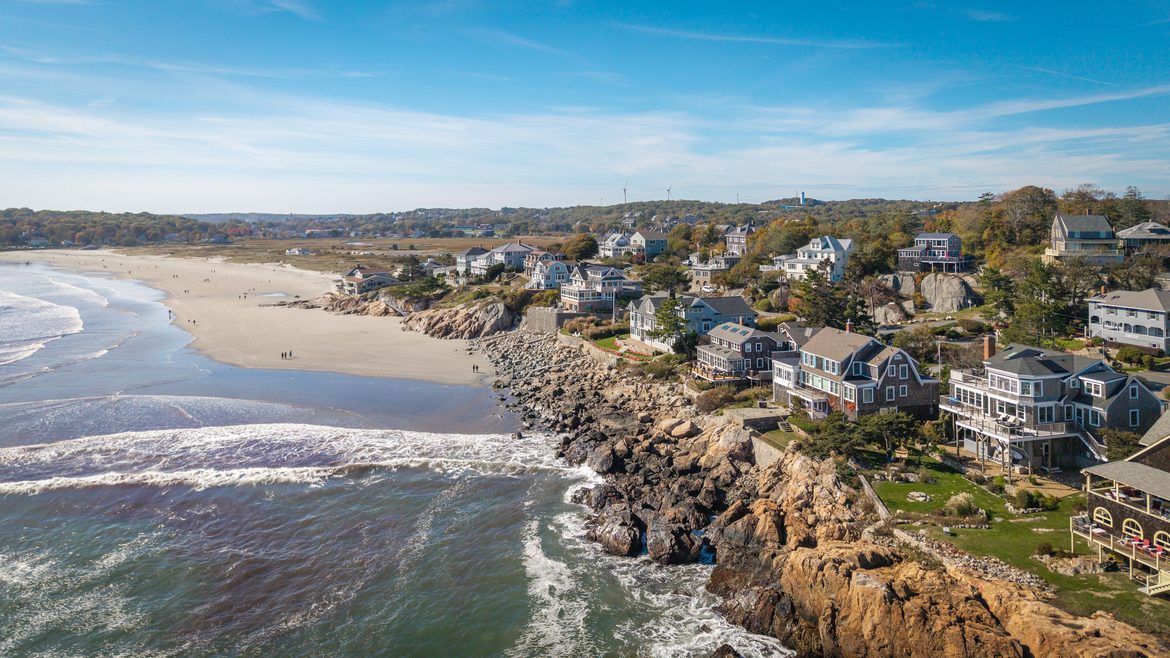
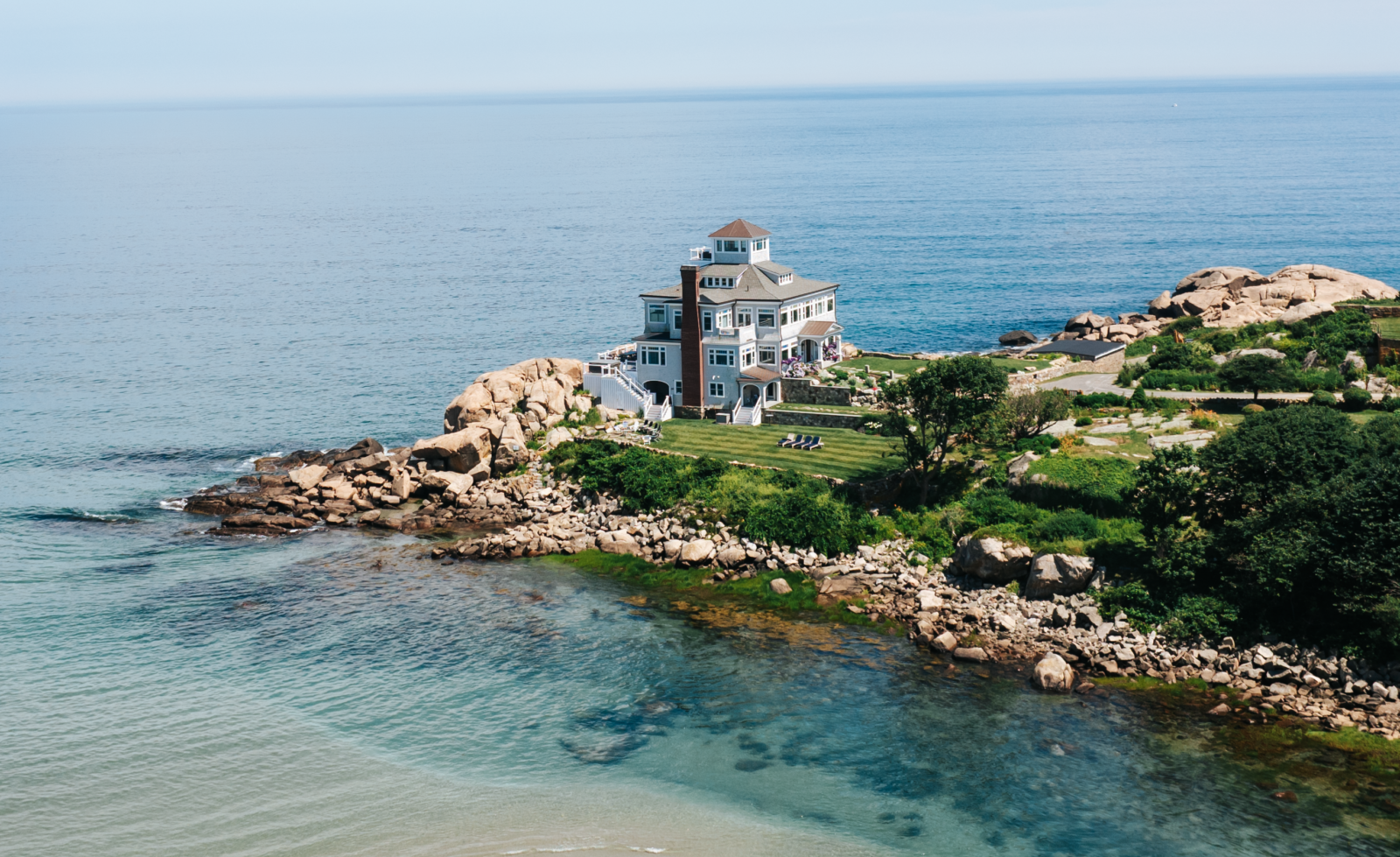
For most of its history, Gloucester’s luxury ceiling moved slowly – just three sales above $4 million before 2020. That changed abruptly when two 2020 listings, both priced in the fours, sold despite neighbors questioning the price. Since then, off-market sales have closed at $7.2 million and $7.6 million, and current inventory includes a prospective $20 million estate (11,000 square feet, deep-water dock, 270-degree views) and a $10 million, 27-acre Beverly Farms waterfront property Janis considers underpriced.
That comparison holds up: a restored 1899 Greek Revival in Manchester-by-the-Sea recently listed near $11.75 million on less than an acre, and the broader ultra-luxury ceiling outside Boston has reached $34 million. Against those numbers, Gloucester looks less like an outlier and more like a market coming into its own – but with considerably more land attached.
The buyers aren’t chasing price alone. Boston remains the primary feeder market, with California and Texas secondary, but Janis points to people already rooted in the region relocating for reasons closer to home. A Winchester couple traded a Vermont second home for Gloucester once their grown sons stopped wanting to make the drive. Empty nesters from inland towns like Hamilton are giving up horse-country acreage for waterfront, helped along by a real tax gap – Hamilton’s 2026 rate of $15.04 per $1,000 runs well above Gloucester’s $9.31. In both cases, it’s not a new life so much as a better-located version of the one they already had.
The Market’s Mechanism
What Janis returns to repeatedly isn’t inventory or price. It’s how money moves once it arrives in Gloucester. And the two institutions he cites as evidence have deep roots of their own.
The Cape Ann Museum traces its history back to 1875, when it was founded as the Cape Ann Scientific and Literary Association, and it has spent a century and a half building one of the country’s more significant regional collections – including the largest holding anywhere of work by native son Fitz Henry Lane, the 19th-century marine painter.
The museum’s recent capital campaign funded a major renovation and expansion, and the museum reopened this year with an exhibition built entirely around Gloucester’s own art history: a survey of the lifelong friendship between Milton Avery, Adolph Gottlieb, and Mark Rothko, tracing the summers the three artists spent painting on Cape Ann in the decades before Rothko became one of the defining figures of American Abstract Expressionism. Organized in partnership with the Phillips Collection in Washington, D.C., the show has been described by regional critics as a genuine blockbuster for an institution of its size, a marker of the same institutional ambition that reinvestment has made possible.
Rockport Music tells a similar story on a smaller footprint. What began in 1981 as a modest chamber music series performed in borrowed gallery space grew, under artistic director David Deveau, into an organization ambitious enough to build its own dedicated concert hall. The Shalin Liu Performance Center opened in 2010 – a 330-seat, oceanfront hall named for the philanthropist whose lead gift helped fund its construction, with acoustics and a wall of glass facing the harbor that have made it, by any account, disproportionately significant for a town of Rockport’s size. It now anchors a full season of chamber, jazz, and world music programming, and remains dependent on the same recurring base of local donors that sustains the museum down the coast.
It’s not simply that Gloucester has wealthy residents. It’s that the same people fund the museum, the concert hall, and the schools – including efforts like the Gloucester Education Foundation and the Gloucester Marine Genomics Institute, which give students in a town still built around a working fishing fleet a path into fields like genetics and marine science. That overlap knits civic and philanthropic life together in a way Janis says he hasn’t seen replicated in more insular luxury markets.
A Working Harbor
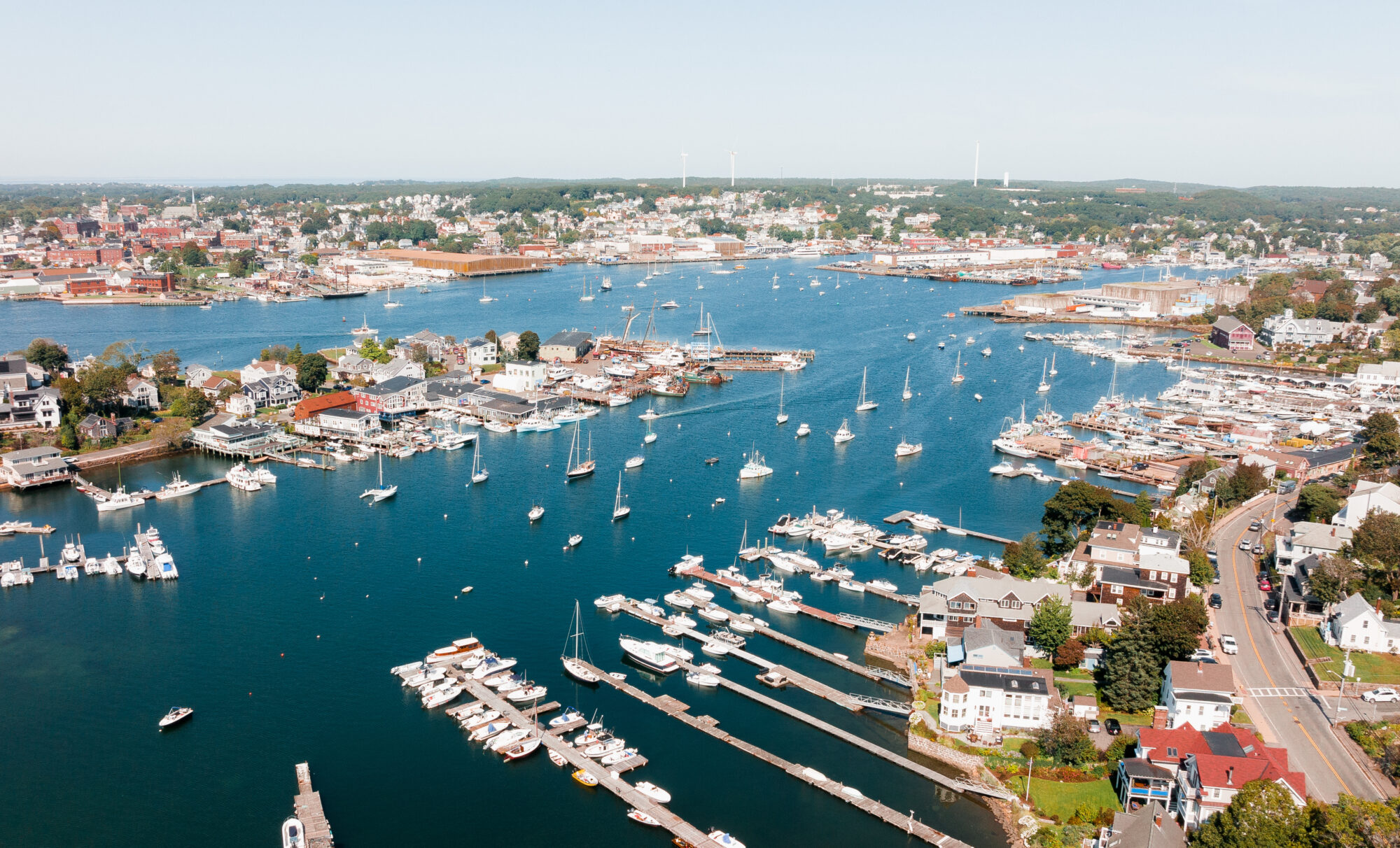
Part of what makes that civic culture distinctive is what it’s built on top of. Gloucester was founded in 1623 and remains, by its own long-standing claim, America’s oldest fishing seaport, a heritage still visible in its working harbor and in landmarks like the Schooner Adventure, a 1926 National Historic Landmark dory-fishing schooner that now sails as a floating classroom and community fixture rather than a tourist prop.
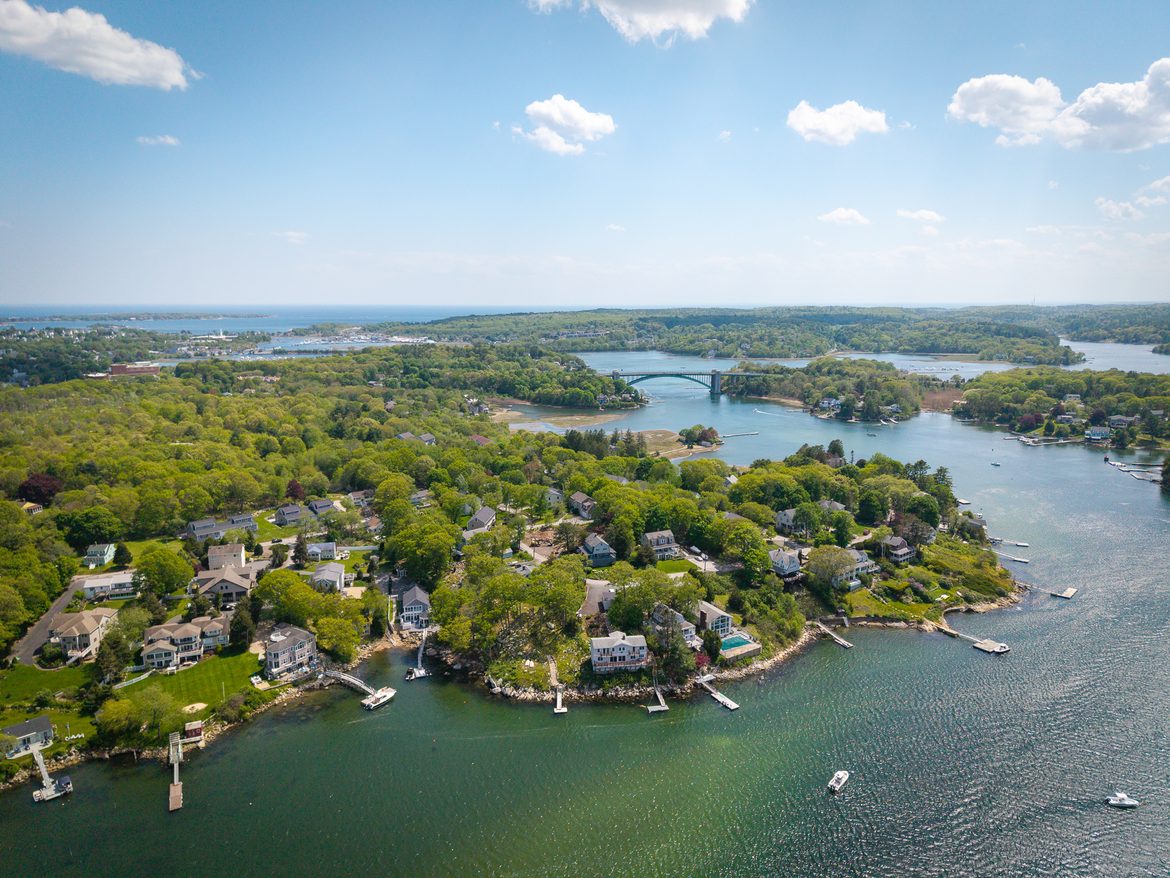
That heritage is also why the Great Marsh matters here beyond its scenery: at roughly 20,000 acres, it’s the largest contiguous salt marsh in New England, an internationally recognized habitat for migratory birds and a natural buffer against storm surge for the towns along its edge, which is part of why waterfront acreage touching it, like the Beverly Farms estate, carries a premium that has little to do with square footage.
That same working-harbor identity shapes how buyers actually spend their time once they’ve settled in. Eastern Point Yacht Club, founded in 1923 on Gloucester’s outer harbor overlooking Lighthouse Cove, anchors the town’s sailing and racing culture and remains a social hub for waterfront residents; Janis counts a standing lunch there among his own routines. On Main Street, downtown’s retail core still runs on old-fashioned civic ritual, seasonal shop nights that draw hundreds of residents out for wine and conversation, evidence that the town’s social life extends well beyond private clubs and onto the sidewalk.
Dining has kept pace with the town’s rising profile: Tonno, opened in 2016 by North End chef Anthony Caturano of Prezza, brings coastal Italian cooking built around the day’s catch to a dining room a block from the harbor, and has become a genuine draw in its own right rather than an afterthought to the real estate. For buyers coming from Boston or beyond, it’s this combination – working boats, a serious yacht club, and a restaurant scene taken as seriously as the Cape Ann Museum’s collection – that separates Gloucester from a purely decorative version of coastal luxury.
None of this shows up on a listing sheet, but it all shapes who ends up buying in Gloucester and why they stay. The price appreciation of the last several years is real, and the ultra-luxury ceiling is likely to keep climbing as more of the North Shore’s established wealth looks toward Cape Ann. But the more durable story, according to Janis, is the civic infrastructure absorbing that wealth as it arrives, a pattern that predates the recent price run-up and, if it holds, will likely outlast it.
About the Expert: Tom Janis is a real estate advisor with the Brackett Janis Group at Engel & Völkers By the Sea in Gloucester, Massachusetts, specializing in luxury properties across Cape Ann and the North Shore, including Gloucester, Rockport, Manchester-by-the-Sea, and Beverly Farms, and is a member of REALM Global, an international network of real estate professionals working in the ultra-luxury segment.
This article is intended for informational purposes only and does not constitute legal, financial, or investment advice. The views and opinions expressed herein reflect those of the individuals quoted and do not represent an endorsement of any company, product, or service mentioned. Readers should conduct their own due diligence and consult qualified professionals before making any investment decisions.